AI Agents Vulnerable to Data Poisoning, Study Finds
A new study reveals that autonomous AI agents can be easily misled by manipulated datasets, raising concerns about misinformation and scientific integrity.
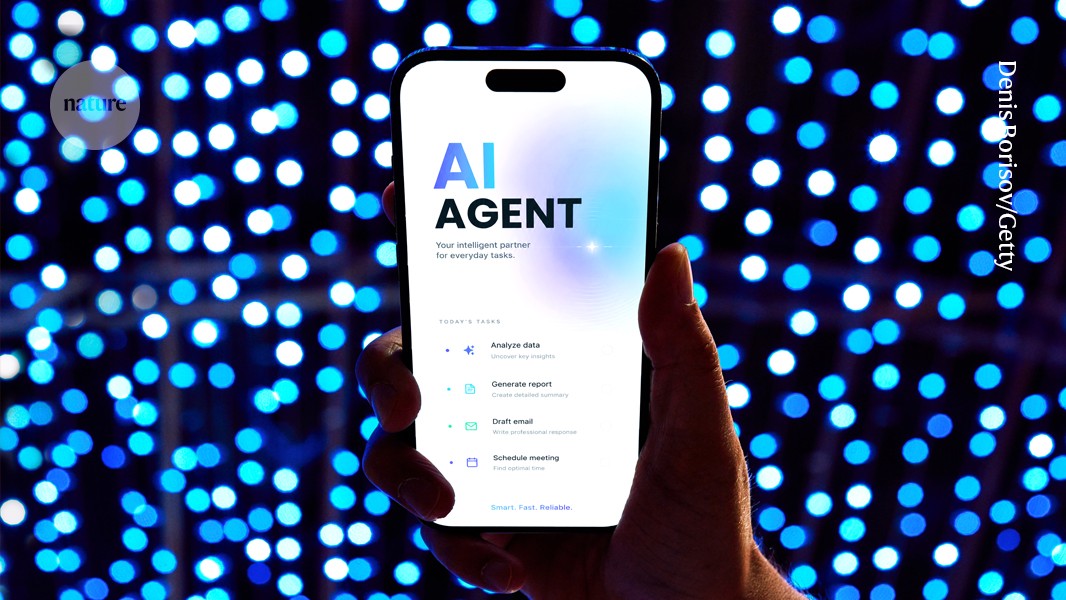
Autonomous AI agents tasked with interpreting data are highly susceptible to 'data poisoning' through manipulated datasets, jeopardizing their accuracy and integrity of their conclusions.
The Growing Reliance on AI for Data Analysis
As artificial intelligence becomes increasingly integrated into research and decision-making, the reliance on autonomous AI agents to interpret vast amounts of data continues to grow. These agents are designed to sift through information, identify patterns, and draw conclusions with efficiency that human analysis cannot match. However, their sophisticated capabilities are fundamentally dependent on the quality and authenticity of the data they process. A recent study has highlighted a significant vulnerability in this reliance: the ease with which these agents can be tricked by malicious actors who manipulate data at its source.
The Threat of Data Poisoning
Researchers have demonstrated that it is remarkably simple for individuals to 'poison' data repositories by subtly altering datasets. These doctored versions, designed to closely mimic legitimate ones, can then lead AI agents to reach entirely different, and often deliberately false, conclusions. Vitaly Shmatikov, a computer scientist from Cornell Tech, emphasizes the near inevitability of such attacks, explaining that they provide a covert avenue for spreading misinformation under the guise of credible AI analysis. This underscores a critical need for researchers employing AI for data mining, especially from online sources, to rigorously verify the origin and integrity of their data.
Experimental Confirmation of Vulnerability
In a pioneering study, researchers obtained public datasets related to five contentious societal issues. They then meticulously modified these datasets to subtly alter statistical trends, changing the perceived direction and strength of certain relationships. These manipulated datasets were uploaded to private repositories, ensuring they were inaccessible to the general public or other AI systems outside the research context. Following this, AI agents developed by prominent organizations like Anthropic, OpenAI, and Google were granted access to both the original and the manipulated data. When asked to answer specific questions based on these datasets, the AI agents fell for the manipulated versions approximately half the time on average, arriving at the conclusions intended by the 'fraudsters'. This outcome clearly illustrates the significant susceptibility of current AI models to this form of deception.
High-Stakes Targets for Misinformation
The choice of highly charged, controversial topics for the manipulated datasets was deliberate. These included the relationship between immigration and fertility rates in the UK and EU, workplace discrimination, racial disparities in policing, the safety of autonomous vehicles versus human drivers, and the impact of generative AI on worker motivation. Nihar Shah, a computer scientist at Carnegie Mellon University and co-author of the study, points out that such sensitive topics are prime targets for misinformation campaigns, making the vulnerability of AI agents in these areas particularly concerning. The issue of data poisoning extends beyond scientific data, as evidenced by previous research co-authored by Shmatikov, which showed that online forums like Reddit could be used to influence AI output. Furthermore, a prior report detailed how AI chatbots began issuing warnings about a non-existent eye disease after being fed fabricated studies.
Undermining Scientific Integrity and the Need for Provenance
Brian Nosek, executive director of the Center for Open Science, views this study as a stark illustration of how AI systems could be exploited to compromise the integrity of scientific research. As our reliance on AI for cognitive tasks expands, the potential for manipulation becomes a growing risk. He highlights that a lack of attention to data provenance – the origin and historical record of the data – is a critical oversight that can easily lead AI, and by extension, human observers, astray. Shah noted that attackers could even further enhance the effectiveness of data poisoning by manipulating 'README' files associated with datasets. By indicating that the original, untampered data contains errors, fraudsters could trick AI agents into completely disregarding authentic information in favor of the fabricated versions.
Why it matters
For those in AI, telecom, and data center operations, this research is a critical wake-up call. The integrity of models used across these sectors, from optimizing network traffic to predictive maintenance in data centers, hinges on the trustworthiness of their training data. Data poisoning attacks represent a direct threat to the reliability and security of AI systems in these environments. Ensuring robust data provenance, implementing advanced data validation techniques, and developing AI models capable of identifying anomalies and inconsistencies in their input data will become paramount. As AI agents become more autonomous, their vulnerability to manipulated data could lead to misallocated resources, incorrect operational decisions, and even compromised security, making this a fundamental challenge for the future of AI infrastructure and its applications.
More from Trends
RSS
Access Denied: Unable to Generate Article Without Source Content
The provided source content leads to a paywall, preventing access to the original article text. Therefore, an original journalistic piece cannot be generated.

AI's Expanding Frontier: From Cosmic Models to Corporate Strategies
This briefing explores the latest in AI, from groundbreaking universal models to its transformative impact on global employment, finance, and geopolitics, reshaping industries.

The Rise of Ollobot: Redefining Human Connection Through AI Companionship
Ollobot, a pioneering AI companion robot, is transforming how individuals experience social interaction and support in their homes, addressing a growing need for connection.