AI Deciphers Crucial DNA 'On Switch,' Advancing Genetic Understanding
Researchers harnessed AI to identify the precise DNA sequence that acts as an 'on switch' for roughly 60% of human genes, a breakthrough with implications for disease prediction and synthetic biology.
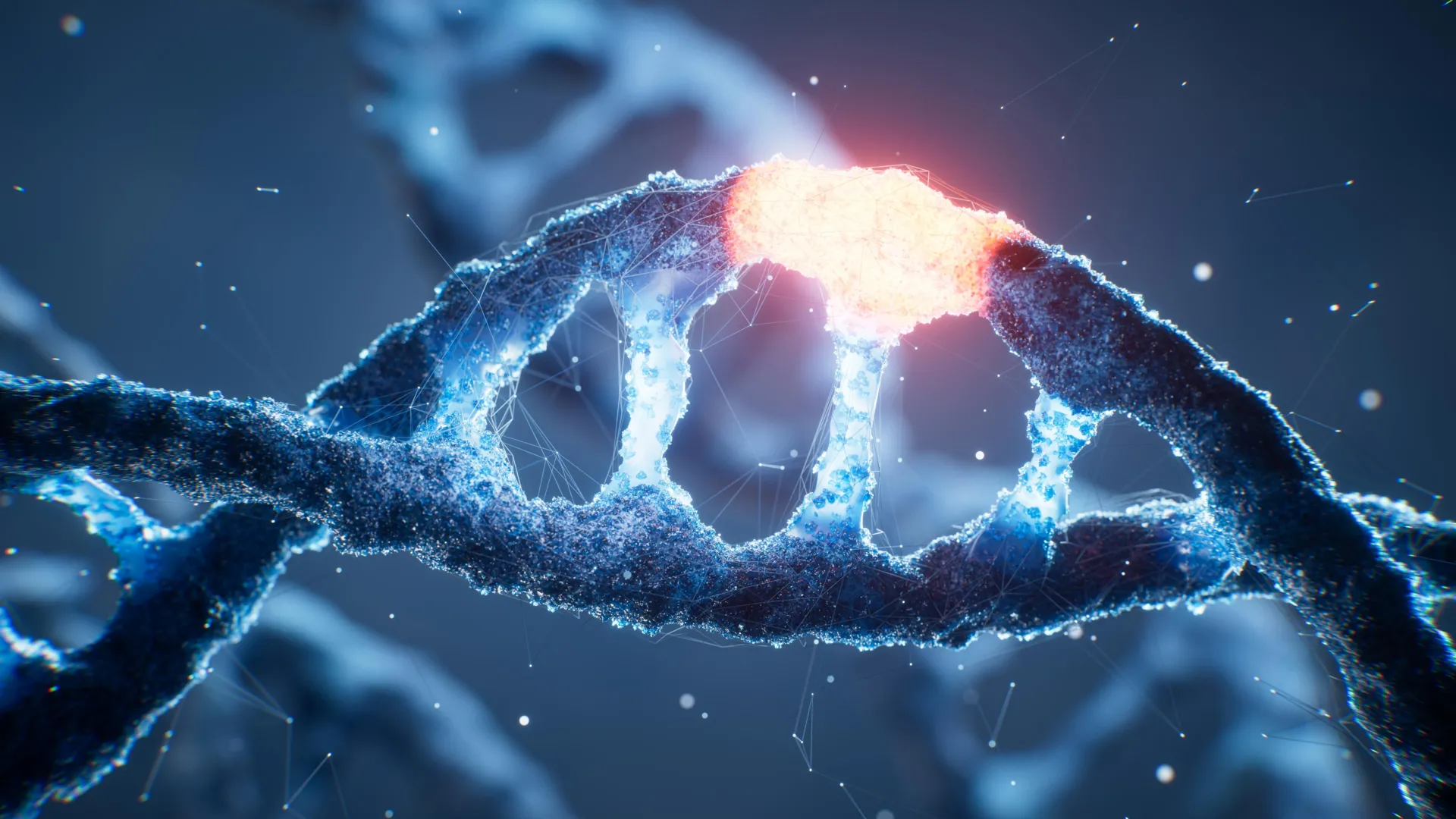
Artificial intelligence has successfully identified the specific DNA signature responsible for initiating gene expression in human cells, unlocking a fundamental mechanism of biological control.
Unlocking the Genome's Control Panel
For life to function effectively, the intricate dance of tens of thousands of genes within human DNA must be precisely choreographed. Genes, the fundamental units of heredity, need to be activated at specific moments and in particular locations to produce the essential enzymes, hormones, and proteins that sustain cellular processes. When this activation goes awry, cells can malfunction, leading to a spectrum of health issues, including various cancers. Understanding the precise mechanisms that govern gene activation is therefore paramount to unraveling the complexities of human biology and disease.
At the heart of this regulatory system lies a critical DNA element known as the 'initiator.' This initiator essentially acts as a starting signal, marking the exact point where the genetic information encoded within a gene begins its journey from DNA to a functional product. Researchers have long sought to fully understand and decode the specific DNA sequences that comprise this vital control element. Recent advancements, particularly in artificial intelligence, have now provided a powerful new lens through which to examine these elusive genomic components.
AI's Role in Decoding the Initiator Sequence
A team of scientists, led by Professor James T. Kadonaga at the University of California San Diego, has made a significant stride in this field. Their research focused on deciphering the exact DNA signature of the initiator. The process involved an extensive experimental phase, where graduate student researcher Torrey Rhyne-Carrigg and colleagues utilized high-throughput DNA sequencing techniques. This allowed them to measure the gene expression activity across an enormous dataset of approximately 500,000 distinct versions of the initiator sequence. This vast amount of data was crucial for training the subsequent computational models.
Following the experimental stage, these empirical results were fed into a sophisticated machine learning system. This form of artificial intelligence was tasked with identifying the characteristic DNA pattern associated with an active initiator. By analyzing the hundreds of thousands of different sequences and their observed activity, the AI model was able to discern the subtle, yet critical, sequence motifs that define this genetic 'on switch.' Once the model had successfully decoded this signature, the researchers applied it to the broader human genome. Their analysis revealed that roughly 60% of all human genes contain this newly identified initiator sequence. Professor Kadonaga noted that these AI models provided the first strong predictions regarding the presence or absence of the initiator in human genes, thereby decoding its fundamental DNA base sequence pattern.
Far-Reaching Implications for Medicine and Bioengineering
The ability to accurately identify and understand the initiator sequence carries profound implications for both medical research and the nascent field of bioengineering. One of the most immediate benefits lies in predicting the impact of DNA mutations. Genetic mutations can alter the sequence of DNA in various ways, and if these changes occur within or near an initiator, they could profoundly affect how a gene is expressed. By knowing the precise signature of the initiator, researchers can now anticipate how specific mutations might alter gene activity, potentially leading to a better understanding of a wide range of genetic disorders. This predictive capability could pave the way for more targeted diagnostics and, eventually, novel therapeutic strategies.
Beyond disease prediction, the insights gained from this research could also accelerate the development of synthetic biology. Promoters are DNA sequences that initiate gene expression, and the initiator is a key component of many promoters. With a clearer understanding of the initiator's characteristics, scientists could design and engineer synthetic promoters with tailored functions. Imagine being able to precisely control when and where a gene is switched on or off in a laboratory setting, or even within therapeutic applications. This could enable the creation of cells that produce specific molecules on demand, or cells that exhibit particular behaviors in response to environmental cues, opening new avenues for biotechnology and medicine.
The Synergistic Power of Experimentation and AI
This study represents a compelling example of how traditional laboratory experimentation, when combined with advanced artificial intelligence, can unlock previously inaccessible biological information. Professor Kadonaga highlighted this synergy, stating that the work is a significant step forward in the combined use of lab experiments and AI to decipher the information embedded in the sequence of DNA bases in humans. The human genome, with its approximately six billion base pairs in each cell, contains a vast and complex gene expression code that dictates when, where, and to what extent every gene should be activated or silenced. Deciphering this entire code is a monumental challenge.
While the initiator model is a relatively small, though critical, piece of this larger puzzle, it demonstrates the immense potential of AI in genomics. The ultimate goal, as expressed by Kadonaga, is to develop a comprehensive AI model for the entire gene expression code. Such a model would allow scientists to predict the activity of different gene variants across different individuals, providing an unprecedented level of personalized genetic insight. The current breakthrough, detailed in the scientific journal Genes, serves as a proof of concept and a powerful stepping stone towards this ambitious future, instilling optimism that more components of the human gene expression code will be unraveled through this combined approach.
Why it matters
This fundamental research, integrating laboratory experiments with artificial intelligence, offers significant implications for fields reliant on precision and data analysis. In the realm of AI and infrastructure, the development of sophisticated machine learning models to analyze vast biological datasets showcases the increasing demand for high-performance computing and robust data center operations. Telco providers stand to benefit from the growing need for high-speed data transmission to support distributed research teams and cloud-based AI training platforms. Furthermore, the principles of decoding complex, hidden patterns through AI have broader applications, such as optimizing network performance, predicting infrastructure failures, or even enhancing robotic systems for in-field diagnostics by enabling them to interpret complex sensor data more effectively. The ability to precisely predict the functional outcome of minute changes in a system, whether biological or technological, is a universally valuable asset emerging from such scientific breakthroughs.
More from Trends
RSS
Access Denied: Source Article Behind Paywall
The requested source article, 'Bill Gates calls for 'human reserved' jobs to protect labour force from AI' from the Financial Times, is currently behind a paywall and inaccessible.
AI's Rapid Enterprise Adoption Reveals Operational Gaps for Reliability Teams
A new study indicates that as artificial intelligence integrates more deeply into enterprise operations, Site Reliability Engineering and platform teams face escalating challenges.

Inaccessible Source Content
The provided source content is behind a paywall, preventing access to the article for rewriting.
