Cleveland Clinic Paves the Way for Enterprise AI Scribe Deployment
Cleveland Clinic and Ambience Healthcare reveal a four-pillar partnership strategy that successfully deployed AI scribes to over 4,000 clinicians in just four months.
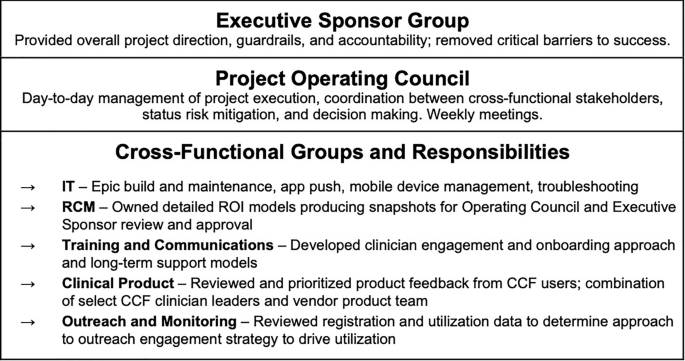
The Cleveland Clinic has established a replicable model for rapidly deploying AI-powered ambient scribes across a large healthcare system, leveraging a strategic four-pillar partnership with a vendor to benefit thousands of clinicians.
The Evolving Landscape of Healthcare Documentation
The healthcare sector is currently undergoing a significant transformation, largely driven by the integration of artificial intelligence. Among the most promising innovations are ambient AI scribes, tools designed to alleviate the substantial documentation burden that has long plagued clinicians. This administrative overhead is a well-documented contributor to burnout and reduced job satisfaction, impacting the efficiency and quality of patient care. Following the widespread adoption of electronic health records (EHR) more than a decade ago, these AI-powered assistants represent the next major leap in streamlining clinical workflows. They promise to reshape how healthcare professionals interact with technology and, more importantly, with their patients, by shifting focus from keyboard to conversation.
Ambient AI scribes are sophisticated, large language model (LLM) driven applications. They operate by passively yet consentually recording the dialogue between a patient and a clinician during an appointment. Utilizing advanced AI, these recordings are then instantaneously processed and converted into a structured, drafted encounter note within the EHR system. This draft is presented to the clinician for review, editing, and final sign-off, dramatically cutting down the time spent on administrative tasks post-consultation. Early indicators suggest a range of benefits, including a noticeable reduction in clinician burnout and cognitive load, an increase in job satisfaction, and even objective improvements in revenue generation due to more accurate and complete documentation. These advantages are often most pronounced when the tools are utilized consistently across a high proportion of eligible patient encounters. Despite the clear potential, achieving high rates of adoption and consistent usage across large enterprises remains a significant challenge for many health systems. While initial pilot programs often show promise, the blueprint for efficient, large-scale deployment that maintains high utilization and clinician satisfaction has largely been absent, until now.
Cleveland Clinic's Strategic Approach to Scaling AI
Faced with a rapidly growing market of over 100 commercial ambient AI scribe vendors, health systems are compelled to navigate complex evaluations to select the most suitable solution. The Cleveland Clinic Foundation (CCF), a global leader in healthcare with 23 hospitals and 276 outpatient locations serving approximately 80,000 caregivers worldwide, embarked on a meticulous process. Like many large organizations, CCF was grappling with clinician burnout, the heavy burden of documentation, and the potential for clinician attrition. Recognizing the transformative potential of ambient AI scribes to address these systemic issues at scale, CCF conducted an extensive internal evaluation of various AI scribe products. This rigorous assessment culminated in a strategic partnership with Ambience Healthcare. The shared objectives of this collaboration were ambitious: to achieve rapid deployment of the AI scribe solution to more than 4,000 ambulatory care clinicians within a challenging four-month timeframe, alongside continuous monitoring of key value metrics such as utilization rates, time spent on documentation, clinician satisfaction, and financial performance. This partnership also laid the groundwork for future expansion opportunities beyond the initial scope of ambulatory care.
The enterprise-wide rollout to ambulatory care began in March 2025, following a successful pilot phase. The immense task of scaling this technology rapidly and effectively across such a vast network was meticulously planned around four critical pillars. These pillars were designed to ensure not only the technical implementation but also the seamless integration of the AI scribe into daily clinical practice, maximizing its benefits and driving high adoption rates. The successful execution of this deployment provides valuable insights for other health systems looking to leverage AI to enhance operational efficiency and improve the well-being of their clinical staff.
The Four Pillars of Enterprise Deployment
The Cleveland Clinic's successful deployment strategy was built upon a robust four-pillar framework, essential for managing the complexity and scale of integrating advanced AI tools into a vast healthcare operation. These pillars represent a comprehensive approach, addressing everything from strategic oversight to continuous operational refinement.
Robust Governance Structure
Establishing a clear and effective governance structure was paramount to the success of the enterprise-wide rollout. This pillar focused on creating a collaborative framework between the Cleveland Clinic and Ambience Healthcare, ensuring alignment of objectives, clear decision-making processes, and efficient resource allocation. The governance model facilitated swift responses to challenges and opportunities, maintaining momentum throughout the rapid deployment. This involved regular joint leadership meetings, defined roles and responsibilities, and clear communication channels to ensure that both the health system's clinical needs and the vendor's technical capabilities were harmonized. This structure allowed for a shared vision and accountability, preventing silos and fostering a unified approach to integration.
Comprehensive Training and Onboarding
The second pillar focused on ensuring that clinicians were not only equipped with the AI scribe technology but also proficient in its use. This involved developing and implementing a comprehensive training and onboarding program tailored to the diverse needs of over 4,000 ambulatory care clinicians. The program went beyond basic technical instruction, emphasizing how the AI scribe could be best integrated into existing clinical workflows to maximize its benefits, such as reducing documentation time and enhancing patient interaction. Training materials were designed to be user-friendly and accessible, covering everything from initial setup and privacy considerations to advanced features and troubleshooting. The goal was to build confidence and competence, transforming potential resistance into enthusiastic adoption.
Accessible Support Systems
Recognizing that even the most intuitive technology requires ongoing support, the third pillar concentrated on establishing easily accessible and responsive support systems. This included a multi-tiered support structure, ranging from in-app assistance and dedicated helpdesks to on-site technical support for more complex issues. The support team was trained not only on the technical aspects of the AI scribe but also on clinical workflows, enabling them to provide context-aware solutions. The emphasis was on minimizing downtime and quickly resolving user queries, ensuring that clinicians could rely on the AI scribe as an indispensable tool without experiencing significant interruptions or frustrations. This proactive support model was crucial for maintaining high user satisfaction and utilization rates.
Real-time Learning Through Continuous Feedback
The final pillar centered on fostering a culture of continuous improvement through real-time learning and feedback. This involved implementing mechanisms to collect, analyze, and act upon user feedback from clinicians and administrative staff on an ongoing basis. Data on utilization, performance, and user satisfaction were systematically gathered and reviewed by the joint governance team. This feedback loop allowed for agile adjustments to the AI scribe's functionalities, training programs, and support protocols. It ensured that the deployment remained responsive to the evolving needs of the users and the clinical environment, driving iterative enhancements that refined the AI scribe experience and maximized its impact over time. This adaptive approach was instrumental in cementing the AI scribe as a valuable, evolving asset within the Cleveland Clinic's operations.
Impact and Future Outlook
The collaborative deployment between Cleveland Clinic and Ambience Healthcare proved exceptionally efficient, successfully bringing AI scribe capabilities to over 4,000 ambulatory care clinicians within a mere four months. This rapid scaling demonstrated the effectiveness of their four-pillar approach in a complex, large-scale healthcare environment. The immediate benefits observed were consistent with early studies on AI scribe utility: clinicians reported reduced documentation burden, improved efficiency, and enhanced job satisfaction. The technology enabled them to dedicate more time to direct patient care and less to administrative tasks, fulfilling a long-standing desire within the medical community.
The partnership also facilitated co-evaluation and continuous monitoring of key performance indicators, providing concrete data on utilization rates, time saved on documentation, and overall clinician sentiment. This data-driven approach allowed for real-time adjustments and optimizations, ensuring the AI scribe solution remained highly relevant and effective for its users. The ability to track these metrics rigorously underlines the commitment of both organizations to not just deploy technology, but to deploy it intelligently and accountably.
Looking ahead, the Cleveland Clinic and Ambience Healthcare are exploring further opportunities for collaboration and expansion. The success in ambulatory care sets a precedent for integrating AI scribes into other clinical settings, potentially extending their benefits to inpatient services, specialty clinics, and emergency departments. This ongoing partnership exemplifies a modern model for health system-industry collaboration, where innovation is not just introduced but strategically integrated and continuously refined. The approach detailed in the Nature journal article underscores that effective AI deployment requires more than just advanced technology; it demands a comprehensive strategy encompassing governance, education, support, and an adaptive learning loop.
Why it matters
This case study offers a crucial blueprint for AI infrastructure and operations across various industries, not just healthcare. For data center operators, telco providers, and field technicians, the Cleveland Clinic's model demonstrates the critical importance of a structured deployment strategy when integrating large-scale AI solutions. The four pillars—governance, training, support, and real-time learning—are universally applicable. Robust governance ensures that AI initiatives align with broader organizational goals and compliance standards. Comprehensive training for personnel is vital for maximizing user adoption and minimizing operational friction. Accessible and responsive support systems are non-negotiable for maintaining system uptime and user confidence, directly impacting productivity for technicians in the field or engineers managing complex data center environments. Finally, a continuous feedback loop is essential for iterative improvement, ensuring that AI tools evolve with operational needs and deliver sustained value. This integrated approach minimizes deployment risks, accelerates return on investment, and sets a high standard for how enterprises can effectively scale AI, whether it's for optimizing network performance, automating infrastructure management, or enhancing field service operations.
More from Trends
RSS
Access Denied: Unable to Generate Article Without Source Content
The provided source content leads to a paywall, preventing access to the original article text. Therefore, an original journalistic piece cannot be generated.

AI's Expanding Frontier: From Cosmic Models to Corporate Strategies
This briefing explores the latest in AI, from groundbreaking universal models to its transformative impact on global employment, finance, and geopolitics, reshaping industries.

The Rise of Ollobot: Redefining Human Connection Through AI Companionship
Ollobot, a pioneering AI companion robot, is transforming how individuals experience social interaction and support in their homes, addressing a growing need for connection.