Robotic Warfare: The Engineering Behind BattleBots' Ghost Raptor
A deep dive into the engineering challenges and strategic design decisions behind Ghost Raptor, one of BattleBots' most distinctive and complex competitors.
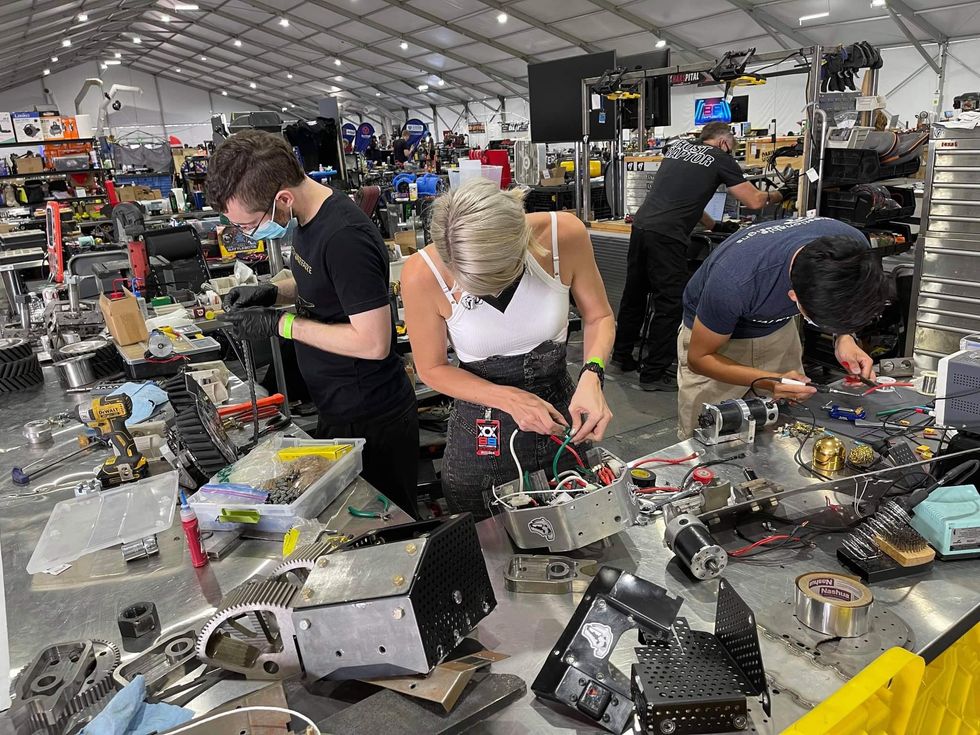
The engineering and strategic planning behind a competitive BattleBot like Ghost Raptor reveal the complex intersection of mechanical design, materials science, and robotics required for success in televised robotic combat.
The Anatomy of a Combat Robot
Competitive robot combat, exemplified by shows like BattleBots, represents a unique fusion of engineering discipline and visceral entertainment. These arenas showcase cutting-edge robotic designs, where teams push the boundaries of mechanical robustness, power efficiency, and strategic weapon integration. A prime example is the robot Ghost Raptor, known for its distinctive horizontal spinning bar weapon and its robust, yet often challenging, design philosophy. Understanding such a machine involves dissecting its core components, from its chassis to its weaponry and mobility systems.
The chassis of a battle robot must withstand immense forces. The designers of Ghost Raptor opted for a layered approach, combining high-strength steel with other impact-absorbing materials. This construction is not merely about enduring hits but also about distributing stress effectively to prevent catastrophic failure. The geometry of the robot's armor also plays a critical role, deflecting kinetic energy rather than absorbing it directly. This intricate dance between material science and structural engineering is central to a robot's survival in the unforgiving arena.
Weapon Systems and Strategic Design
Ghost Raptor's primary offensive mechanism is its horizontal spinning bar, a formidable weapon capable of inflicting significant damage. The design of such a weapon involves careful consideration of rotational mass, tip speed, and energy transfer. A heavier bar rotating at high speeds generates substantial kinetic energy, which, upon impact, can tear through opponents' armor or disable their systems. However, this power comes with inherent challenges. The gyroscopic forces produced by a rapidly spinning weapon can destabilize the robot, affecting its maneuverability and control. Engineers must implement sophisticated control systems and chassis designs to mitigate these effects, ensuring the robot remains agile despite its powerful weaponry.
Beyond the main weapon, supporting mechanisms and strategic defensive attributes are crucial. For Ghost Raptor, this includes the positioning of its weapon relative to its body, enabling both defensive deflections and offensive strikes. The ability to articulate or adjust the weapon's height can offer tactical advantages, allowing the robot to target vulnerable points on various opponent designs. The strategic integration of multiple systems, where each component complements the others, defines a truly competitive robot.
Power, Propulsion, and Control
The heart of any combat robot lies in its power and propulsion systems. Custom-designed electric motors, often paired with high-efficiency gearboxes, drive both the weapons and the wheels. The choice of motors and their associated power electronics directly influences the robot's speed, acceleration, and weapon's destructive potential. High-discharge battery packs, typically lithium polymer (LiPo) cells, provide the necessary energy, but their placement and protection within the robot are critical due to their volatility. A breach in a battery pack can lead to a fire, disqualifying the robot.
Control systems are equally vital, translating human input into precise robotic actions. Advanced radio control (RC) systems, often custom-built for enhanced reliability and range, link the human driver to the robot. Onboard microcontrollers handle the complex power management, motor control, and sensor data processing. The agility and responsiveness of a robot in the arena are direct reflections of the sophistication and tuning of its control architecture. Latency and signal interference are constant concerns, necessitating robust communication protocols and countermeasures.
The Iterative Design Process and Learning from Combat
The development of a BattleBot like Ghost Raptor is an iterative process, much like any complex engineering project. Initial designs are often conceptualized using CAD software, followed by extensive simulation to predict performance and identify potential weaknesses. Prototyping, often involving 3D printing and CNC machining, allows teams to test components and assemblies in real-world conditions, albeit in a controlled environment. However, the true test comes in the arena.
Each battle provides invaluable data. Damages sustained, tactical successes, and operational failures offer critical insights for continuous improvement. Post-match analysis involves careful examination of the robot's structural integrity, the performance of its weapon systems, and the efficiency of its power and control mechanisms. This data then feeds back into the design cycle, leading to modifications, upgrades, and sometimes complete overhauls. The evolution of Ghost Raptor, as detailed by IEEE Spectrum, showcases this adaptive engineering approach that defines success in robotic combat.
Why it matters
The rigorous engineering and real-world testing evident in competitive robotics, such as BattleBots, offer a practical laboratory for advanced robotics and AI. The demands for robust mechanical design, efficient power management, responsive control systems, and quick adaptation to failures directly parallel challenges faced in critical infrastructure, telecommunications, and data center operations. Lessons learned in designing robots to withstand extreme physical stress, minimize downtime, and operate autonomously under duress can be directly applied to field AI deployment, remote maintenance robots, and the resilient design of data center hardware. The necessity for rapid prototyping and iterative improvement also mirrors the agile development cycles increasingly adopted in AI and robotics technology fields, demonstrating how entertainment can drive significant technical innovation relevant to industrial applications.
More from Trends
RSS
Samsung and Google Unveil Smart Glasses with Extended Battery Life
Samsung and Google reveal new smart glasses from Gentle Monster and Warby Parker, boasting a 9-hour battery life and discreet design, set to launch this fall.

The Network, Not the Model: Rethinking AI's Core Competitive Edge
The next decade's most impactful AI firms may not build models, but rather the intelligent infrastructure that dictates how and where AI requests are processed.

Tesla's Optimus: A Reality Check From Robotics Experts
Robotics professionals offer a nuanced, often critical, perspective on Tesla's Optimus, highlighting both its progress and significant unaddressed challenges.