Submerged Computing: The Deep Dive into Energy-Efficient Data Centers
A deep dive into the compelling proposition of deploying data centers beneath the ocean's surface, offering significant advantages in energy efficiency, cooling, and proximity to major population centers.
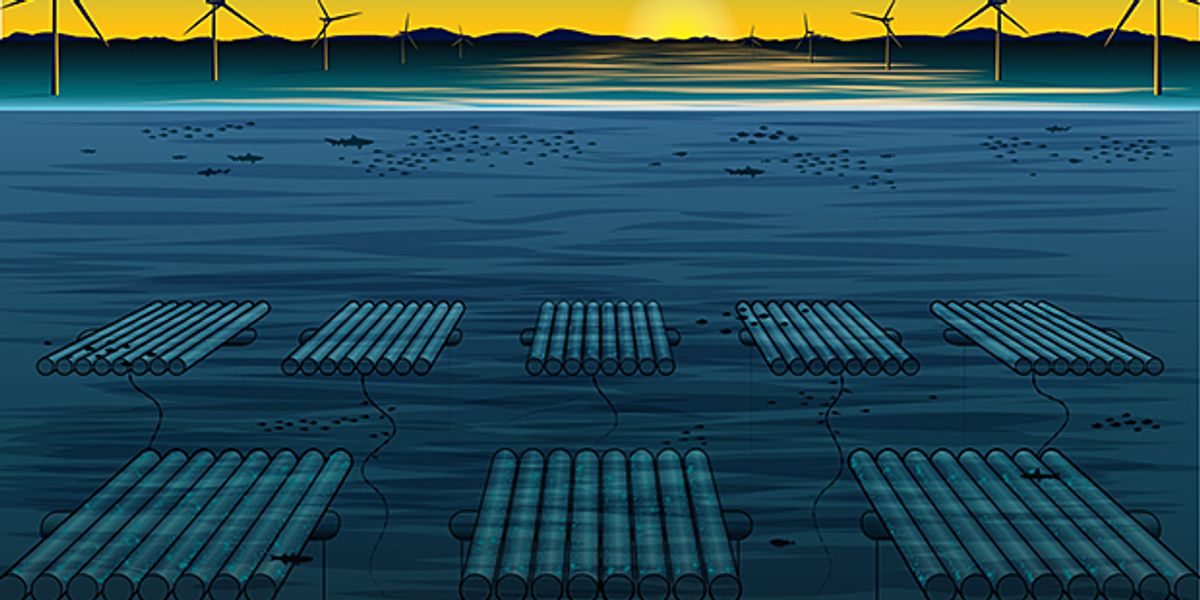
Deploying data centers underwater offers a revolutionary approach to energy efficiency and cooling, leveraging the ocean's natural thermal properties and strategic coastal proximity.
The Rising Tide of Data Demand and Energy Concerns
The digital age is characterized by an insatiable demand for data processing and storage. From streaming high-definition video and powering artificial intelligence applications to facilitating global communications and running complex simulations, the infrastructure required to support these activities is immense. At the heart of this infrastructure are data centers, sprawling facilities housing countless servers, storage devices, and networking equipment. These centers are the backbone of our connected world, but they come with a significant environmental footprint, primarily due to their prodigious energy consumption. A substantial portion of this energy, often exceeding 40 percent, is dedicated not to powering the computing hardware itself, but to cooling it. Servers generate considerable heat, and maintaining optimal operating temperatures is critical for their performance, reliability, and longevity. As the volume of data continues to explode and AI workloads become more intensive, the energy demands of data centers are projected to escalate dramatically, raising concerns about sustainability, operational costs, and the strain on electrical grids.
The industry is actively seeking innovative solutions to mitigate these challenges. Efforts range from developing more energy-efficient hardware and optimizing software algorithms to implementing advanced air and liquid cooling techniques within conventional land-based facilities. However, these solutions often face inherent limitations, particularly regarding the sheer volume of heat that needs to be dissipated. This ongoing quest for greater efficiency and reduced environmental impact has led engineers and innovators to look beyond traditional terrestrial approaches, contemplating environments that offer natural advantages for thermal management. One such radical yet increasingly compelling idea is to situate data centers beneath the ocean's surface.
The Allure of the Deep: Natural Cooling and Strategic Placement
The concept of an underwater data center leverages one of nature's most abundant and effective cooling agents: the cold depths of the ocean. By submerging sealed, pressure-resistant vessels containing servers, operators can passively cool their equipment using the surrounding seawater. This eliminates the need for expensive and energy-intensive mechanical refrigeration systems, which are a major component of a conventional data center's power consumption. The continuous flow of cold water around the submerged structures acts as an infinitely scalable heat sink, drawing heat away from the servers through heat exchangers. This passive cooling mechanism not only dramatically reduces energy expenditure but also lowers operational costs associated with cooling infrastructure maintenance and electricity bills.
Beyond cooling, the ocean offers other strategic advantages. Many of the world's largest population centers and economic hubs are located near coastlines. Placing data centers offshore can significantly reduce the physical distance between the data processing infrastructure and its users, a critical factor for minimizing latency. Lower latency translates to faster response times for web services, more seamless real-time applications, and improved user experiences. This proximity also positions these facilities near existing submarine fiber optic cable networks, which crisscross the ocean floors, providing high-bandwidth connectivity to global internet backbones. Integrating directly with these networks can streamline data transmission and reduce the need for extensive terrestrial infrastructure to connect the data center to the internet.
Engineering the Submerged Solution: Design and Deployment
Bringing the concept of underwater data centers to fruition requires overcoming significant engineering challenges. The core of such a system involves robust, watertight enclosures capable of withstanding the immense pressures of the deep sea. These enclosures must protect sensitive electronic equipment from corrosion, water ingress, and the various biological elements present in the marine environment. Advanced materials, specialized sealing techniques, and redundant safety systems are paramount to ensure the integrity and longevity of these submerged modules.
Early prototypes, such as Microsoft's Project Natick, demonstrated the viability of this approach. These experiments involved deploying sealed cylindrical or rectangular capsules containing hundreds of servers to depths of tens to hundreds of meters. The design typically incorporates a system for heat exchange, where internal warm air is transferred to a liquid coolant loop that then exchanges heat with the cold surrounding seawater. The modules are designed for easy deployment and retrieval, often requiring specialized marine vessels and remotely operated vehicles (ROVs) for installation, monitoring, and eventual decommissioning or servicing. The sealed environment itself offers an unexpected benefit: by removing human intervention and controlling the internal atmosphere, the modules can operate in an inert nitrogen environment, which reduces corrosion and other degradation factors, potentially increasing server lifespan and reliability compared to air-filled terrestrial data centers.
Overcoming Obstacles: Maintenance, Reliability, and Environmental Impact
While the advantages are compelling, operating data centers beneath the waves introduces a unique set of challenges. Maintenance, for instance, becomes a complex logistical exercise. Unlike land-based facilities where technicians can readily access equipment, submerged modules require specialized marine operations for any hardware upgrades, repairs, or replacements. This often means retrieving the entire module to the surface, which is costly and time-consuming. Future designs aim to incorporate more self-healing capabilities, remote diagnostics, and modular components that can be exchanged by ROVs, thereby minimizing the need for full retrieval.
Reliability is another critical consideration. The isolated, sealed environment must be exceptionally stable. Failures underwater are significantly more difficult and expensive to address. Redundancy in power systems, networking, and server hardware is even more crucial than in traditional data centers. Furthermore, the environmental impact of these facilities must be carefully assessed. While they offer a greener alternative in terms of energy consumption, concerns exist regarding potential thermal plumes from heat discharge, the effect of submerged structures on marine ecosystems, and the materials used in construction. Rigorous environmental impact assessments and adherence to international maritime regulations are essential to ensure these deployments do not adversely affect marine life or ocean health. Responsible design includes minimizing footprint, using environmentally benign materials, and ensuring heat discharge is diffused over a wide area to prevent localized thermal pollution.
The Future of Submerged Computing: Scalability and Integration
The successful demonstrations of underwater data center technology point towards a future where these facilities could play a significant role in global computing infrastructure. The modular nature of these designs means they can be scaled up by deploying multiple capsules or larger, interconnected underwater structures. This scalability, combined with the energy efficiency and proximity advantages, makes them an attractive option for regions with limited land, high energy costs, or a strong desire for sustainable technological solutions.
The long-term vision includes integrating these data centers into smart coastal cities and renewable energy grids. Imagine a data center powered by offshore wind or tidal energy, located just miles from a major metropolitan area, providing low-latency services while drawing zero power from the conventional grid. This synergy could create a truly sustainable and highly efficient computing paradigm. The insights gained from pioneering projects continue to refine the engineering, operational protocols, and environmental stewardship of these unique facilities. As highlighted by analyses from outlets like IEEE Spectrum, the drive for energy-efficient computing is pushing innovation into uncharted territories, with the ocean proving to be a surprisingly hospitable environment for the next generation of data infrastructure.
Why it matters
The emergence of underwater data centers holds profound implications for AI, telco, and data center operations. For AI, which demands immense computational power, these facilities offer a path to significantly lower operational costs and reduced carbon footprints due to efficient cooling, making large-scale AI training and inference more sustainable. Telecommunication providers can leverage coastal deployments to reduce network latency, enhancing services like 5G and edge computing by bringing data processing closer to users. For data center operators, this paradigm shift offers a robust, energy-efficient alternative to traditional builds, mitigating escalating energy prices and land scarcity while improving reliability in a sealed, controlled environment. It signifies a critical step towards future-proofing our digital infrastructure against growing energy demands and environmental pressures.
More from Trends
RSS
Access Denied: Unable to Generate Article Without Source Content
The provided source content leads to a paywall, preventing access to the original article text. Therefore, an original journalistic piece cannot be generated.

AI's Expanding Frontier: From Cosmic Models to Corporate Strategies
This briefing explores the latest in AI, from groundbreaking universal models to its transformative impact on global employment, finance, and geopolitics, reshaping industries.

The Rise of Ollobot: Redefining Human Connection Through AI Companionship
Ollobot, a pioneering AI companion robot, is transforming how individuals experience social interaction and support in their homes, addressing a growing need for connection.