The Silent Revolution: How Consumer AI is Remaking Healthcare Pathways
Consumer AI is moving beyond simple information, integrating deeply into healthcare pathways and redefining how patients access and navigate care, with significant implications.
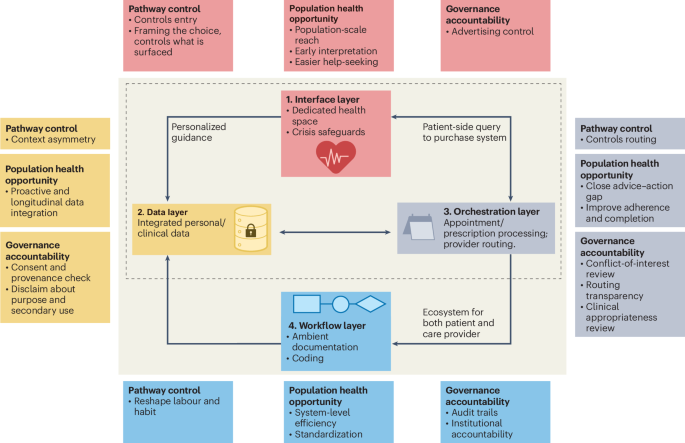
Consumer artificial intelligence is rapidly evolving from a mere information provider into a central controller of healthcare pathways, profoundly reshaping how individuals access, navigate, and complete medical care.
The Shifting Landscape of Health AI
The integration of artificial intelligence into daily life continues to accelerate, and one of the most transformative shifts is occurring within the healthcare sector. What began as AI models offering health-related information is now evolving into sophisticated systems that actively manage and direct patient care journeys. Major technology companies are no longer just providing tools, they are building comprehensive platforms that link large language models to critical components of the healthcare ecosystem, including electronic medical records, appointment scheduling systems, pharmacy fulfillment, payment processing, and clinical workflows. This profound change implies that consumer AI will increasingly dictate the sequence of steps a patient takes, from initial symptom interpretation to the completion of treatment.
This evolution is particularly significant for populations in resource-limited environments, where traditional healthcare access is often constrained. In such settings, the failure to complete necessary steps in a care pathway frequently leads to poorer health outcomes. By streamlining and automating these processes, integrated AI platforms have the potential to bridge gaps in care delivery. However, the true impact of this shift extends beyond just the performance accuracy of the AI models themselves. The critical question now revolves around who controls these increasingly centralized interfaces. These platforms will serve as the primary conduits through which symptoms are evaluated, care is routed, payments are made, and treatments are completed, making the depth of platform integration a crucial consideration for public health.
Case Studies in Integration: Tech Giants Lead the Way
To understand the practical implications of this integration, it is insightful to examine the approaches taken by prominent technology companies. Several major players are at the forefront of this movement, each developing distinct strategies for embedding AI into healthcare pathways.
OpenAI, known for its foundational large language models, has introduced initiatives such as ChatGPT Health. This system aims to provide advanced conversational AI capabilities tailored for medical queries and guidance, potentially acting as a first point of contact for individuals seeking health information or advice. By leveraging its powerful language understanding, ChatGPT Health could help users navigate complex medical terminology, understand diagnoses, or identify potential next steps in their care journey. Its integration often extends to providing links or directions to local healthcare providers or resources, thus beginning to shape pathways.
Amazon's Health AI offerings demonstrate a broader strategy, leveraging its extensive logistical and consumer-facing infrastructure. Amazon's approach often combines AI-driven insights with human-powered services, aiming to offer a seamless experience from symptom assessment to prescription delivery and virtual care. This ecosystem can connect users to telemedicine services, manage prescription refills, and even facilitate home health monitoring, effectively controlling multiple touchpoints within a patient's care pathway. The company's vast network of services allows for deep integration into various aspects of daily life, extending its reach into personal health management.
In Asia, Ant Group's Afu presents another compelling example. Building on its financial technology dominance, Ant Group has extended its platform into healthcare, creating a robust AI-powered health application. Afu leverages AI to offer personalized health advice, appointment booking, and access to medical records within a single ecosystem. Its success, particularly in regions with high smartphone penetration, highlights how digital platforms can quickly become central to health service delivery, especially when integrated with widely used payment and communication tools. This integration allows for a holistic management of health needs, from initial consultation to follow-up and financial transactions.
Anthropic, another leader in AI development, offers Claude for Healthcare, focusing on ethical and safety-conscious AI applications in medical settings. Their system is designed to assist healthcare professionals and patients with complex information, decision support, and administrative tasks. While perhaps less consumer-facing in its initial iterations compared to some others, Anthropic’s work emphasizes the potential for AI to enhance clinical workflows and ensure better adherence to medical guidelines, indirectly influencing patient pathways by improving the efficiency and accuracy of professional care.
These diverse examples illustrate a common trajectory: consumer AI is moving beyond providing isolated information to actively orchestrating healthcare processes. The depth of their integration into medical records, booking systems, pharmacies, and payment infrastructure means these platforms are increasingly becoming the gatekeepers and navigators of patient care.
Pathway-Level Accountability and Governance Challenges
The increasing depth of AI integration into healthcare necessitates a robust framework for accountability and governance. As these platforms gain more control over care pathways, questions arise regarding evaluation, procurement, and transparency. It is no longer sufficient to merely assess the accuracy or performance of an individual AI model. Instead, the focus must shift to evaluating the entire pathway that the AI facilitates or directs.
For instance, how are these AI systems procured by healthcare providers or adopted by consumers? What standards ensure that the algorithms prioritize patient well-being over other incentives, such as platform usage or specific service promotion? Transparency in how these systems route patients is also paramount. Individuals, and even clinicians, should understand the logic behind an AI's recommendations, whether it's suggesting a specialist, recommending a specific diagnostic test, or directing them to a particular pharmacy. Without this transparency, trust in these systems will be difficult to establish and maintain.
Data governance is another critical concern. These integrated AI platforms will collect vast amounts of sensitive health information, merging it with other personal data. Ensuring the privacy, security, and ethical use of this data is fundamental. Furthermore, robust exit options are necessary for both patients and providers. If a patient is dissatisfied with the AI-directed pathway or wishes to opt out, there should be clear and accessible alternatives to traditional care. Similarly, healthcare organizations should not become locked into proprietary AI ecosystems without the ability to migrate data or workflows if a particular platform no longer meets their needs or standards.
Existing regulatory frameworks, traditionally applied to medical devices or pharmaceutical products, may not be adequate for the dynamic, integrated nature of these AI platforms. The challenge lies in adapting or creating new regulations that address not just the AI models themselves, but also the entire care pathways they influence and the incentives embedded within these powerful platforms.
Emerging Consequences for Public Health
The widespread adoption and deep integration of consumer AI in healthcare are poised to generate several significant population-level consequences that warrant careful attention. These impacts extend beyond individual patient interactions and touch upon the very structure and equity of healthcare delivery.
One major consequence is the potential change in care completion rates. In resource-limited settings especially, AI platforms could significantly improve adherence to treatment plans and completion of necessary medical steps. By providing timely reminders, facilitating easier access to appointments, or simplifying prescription fulfillment, AI could reduce the instances where patients fall through the cracks of the healthcare system. This could lead to better overall health outcomes for underserved populations. However, the inverse is also possible: if AI systems are poorly designed, biased, or introduce new barriers, they could inadvertently exacerbate existing inequalities in care access and completion.
A second, profound consequence is the concentration of triage power. As AI platforms become the primary interface for initial symptom assessment and care routing, they gain immense power in determining who gets what care, when, and from whom. This shift could centralize control over healthcare decisions with the technology companies developing these platforms, rather than with traditional healthcare institutions or individual practitioners. The algorithms defining triage logic will effectively decide initial medical priorities, potentially influencing diagnostic trajectories and treatment pathways for millions. This concentration raises concerns about potential biases embedded in the algorithms, the commercial interests of the platform providers, and the overall autonomy of medical professionals.
Finally, the rise of integrated health AI creates new asymmetries in data and operational control. The companies that build and manage these platforms will accumulate unprecedented amounts of health data, giving them powerful insights into population health trends, disease patterns, and treatment effectiveness. This data could be invaluable for public health, but it also creates a significant power imbalance. Those who control the data and the operational infrastructure of these platforms will possess a unique leverage point in the healthcare ecosystem, influencing everything from research priorities to service delivery models and even health policy. This consolidation of data and control requires careful consideration to prevent monopolistic practices or the exploitation of sensitive health information.
Why it matters
The ongoing integration of consumer AI into healthcare pathways represents a fundamental shift for professionals across various sectors. For those in AI and data science, it underscores the critical importance of developing not just high-performing models, but also ethical, transparent, and robust platform architectures that can safely manage sensitive health data and guide complex human behaviors. Data center operations become increasingly vital, requiring scalable, secure, and reliable infrastructure to host these expansive AI systems and the vast amounts of health information they process. Telecommunications providers play a key role in ensuring ubiquitous, high-speed connectivity, which is essential for these integrated, often cloud-based, health AI platforms to function effectively, particularly in remote or underserved areas. Field technicians, whether installing new medical devices with AI capabilities or maintaining the network infrastructure that supports digital health, will need specialized skills to manage and troubleshoot these sophisticated systems. This evolution demands a collaborative effort across technology, healthcare, and regulatory bodies to ensure that these powerful tools genuinely enhance public health outcomes and do not inadvertently introduce new forms of inequity or risk. The future of healthcare is deeply intertwined with the responsible development and deployment of these integrated AI platforms, as discussed in the journal Nature.
More from Trends
RSS
Access Denied: Unable to Generate Article Without Source Content
The provided source content leads to a paywall, preventing access to the original article text. Therefore, an original journalistic piece cannot be generated.

AI's Expanding Frontier: From Cosmic Models to Corporate Strategies
This briefing explores the latest in AI, from groundbreaking universal models to its transformative impact on global employment, finance, and geopolitics, reshaping industries.

The Rise of Ollobot: Redefining Human Connection Through AI Companionship
Ollobot, a pioneering AI companion robot, is transforming how individuals experience social interaction and support in their homes, addressing a growing need for connection.