US Government Launches Major AI Funding Initiative Amidst Science Funding Overhaul
The US administration has unveiled a significant AI research funding program and proposed a major restructuring of federal science funding, sparking both anticipation and controversy among policymakers and researchers.
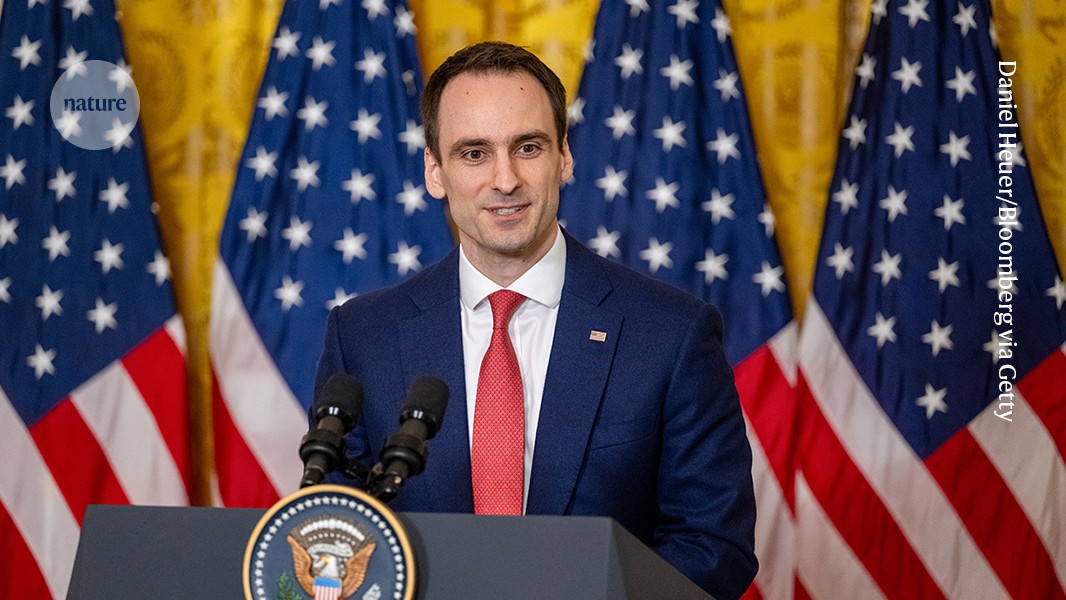
The US government is committing significant resources to artificial intelligence, simultaneously proposing a complete rethinking of how it funds scientific research across the nation.
Washington D.C. recently saw a dual focus on science policy from the White House. The president's chief science adviser released a comprehensive report outlining an ambitious new vision for federally funded research. Concurrently, some of the initial grant recipients were announced for the administration's primary artificial intelligence venture, the Genesis Mission. These developments mark a pivotal moment for US science, particularly in the realm of AI innovation.
For some time, the administration has been noted for its efforts to reduce funding for scientific areas it deemed less favorable. The recent announcements, however, highlight its proactive support for favored fields, with artificial intelligence leading the charge.
The Genesis Mission: A New Era for AI Research
The Genesis Mission, described by the administration as having an urgency and scope comparable to historical projects like the Manhattan Project, aims to propel US scientific advancement through AI. An impressive 5,000 teams put forward proposals for funding. At a summit in late July, officials revealed approximately 280 winning projects as part of the program's initial phase. These projects will explore the application of AI to diverse challenges, such as enhancing the national power grid and automating laboratory processes. Each successful team will receive a nine-month grant ranging from $500,000 to $750,000. Further opportunities exist for these researchers to apply for a second phase, a three-year program involving substantial annual funding.
One recipient, Jeremy Zucker, a computational scientist at Pacific Northwest National Laboratory in Richland, Washington, expressed his delight at being selected, emphasizing the program's competitive nature. His project focuses on modeling algal growth in ponds to optimize biofuel production.
Rethinking Science Funding: A "New Golden Age"?
However, the reception for the chief science adviser's accompanying report, titled "Science: A New Golden Age," was more varied during a congressional hearing on the same day. The report advocates for redirecting US science funding away from what it terms "legacy institutions" like universities. The adviser posited that a significant portion of the research ecosystem had become self-serving rather than supporting individual scientists. He proposed new models such as 'golden tickets,' which would empower grant reviewers to override peer decisions to fund high-risk, potentially groundbreaking proposals. During his testimony before the US House of Representatives Committee on Science, Space and Technology, he argued that US science faced stagnation and required a fundamental reevaluation of its approach to innovation.
Lawmakers' responses to these proposals were divided. Republican committee members largely supported the adviser's vision for US science. In contrast, Democrats criticized the administration's historical cuts to science budgets and agencies, alongside concerns about political interference in grant awards. One Democratic representative voiced strong opposition, stating that these policies risked setting back scientific progress.
Scientists also quickly weighed in with their critiques. An evolutionary biologist at the University of Washington expressed on a social media platform that the administration appeared intent on undermining US universities. This sentiment reflects broader tensions, as the administration and its allies have previously accused US research institutions of bias against conservative viewpoints and have linked funding decisions to perceived antisemitism in certain universities.
Grant Challenges and Funding Reductions
During the hearing, legislators also questioned the chief science adviser regarding media reports, including one from Nature, suggesting that the US National Science Foundation (NSF) intended to reallocate approximately $500 million from its existing grant divisions towards a new White House initiative. When pressed on the matter by a Californian Democratic representative, the adviser indicated he was not fully privy to those specifics, directing the query to the NSF. He did, however, reiterate the importance of the United States adopting a more focused and intentional approach to addressing significant national challenges.
Sources indicate that the NSF has indeed reallocated $300 million from two of its divisions: mathematics and physical sciences, and computer and information science and engineering. To free up these funds, which were allocated by Congress, program officers at the NSF halted approximately 150 proposals that had already passed peer review. Some proposals have been entirely withdrawn, others have seen their funding reduced, and some have been deferred to the next fiscal year.
NSF staff, who preferred to remain anonymous due to concerns about potential retaliation, believe these funds are likely being directed to a program called Grand Research Challenges, managed by the White House Office of Science and Technology Policy, which the chief science adviser oversees. A preliminary document obtained by Nature outlining these challenges reportedly identified four key areas: the future of intelligence, quantum phenomena, advanced materials and matter, and the foundations of biological design.
A spokesperson for the NSF declined to comment on internal budgetary discussions. They did state that research funds for a given fiscal year could be awarded in that year or the subsequent one, and that the NSF routinely adjusts budgets and manages its portfolios as necessary.
Why it matters
The substantial investment in AI research, coupled with a proposed reorientation of traditional science funding, has significant implications for in-field AI applications, technicians, and data center operations. The Genesis Mission's focus on areas like grid optimization and laboratory automation directly impacts the development of AI tools that technicians will use for predictive maintenance, operational efficiency, and complex diagnostics in telecommunications infrastructure and data centers. The shift towards funding high-risk, high-reward projects could accelerate breakthroughs in AI algorithms and hardware, demanding new skills from IT and network professionals. Furthermore, the reallocation of funds from established science programs to new AI initiatives could influence the talent pipeline and the foundational research that underpins future technological advancements, requiring a proactive strategy for skill development and infrastructure planning.
More from Trends
RSS
Access Denied: Unable to Generate Article Without Source Content
The provided source content leads to a paywall, preventing access to the original article text. Therefore, an original journalistic piece cannot be generated.

AI's Expanding Frontier: From Cosmic Models to Corporate Strategies
This briefing explores the latest in AI, from groundbreaking universal models to its transformative impact on global employment, finance, and geopolitics, reshaping industries.

The Rise of Ollobot: Redefining Human Connection Through AI Companionship
Ollobot, a pioneering AI companion robot, is transforming how individuals experience social interaction and support in their homes, addressing a growing need for connection.