Apple Eyes Enterprise AI Market with Bespoke Server Hardware
Apple is reportedly developing a powerful enterprise server, integrating its custom M-series chips and potentially Nvidia's networking technology, aimed at the burgeoning AI compute market.
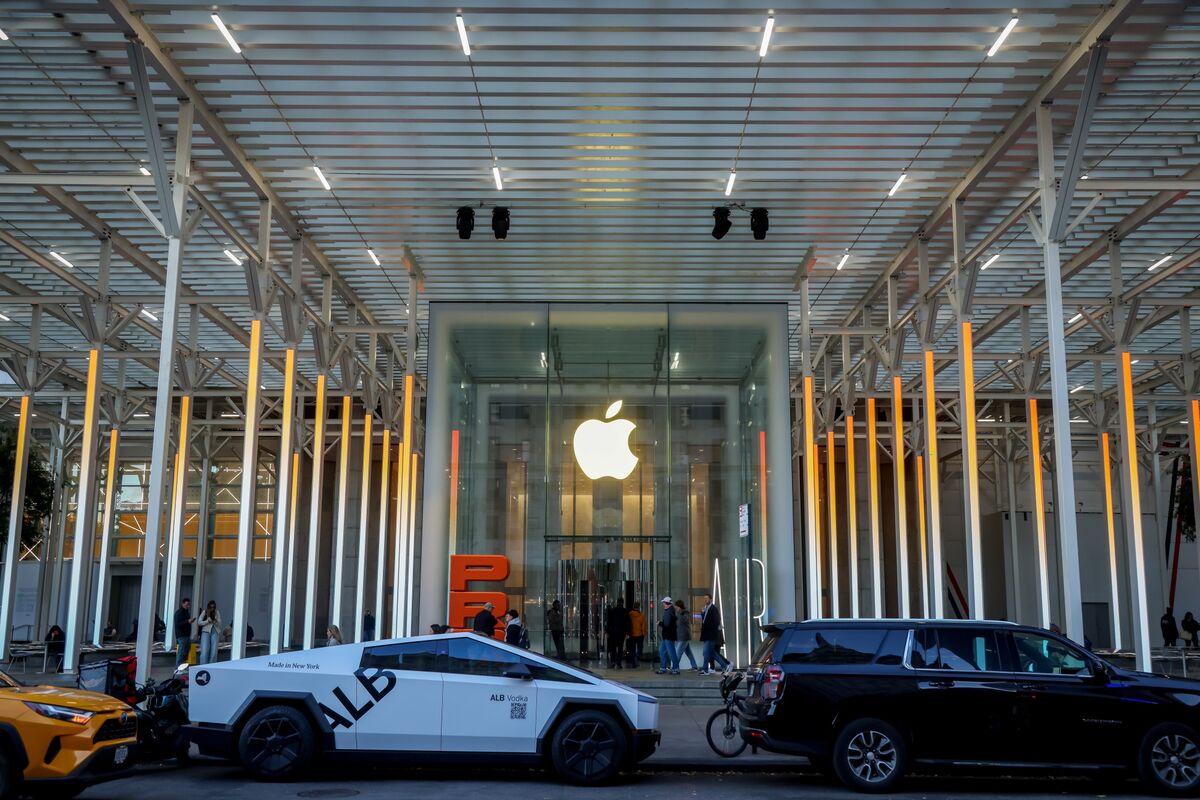
Apple is reportedly developing a dedicated enterprise server, powered by its own advanced M-series chips, signaling a strategic entry into the high-performance computing market for artificial intelligence workloads.
Apple's Strategic Shift Towards AI Infrastructure
For decades, Apple has primarily been recognized as a consumer electronics giant, a purveyor of sleek smartphones, intuitive computers, and innovative wearables. Its success has been built on an integrated ecosystem where hardware and software work seamlessly together, often leveraging custom silicon designed in-house. However, recent reports suggest a significant, albeit quiet, shift in the company's strategic focus. Apple is reportedly embarking on a venture into the enterprise server market, specifically targeting the burgeoning demand for high-performance computing required by artificial intelligence and machine learning applications. This move represents a departure from its consumer-centric core and an audacious step into a highly specialized, intensely competitive arena.
The development of an Apple-branded server is not merely an extension of its existing product lines. It signifies a calculated entry into the foundational infrastructure that underpins the modern digital economy. The servers are expected to harness the formidable capabilities of Apple's custom silicon, specifically the advanced M-series chips that have already redefined performance and power efficiency in its Mac lineup. By bringing its chip design prowess to data centers, Apple aims to offer a compelling alternative to the established players in the AI server space, which are predominantly reliant on GPUs from companies like Nvidia and CPUs from Intel and AMD.
This strategic pivot could be motivated by several factors. Firstly, the escalating costs and complexities associated with AI training and inference have created a pressing need for more efficient and powerful hardware solutions. Apple's M-series chips, known for their integrated memory architecture and optimized performance per watt, could offer a distinct advantage in this context. Secondly, it allows Apple to gain greater control over the entire vertical stack, from silicon to system architecture, for AI workloads, potentially enabling unparalleled optimization and security features. Thirdly, by directly catering to AI developers, governments, and large enterprises, Apple could tap into a highly lucrative market segment with immense growth potential, diversifying its revenue streams beyond consumer hardware and services.
Hardware Ambitions: M8 Ultra and Nvidia Collaboration
Central to Apple's enterprise server ambitions is the utilization of its proprietary silicon. The reports indicate that these servers would be powered by future iterations of the M-series chips, specifically the forthcoming M8 Ultra. The M8 Ultra, presumably an evolution of the current M2 Ultra and M4 Ultra chips, would be designed for extreme performance, capable of handling the most demanding AI computational tasks. It's speculated that these servers would be available in at least two configurations: a dual-chip variant featuring two M8 Ultra processors and a more potent, 'souped-up' edition incorporating four of these high-performance chips.
This multi-chip approach suggests an architecture designed for massive parallelism and scalability, critical requirements for large-scale AI model training and complex simulations. The 'Ultra' designation itself implies a system-on-a-chip (SoC) design that integrates not just CPU and GPU cores, but also neural engines for AI acceleration, unified memory architecture, and various other specialized co-processors, all interconnected within a single package or tightly coupled system. This integrated design is a hallmark of Apple's silicon strategy, allowing for significantly higher data throughput and lower latency compared to traditional architectures where these components are discrete.
Interestingly, the reports also highlight potential collaboration with Nvidia, a company that is currently the undisputed leader in AI accelerators. Specifically, Apple has reportedly engaged in discussions with Nvidia regarding the use of its networking equipment, including NVLink Fusion technology. NVLink is a high-bandwidth, low-latency interconnect technology developed by Nvidia to link multiple GPUs together, or in the case of NVLink Fusion, to tightly couple CPU and GPU memory spaces. While Apple is designing its own processors, the integration of Nvidia's advanced interconnect technology would suggest a pragmatic approach to leveraging best-in-class components where they complement Apple's core strengths. This collaboration could enable Apple's M8 Ultra chips to communicate with each other at unprecedented speeds, essential for scaling performance in multi-chip server configurations, and potentially allowing Apple to tap into Nvidia's established ecosystem for high-speed data transfer within and between server racks.
The Competitive Landscape and Market Entry Challenges
Apple's potential entry into the enterprise server market places it directly in competition with a well-entrenched ecosystem of hardware vendors and cloud service providers. Companies like Dell, HPE, Cisco, and Supermicro have long dominated the server hardware space, offering a wide array of configurations tailored to various enterprise needs. More specifically, in the AI server segment, Nvidia has a near-monopoly with its Hopper and Blackwell GPU architectures, which are the go-to choice for training large language models and other complex AI algorithms. Intel and AMD are also significant players, offering high-performance CPUs and increasingly capable GPUs for AI workloads.
Cloud providers such as Amazon Web Services (AWS), Microsoft Azure, and Google Cloud Platform (GCP) also offer their own optimized AI infrastructure, often featuring custom silicon like AWS's Trainium and Inferentia chips, or Google's Tensor Processing Units (TPUs). These providers also heavily utilize Nvidia GPUs, integrating them into massive scalable clusters.
Apple's path to success in this market will depend on several factors. Firstly, it must demonstrate a clear and compelling performance advantage, particularly in terms of performance per watt and total cost of ownership, over existing solutions. Its integrated architecture and optimized software stack could be key differentiators. Secondly, it will need to build out an enterprise-grade support and sales infrastructure, a very different model from its consumer retail operations. Enterprise customers demand robust reliability, extensive service level agreements, and specialized technical support that goes beyond typical consumer product warranties.
Thirdly, ecosystem compatibility will be crucial. AI development relies heavily on frameworks like TensorFlow, PyTorch, and JAX, along with a vast array of specialized libraries and tools. Apple will need to ensure that its hardware is fully compatible and performs optimally with these widely used tools, or provide compelling reasons for developers to adapt to its ecosystem. This is where a potential collaboration with Nvidia on interconnects could be strategic, hinting at a desire to play well within the broader AI hardware landscape rather than creating an entirely closed system.
Anticipated Launch and Long-Term Vision
The timeline for Apple's enterprise server project suggests a patient, long-term strategy. Reports indicate that the product is not expected to hit the market until 2029. This extended development cycle is typical for complex hardware projects, especially those venturing into new market segments. It allows Apple ample time to refine its M8 Ultra chips, optimize the server architecture, develop the necessary software and firmware layers, and establish the manufacturing and supply chain logistics required for enterprise-scale deployment. This also gives Apple time to observe and adapt to the rapidly evolving AI landscape, ensuring their eventual product meets future demands.
An entry in 2029 would position Apple to capitalize on the continued exponential growth of AI and machine learning. By then, AI models are expected to be even larger and more complex, driving further demand for specialized, energy-efficient compute resources. Governments and large organizations, increasingly investing in on-premise or sovereign AI capabilities, represent a significant market for such dedicated hardware.
Apple's long-term vision with this venture could extend beyond merely selling server boxes. It could pave the way for Apple to offer its own AI-as-a-Service, similar to what cloud providers offer, but perhaps with a stronger emphasis on privacy, security, and integration with Apple's own software platforms. This would create a complete vertical integration for AI, from the silicon level all the way to cloud services and consumer-facing applications, reinforcing Apple's characteristic control over its technology stack. This also positions Apple to provide powerful internal infrastructure for its own rapidly expanding AI initiatives, including advanced Siri capabilities and on-device machine learning for future products.
Potential Impact on AI Development and Enterprise Infrastructure
Should Apple successfully enter the enterprise AI server market, its impact could be profound. The introduction of highly optimized, energy-efficient M-series-powered servers could spur greater innovation in AI hardware, challenging existing paradigms and potentially driving down costs for advanced compute. Apple's reputation for design, integration, and user experience, while traditionally associated with consumer products, could translate into a new class of enterprise hardware that is more reliable, easier to manage, and more power-efficient than current offerings.
For AI developers, particularly those working on large-scale models, the availability of Apple's servers could offer new avenues for accelerating research and deployment. The tightly integrated architecture, if paired with robust software tools, could provide a more streamlined development environment. Governments and enterprises seeking to run sensitive AI workloads on dedicated hardware, perhaps for reasons of data sovereignty or security, might find Apple's solutions particularly appealing, especially given the company's strong stance on privacy and security.
Furthermore, Apple's entry could intensify competition, compelling existing players to innovate faster and potentially adopt similar integrated approaches. This could lead to a more diverse and robust market for AI infrastructure, ultimately benefiting the broader AI community through improved performance, efficiency, and accessibility of advanced computing resources. The fact that the report originates from Bloomberg, a respected financial news outlet, lends significant credibility to these early indications of Apple's ambitious new direction.
Why it matters
This development is highly significant for anyone in the AI field, infrastructure, and data center operations. For AI developers, it presents a potential new platform promising high performance and energy efficiency, possibly altering how large models are trained and deployed. For telco and data center operators, Apple's entry signifies a major new player in the highly specialized AI hardware market. It could mean new procurement options, different architectural considerations for rack design and power consumption, and potentially a shift towards more ARM-based solutions in the enterprise. The reported collaboration with Nvidia also highlights the criticality of high-speed interconnects and the possibility of diverse chip ecosystems converging to meet demanding AI needs. It could drive innovation across the board, pushing existing vendors to optimize their offerings further and leading to more efficient, powerful, and potentially more secure infrastructure for the next generation of AI applications.
More from Trends
RSS
Anthropic Navigates Competitive Waters with New AI Model and IPO Considerations
Anthropic is weighing the release of a new AI model to counter OpenAI's recent momentum, a strategic move ahead of its anticipated IPO amidst calls for a slowdown in AI development.

Proprietary Data from Pharma Firms Elevates AI Protein Modeling
Pharmaceutical companies are pooling their extensive, previously private protein structure data to significantly enhance AI models for drug discovery, moving beyond public datasets.

Digit 5: Setting a New Standard for Humanoid Robot Safety in the Workplace
Agility Robotics' Digit 5 represents a significant leap in humanoid robot design, prioritizing safety from the ground up, making it suitable for human-centric environments.