Humanoid Robots: Evolution Beyond Expectation
The future of humanoid robots is unfolding in ways few predicted, moving past science fiction ideals to find practical applications in diverse sectors.

Humanoid robots are set to become genuinely useful, though their applications may differ significantly from initial public perception and fictional portrayals.
Rethinking Robotic Form and Function
For decades, the concept of humanoid robots has been heavily influenced by science fiction, envisioning intelligent machines that seamlessly blend into human society, performing complex tasks with human-like dexterity and reasoning. From Rosie the Maid in The Jetsons to the androids of Star Wars, the popular imagination has largely focused on robots that mirror human appearance and capability in domestic or social settings. However, the reality of robotic development and deployment is charting a course that, while still promising substantial utility, diverges from these ingrained fantasies. Industry experts and researchers are increasingly recognizing that the true value of humanoid robots might not lie in their ability to mimic humans perfectly, but rather in their capacity to adapt to environments built for humans, filling labor gaps and enhancing productivity in specific, often industrial, contexts. This paradigm shift involves understanding that the primary advantage of a human-like form is its compatibility with existing infrastructure, not necessarily its capacity for complex social interaction or broad cognitive function.
The Practical Appeal of Human-Like Design
The fundamental rationale behind building robots in a humanoid shape is not to create companions or sophisticated personal assistants, but to enable them to operate within environments inherently designed for human occupants. Factories, warehouses, offices, and even many outdoor work sites are structured around human physical dimensions, movement capabilities, and tool interfaces. Doorways are sized for people, stairs are built for bipeds, and tools are ergonomically designed for human hands. A robot with a similar form factor can theoretically navigate these spaces and manipulate these objects without requiring extensive, costly, or time-consuming retooling of existing facilities. This inherent compatibility offers a significant advantage over other robotic forms, such as wheeled platforms or specialized industrial arms, which often necessitate a complete overhaul of work areas or dedicated, isolated operational zones. The ability to simply walk into an existing facility and perform tasks represents a substantial economic and logistical benefit for businesses looking to automate without massive initial investments.
Beyond Sci-Fi: Real-World Applications Emerge
While the dream of a fully sentient, multitasking humanoid robot remains distant, current developments are focusing on more achievable and impactful applications. Early deployments are not in households but in industrial and logistical settings. Consider warehouses where robots could retrieve items from shelves designed for human reach, or manufacturing plants where they could operate machinery with controls meant for human hands. The focus is on tasks that are repetitive, physically demanding, or performed in environments where human workers face safety risks. For instance, in disaster response, humanoids could explore dangerous areas, or in healthcare, they might assist with material handling, freeing up human staff for direct patient care. These roles capitalize on the robot's physical form to interact with human-centric tools and infrastructure, rather than on advanced reasoning or social intelligence. The key is task-specific automation within a human-friendly environment, leveraging mobility and manipulation over abstract thought.
Navigating Technological Hurdles and Public Perception
The journey to widespread humanoid robot deployment is not without its challenges. Engineering a robot that can reliably balance, navigate complex terrains, and manipulate objects with precision, all while being cost-effective, is an immense undertaking. Companies like Boston Dynamics have showcased impressive feats of mobility and dexterity, but these demonstrations often highlight highly controlled environments and specific, pre-programmed actions. The transition from controlled demonstrations to real-world, adaptable performance requires significant advances in areas like artificial intelligence, sensor fusion, and battery technology. Moreover, public perception plays a crucial role. While the initial awe inspired by humanoid robots is powerful, concerns about job displacement, safety, and ethical implications must be addressed transparently. Educating the public about the specific, practical roles these robots will fill, and how they will augment human capabilities rather than simply replace them, will be vital for broader acceptance and integration. The narrative needs to shift from futuristic novelty to pragmatic utility.
The Economic and Social Impetus
The drive towards humanoid robot development is underpinned by powerful economic and demographic forces. Many industrialized nations face aging populations and labor shortages in physically demanding sectors. Robots offer a potential solution to maintain productivity and fill these critical gaps. Furthermore, automation can lead to increased efficiency, reduced operational costs, and improved workplace safety by taking on hazardous tasks. The economic argument for investing in these technologies is becoming increasingly compelling as manufacturing, logistics, and service industries seek ways to optimize operations in a competitive global landscape. As the technology matures and costs decrease, the economic viability of integrating humanoid robots into various workflows will only strengthen, spurring further innovation and adoption. The Financial Times noted this divergence from imagination to practical application, emphasizing the economic forces at play.
Why it matters
The emergence of truly useful humanoid robots, distinct from their fictional counterparts, holds significant implications for infrastructure, telco, and data centre operations. In data centres, humanoids could perform routine tasks such as checking server status, replacing components, or managing cable infrastructure in high-density rack environments, areas often constrained by human dimensions. For telecommunications, these robots could assist field technicians with infrastructure maintenance in challenging or hazardous locations, carrying equipment, or performing inspections of remote towers and conduits. Their ability to navigate human-designed spaces means less need for specialized robotic pathways, easing deployment. This translates to increased operational efficiency, reduced manual labor in potentially dangerous settings, and optimized resource allocation, directly impacting uptime and service delivery across critical digital infrastructure.
More from Trends
RSS
Access Denied: Cannot Process Paywalled Content
The source article provided is behind a paywall. As a result, I am unable to access its content and cannot fulfill the request to rewrite it as original journalism.
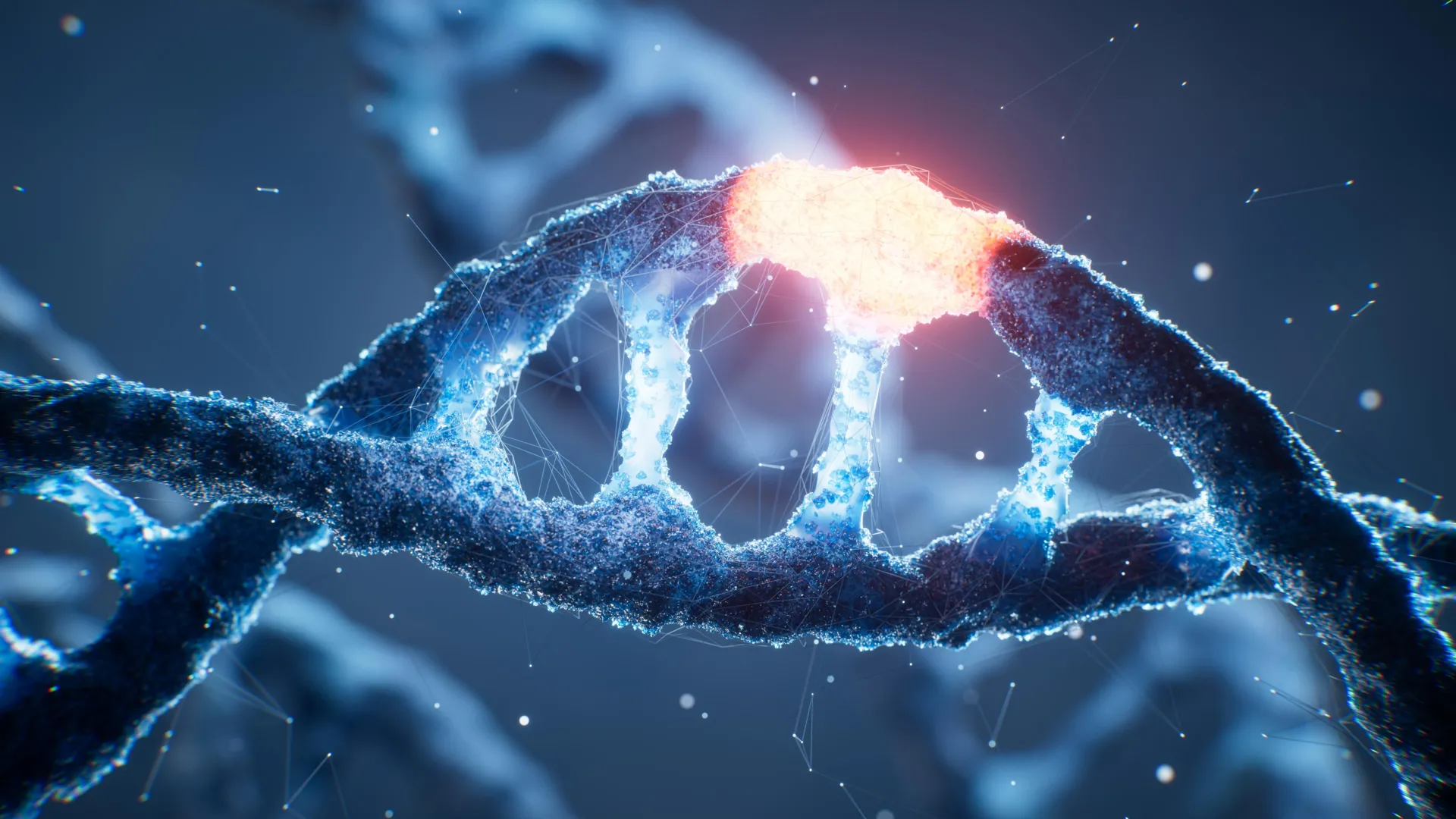
AI Deciphers Crucial DNA 'On Switch,' Advancing Genetic Understanding
Researchers harnessed AI to identify the precise DNA sequence that acts as an 'on switch' for roughly 60% of human genes, a breakthrough with implications for disease prediction and synthetic biology.

Access Denied: Source Article Behind Paywall
The requested source article, 'Bill Gates calls for 'human reserved' jobs to protect labour force from AI' from the Financial Times, is currently behind a paywall and inaccessible.