Hyundai Workers Strike Over Humanoid Robot Deployment at Production Plants
Hyundai workers in South Korea are striking over the proposed introduction of humanoid robots, marking a significant labor dispute against automation.
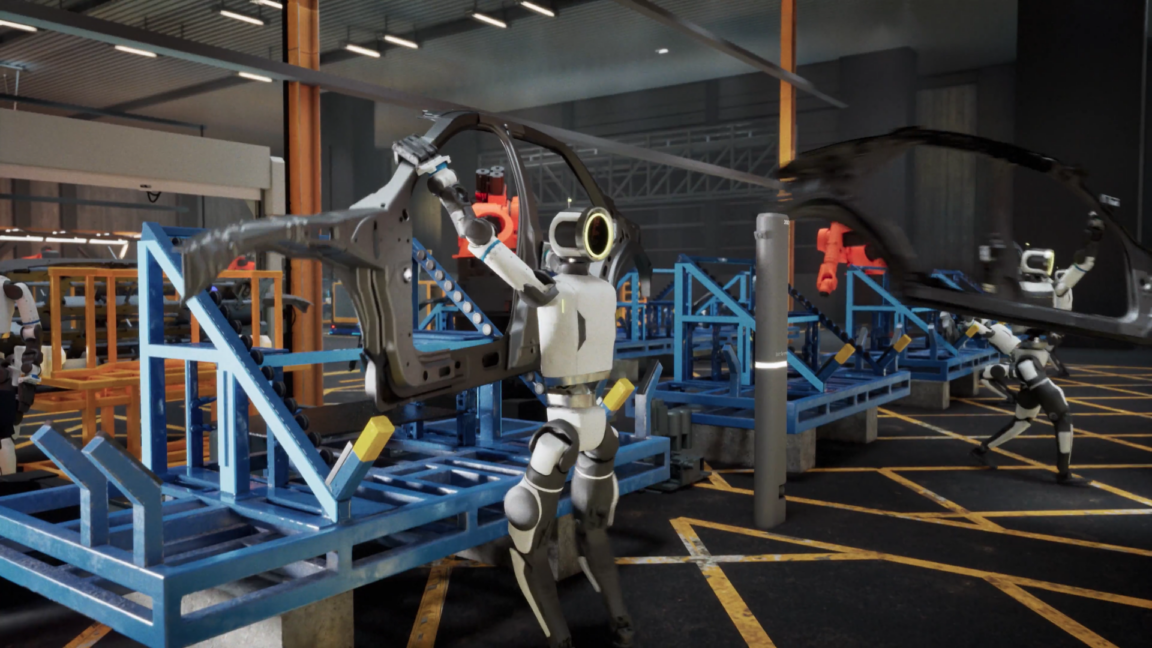
Hyundai workers in South Korea are striking, fearing job displacement and reduced work hours due to the automaker's plans to deploy humanoid robots in its factories, escalating the global debate on automation's impact on employment.
Union Confronts Automation at Hyundai
Thousands of unionized Hyundai automotive workers in South Korea have initiated partial strikes following stalled negotiations with the automaker. The core of the dispute centers on Hyundai's intention to integrate advanced humanoid robots into its manufacturing processes. This industrial action represents a notable instance of organized labor directly challenging the rising tide of robotic automation in a major industry. The walkouts, starting with two-hour early finishes at the Ulsan production complex, the world's largest automotive plant, are planned to escalate to four-hour strikes after 15 negotiation rounds failed to yield an agreement.
The workers' concerns intensified after Hyundai Motor Group unveiled the latest iteration of the Atlas humanoid robot earlier this year. Developed by Boston Dynamics, now a wholly owned subsidiary of Hyundai, the Atlas robot stands over six feet tall and can lift more than 100 pounds. Hyundai's ambitious plan involves deploying over 25,000 Atlas robots across various Hyundai and Kia manufacturing facilities, commencing with its US factories in 2028. While a timeline for deployment elsewhere has yet to be disclosed, the sheer scale of this initiative has fueled apprehension among the workforce.
Financial analyses suggest that each Atlas robot, estimated to cost around $130,000, could become cost-effective within approximately two years. Should the unit price drop to $100,000, some analysts predict that the operational cost could fall below the US federal minimum wage, significantly undercutting a typical auto worker's salary. In response, the Hyundai Motor union, representing over 39,000 South Korean workers, is demanding a transition to fixed salaries for production workers to mitigate the impact of automation on work hours. They are also seeking an increase in the retirement age from 60 to 65 and larger worker bonuses.
The Broader Trend of Humanoid Robotics in Manufacturing
Hyundai is not alone in its pursuit of humanoid robot integration. Other major automakers are also exploring or implementing similar technologies. Tesla is developing its Optimus robot for use in its electric vehicle factories, and BMW has been conducting pilot tests with Figure AI's humanoid robots at its Spartanburg, South Carolina plant. Chinese automotive giants, including BYD, are also experimenting with and even developing their own humanoid robots.
This push for humanoid robots is an extension of a long-standing trend in the global automotive industry, which has historically been a primary adopter of industrial automation. By 2021, over one million industrial robots were operating in automotive factories worldwide, accounting for a third of all robots across various industries. However, humanoid robots represent a different echelon of automation. Unlike traditional industrial robots designed for specific, repetitive tasks, humanoid robots, especially those powered by advanced AI models, are envisioned as more versatile, capable of performing a wider range of tasks while integrating more seamlessly into human-centric workspaces. This vision requires significant advancements in AI training and hardware development to achieve general-purpose autonomy.
Pioneering Automation at Metaplant America
Hyundai's initial rollout of Atlas humanoid robots is slated for Metaplant America, its electric vehicle factory near Savannah, Georgia, starting in 2028. This facility is already highly automated, utilizing over 850 robots for tasks such as unloading parts, stamping components, assembling car frames, and installing doors. Additionally, 300 automated guided vehicles navigate the plant, delivering parts and avoiding human workers. Even Boston Dynamics' four-legged robot, Spot, is deployed at Metaplant America for exterior quality inspection, using its sensors to detect defects.
Critically, the workers at Metaplant America are not currently unionized, which might suggest less immediate resistance to the introduction of humanoid robots. However, the United Auto Workers (UAW), a powerful union representing hundreds of thousands of auto workers across North America, has been actively attempting to organize the Georgia facility's workforce. Hyundai has pledged to employ 8,100 human workers full-time at Metaplant America by 2031, a commitment made as part of a $2.1 billion incentive package from Georgia state and local leaders. As of late 2025, the facility already employed over 3,800 workers.
Despite these commitments, labor unions on both continents are seeking stronger assurances from automakers. The UAW recently criticized General Motors for installing new robot arms at its Detroit electric vehicle factory after laying off over 1,300 workers, even if temporarily. During the UAW Constitutional Convention in June 2026, UAW President Shawn Fain issued a stark warning about the potential threat of humanoid robotics and widespread automation to worker employment and compensation. The coming years will serve as a crucial test to determine whether humanoid robots prove to be a truly cost-effective and viable alternative to both specialized industrial robots and human labor.
Why it matters: This strike highlights a growing tension point for the AI and robotics industry. As advanced robotics move from controlled industrial environments to more flexible, human-like roles, their impact on employment and labor relations becomes a central concern. For telco and data center operations, which rely heavily on automation for efficiency, this situation underscores the importance of proactive strategies for workforce integration, retraining, and ethical deployment of intelligent machines. The debate at Hyundai could set precedents for how AI-driven automation is negotiated in other critical infrastructure sectors globally.
More from Trends
RSS
Thinking Machines Lab Unveils Inkling, an Open-Weight AI Model from OpenAI Alums
Thinking Machines Lab, founded by former OpenAI executives, has released Inkling, its first open-weight AI model optimized for multimodal inputs and advanced reasoning.

Applied Computing's AI Model Revolutionizes Oil and Gas Operations
Applied Computing has secured $20 million in Series A funding to advance its AI foundation model, Orbital, aiming to optimize complex oil, gas, and petrochemical facilities.