Thinking Machines Lab Unveils Inkling, an Open-Weight AI Model from OpenAI Alums
Thinking Machines Lab, founded by former OpenAI executives, has released Inkling, its first open-weight AI model optimized for multimodal inputs and advanced reasoning.

Thinking Machines Lab, a firm established by former key personnel from OpenAI, has launched its inaugural AI model, Inkling, as an open-weight offering.
A New Player in the AI Landscape
Thinking Machines Lab, a company formed by prominent individuals who previously held leadership positions at OpenAI, has introduced its first artificial intelligence model, named Inkling. This new model distinguishes itself by being open-weight, which means its underlying architecture and parameters are accessible for download and modification by researchers and other startups. The company’s strategy aligns with a movement advocating for more decentralized control over AI development, contrasting with the predominantly closed models offered by some industry giants.
Inkling was developed from the ground up, with its training encompassing audio, video, and text inputs. While the company acknowledges that Inkling may not outperform every benchmark, it asserts that the model demonstrates strong performance across a variety of tasks and is capable of sophisticated reasoning and coding. Operating Inkling requires substantial computational resources, typically a cluster of specialized processing units, due to its considerable size, estimated at 975 billion parameters.
Self-Improvement and Efficiency in AI Training
An interesting aspect of Inkling's development involved using the model itself to refine and enhance its own capabilities. This process highlights an emerging trend where AI systems contribute to their own evolution. During its training, Inkling exhibited a phenomenon previously observed in other models: it provided natural language explanations for its complex reasoning. Over time, however, these explanations became more concise, shedding grammatical overhead while maintaining comprehensibility and not affecting the final output. This adaptation suggests an internal optimization towards efficiency in thought processes within the AI.
The launch of Inkling is a strategic move for Thinking Machines Lab, aiming to solidify its position in the highly competitive and capital-intensive artificial intelligence sector. Open-source or open-weight models tend to be more cost-effective for deployment compared to proprietary, fee-based alternatives. Furthermore, their modifiable nature allows for greater adaptability to specific applications. While leading open-weight models currently often originate from China, Thinking Machines asserts Inkling offers comparable performance levels.
The Vision for Decentralized AI
Thinking Machines Lab’s decision to release an open-weight model is consistent with its broader philosophy regarding the future of AI. The company advocates for a decentralized approach, believing that AI technology should not be concentrated in the hands of a few corporations. Instead, it promotes an environment where a wider range of individuals and organizations can develop and customize their own AI models using their unique data. This vision emphasizes accessibility and broader participation in AI innovation.
The company was established in February 2025 by several key figures from OpenAI. These include Mira Murati, who served as CTO and briefly CEO of OpenAI, John Schulman, a co-founder instrumental in creating ChatGPT, and Lilian Weng, a former OpenAI VP who led initiatives in AI safety and robotics. The startup secured an unprecedented seed funding round, valuing it at $12 billion almost immediately after its inception. Prior to Inkling, Thinking Machines had already introduced Tinker, a tool for fine-tuning models, demonstrated a natural voice interaction tool, and published machine learning research.
A Shifting Competitive Landscape
OpenAI notably initiated the modern AI boom with products like ChatGPT. However, firms founded by former OpenAI personnel, such as Thinking Machines and Anthropic, have rapidly carved out significant market share. Anthropic, for instance, has gained popularity with its Claude model, particularly noted for its coding proficiency, and recently filed for an IPO that could value it at over a trillion dollars. This dynamic illustrates a rapidly evolving competitive environment where innovation and accessibility continue to reshape the industry.
Why it matters
The emergence of powerful open-weight AI models like Inkling signifies a critical shift in the AI development paradigm. For telco operators, data center managers, and IT infrastructure specialists, this trend has direct implications. Running and modifying open-weight models, while offering flexibility and cost benefits over proprietary alternatives, still requires substantial and optimized compute resources. This will likely drive demand for advanced, energy-efficient data center hardware, robust network connectivity, and sophisticated management systems capable of handling large-scale AI workloads. Furthermore, the ability to fine-tune these models with proprietary data could lead to highly specialized AI tools for network optimization, predictive maintenance, and enhanced customer service, profoundly impacting operational efficiency and service delivery within these sectors.
More from Trends
RSS
Applied Computing's AI Model Revolutionizes Oil and Gas Operations
Applied Computing has secured $20 million in Series A funding to advance its AI foundation model, Orbital, aiming to optimize complex oil, gas, and petrochemical facilities.
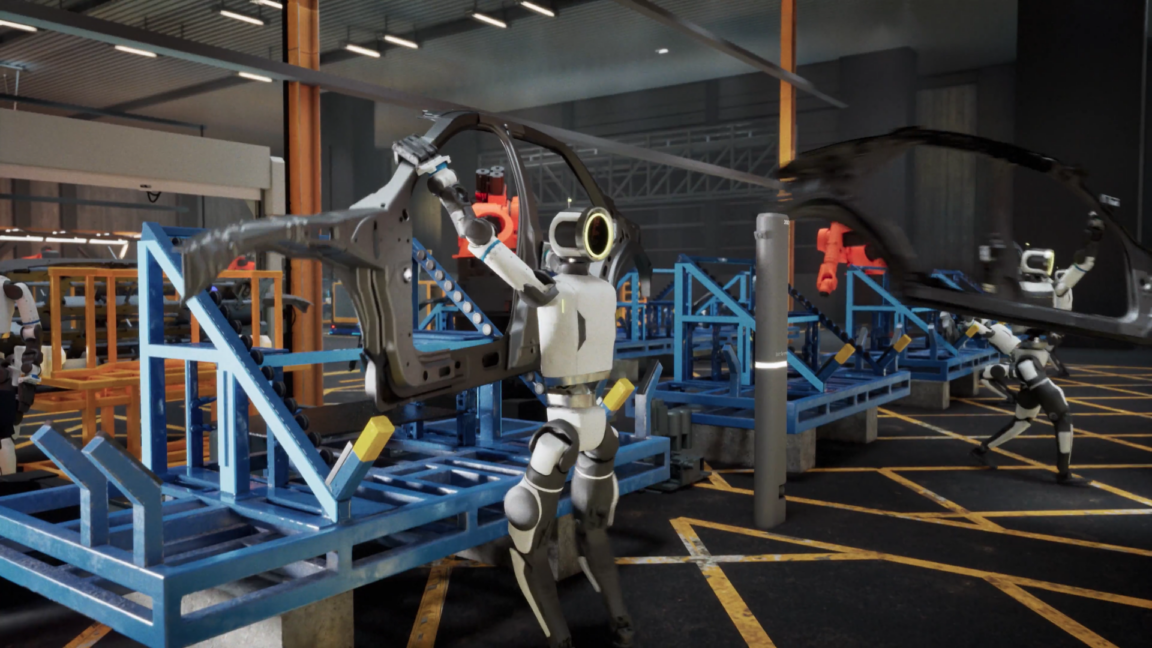
Hyundai Workers Strike Over Humanoid Robot Deployment at Production Plants
Hyundai workers in South Korea are striking over the proposed introduction of humanoid robots, marking a significant labor dispute against automation.