AI Model NeuroVFM Revolutionizes Neuroimaging Diagnostics
A new AI model, NeuroVFM, trained on millions of clinical scans, demonstrates superior diagnostic accuracy and efficiency in neuroimaging compared to existing models.
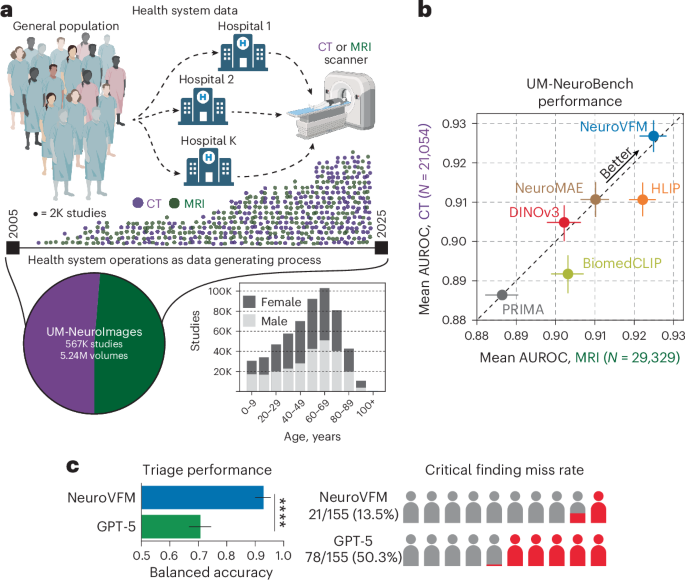
A new AI model, NeuroVFM, trained directly on extensive clinical imaging data, offers significant advancements in neuroimaging diagnosis and preliminary report generation.
The Power of Clinical Data Training
Recent advancements in artificial intelligence are poised to transform medical diagnostics, particularly in the complex field of neuroimaging. A groundbreaking development involves a three-dimensional visual foundation model, dubbed NeuroVFM, which has been directly trained on a massive dataset comprising 5.24 million routine clinical computed tomography (CT) and magnetic resonance imaging (MRI) series. This extensive training allows the model to develop a sophisticated understanding of both neuroanatomy and various disease pathologies.
Unlike many foundation models that rely on broad internet data or a mix of public and medical sources, NeuroVFM's exclusive focus on real-world clinical imaging data from health system archives is a key differentiator. This approach has enabled it to achieve state-of-the-art diagnostic capabilities, surpassing the performance of models trained on less specialized or curated datasets. The model's ability to learn from such a vast and specific clinical repository means it internalizes patterns and nuances that are directly relevant to patient care, leading to more accurate and reliable interpretations.
Enhancing Diagnostic Accuracy and Efficiency
The immediate impact of NeuroVFM is its enhanced diagnostic performance. By processing millions of scans, the AI system has learned to identify subtle indicators of neurological conditions that might be challenging for human interpretation alone, or that could lead to variability between different human experts. This translates into more consistent and potentially earlier detection of diseases affecting the brain and nervous system.
Beyond diagnosis, the model has demonstrated its utility in real health system environments by facilitating preliminary report generation and patient triage. This capability can significantly streamline workflows in busy clinical settings. Radiologists and other medical professionals can receive an AI-generated initial assessment, allowing them to focus their expertise on complex cases and critical decisions, ultimately reducing diagnostic turnaround times and improving patient management. The system acts as an intelligent assistant, flagging abnormalities and providing an initial summary, which can then be reviewed and finalized by a human expert.
The Importance of High-Quality, Relevant Data
The success of NeuroVFM underscores a critical principle in AI development: the quality and relevance of training data are paramount. While large language models and other AI systems have shown impressive general capabilities when trained on vast internet data, specialized applications like medical diagnostics demand data that is precisely aligned with the task at hand. Clinical imaging data from health systems provides this specificity, capturing the full spectrum of patient variations, disease manifestations, and imaging protocols encountered in real medical practice.
This focused training approach allows NeuroVFM to develop a shared representation of neuroanatomy and disease that is highly granular and clinically pertinent. It moves beyond superficial pattern recognition to a deeper understanding of underlying biological structures and pathological changes. This kind of nuanced understanding is what allows the model to differentiate between various conditions and to pinpoint areas of concern with high precision.
Future Implications for Healthcare Systems
The deployment of models like NeuroVFM heralds a new era for healthcare systems, particularly in specialties reliant on complex imaging. The potential to improve diagnostic accuracy, expedite reporting, and optimize patient flow has far-reaching implications. For instance, in areas with shortages of specialist radiologists, AI models could help bridge the gap by providing reliable initial analyses, enabling quicker patient routing to appropriate care pathways.
Furthermore, the continuous learning potential of such foundation models means they can evolve and improve as more clinical data becomes available. As healthcare systems continue to digitize and archive patient data, these models can be continually refined, leading to an ever-improving standard of care. The modular nature of foundation models also suggests that the core representations learned by NeuroVFM could be adapted for other neuroimaging tasks or even integrated into broader multi-modal AI systems that combine imaging with other patient data like electronic health records and genetic information.
Contrasting with Generalist AI Approaches
The distinction between NeuroVFM and generalist foundation models is significant. While models trained on diverse public internet and medical data aim for broad applicability, they may lack the deep, specific expertise required for highly specialized tasks such as identifying subtle neurological lesions. NeuroVFM's superior performance in diagnosis, preliminary report generation, and triage stems directly from its training on a domain-specific dataset that mirrors the challenges and complexities of actual clinical practice. This demonstrates that for critical applications like medical diagnosis, specialized, high-fidelity data is often more valuable than sheer volume from heterogeneous, less curated sources. This research, highlighted by an article in Nature, indicates a clear path forward for AI in medicine: leveraging vast, specific institutional data for targeted, high-impact applications.
Why it matters
For AI, technicians, and data centre operations, the development of NeuroVFM illustrates several critical trends. Firstly, it underscores the immense value of large, high-quality, domain-specific datasets for training AI models, particularly in fields like medicine where accuracy is paramount. This creates a demand for robust data infrastructure and secure, efficient data management within healthcare systems. Secondly, for technicians, particularly those involved in medical imaging, AI tools like NeuroVFM will augment their capabilities, potentially reducing workload on routine tasks and allowing them to focus on more complex cases and quality assurance. Finally, the processing and storage of 5.24 million 3D imaging series require substantial computational resources, highlighting the increasing strain on data centres to provide the necessary power and cooling for advanced AI training and inference. Telco infrastructure is also crucial for transmitting these large datasets rapidly and securely between medical facilities and processing hubs. This research demonstrates a tangible pathway for AI to directly improve patient outcomes, but it is deeply reliant on sophisticated underlying digital infrastructure and skilled technical personnel.
More from Trends
RSS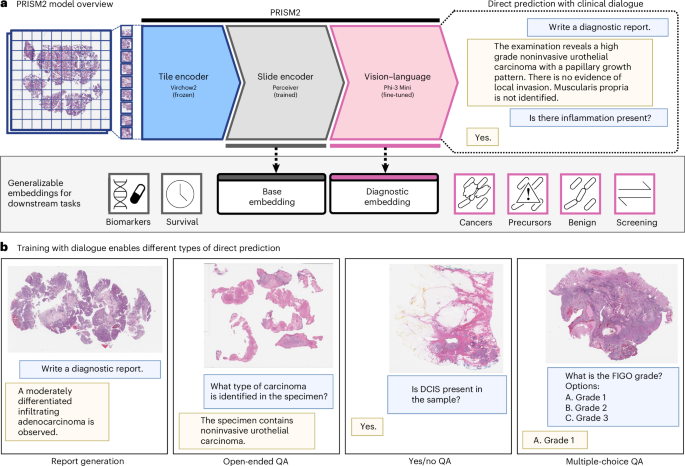
PRISM2: Bridging Pathology Images and Clinical Dialogue for Advanced Cancer Diagnostics
A new multimodal AI model, PRISM2, integrates vast pathology slide data with clinical reports to achieve human-level diagnostic accuracy in cancer detection.
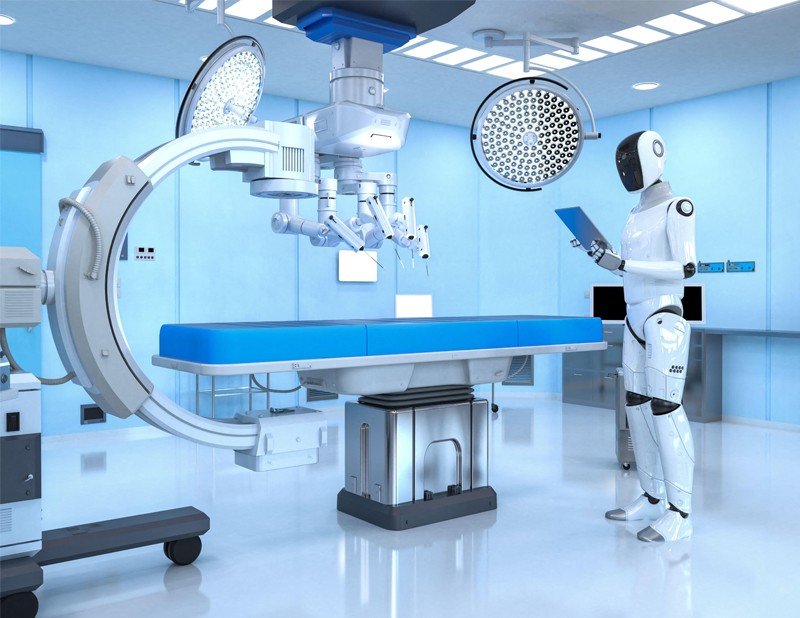
Humanoid Robots Achieve Surgical Success in Animal Trials
New research demonstrates that humanoid robots can successfully perform complex surgical procedures in animal models, pushing the boundaries of robotic application in healthcare.

Robotics Advances: From Lab Demonstrations to Real-World Applications
Recent developments in robotics showcase advanced capabilities in humanoid and quadrupedal robots, moving beyond controlled environments to practical tasks.