Digit Robot Demonstrates Enhanced Mobility and Task Execution with Couch Relocation
Agility Robotics' bipedal humanoid, Digit, showcases its advanced capabilities by autonomously moving a couch, highlighting progress in robotic manipulation and navigation.

Agility Robotics' bipedal robot, Digit, recently demonstrated its evolving capabilities by independently reconfiguring a living space, including the repositioning of a full-sized couch.
Advancements in Autonomous Manipulation
Recent demonstrations by Agility Robotics, a leading innovator in bipedal locomotion, have showcased the significant progress made with their Digit robot platform. The latest video footage highlights Digit's capacity for complex manipulation and environmental interaction, specifically its ability to move a sofa across a room. This task, seemingly simple for a human, presents a multitude of challenges for autonomous systems, involving object recognition, path planning, force exertion, and maintaining balance while handling an unwieldy load. The success of this operation underscores the maturation of robotic control systems and sensor fusion technologies.
Traditionally, tasks requiring fine motor skills, dynamic balance, and adaptive interaction with objects of varying mass and form factors have been significant hurdles for humanoid robots. Digit's performance suggests that these barriers are steadily being overcome, pushing the boundaries of what these machines can achieve in unstructured environments. The robot's smooth, coordinated movements, even when faced with the inherent difficulties of gripping and shifting a large piece of furniture, reflect a sophisticated integration of hardware and software.
The Evolution of Bipedal Locomotion
Agility Robotics has been at the forefront of developing robots that mimic human gait and balance, aiming to create machines that can operate effectively in environments designed for people. Digit, with its two legs and torso, is engineered to navigate diverse terrains and obstacles, making it suitable for a wide range of applications from logistics to hazardous inspections. The ability to autonomously handle and relocate substantial objects like a couch is a natural progression of its design philosophy.
This capability extends beyond mere novelty. It indicates an improved understanding and implementation of dynamic stability algorithms, allowing the robot to adjust its center of gravity and foot placement in real-time as it applies force to an object. Furthermore, the robot must interpret the object's resistance and movement, adapting its actions accordingly. Such advanced control is crucial for any future widespread deployment of humanoid robots in practical settings.
Practical Applications and Future Implications
While moving a couch might seem like a niche application, the underlying technologies demonstrated have broad implications. In logistics and warehousing, robots capable of rearranging inventory, loading and unloading odd-shaped packages, or even setting up temporary workstations could significantly boost efficiency and reduce human labor in strenuous or repetitive tasks. The ability to manipulate large, soft, or irregularly shaped items opens up new avenues for automation that were previously inaccessible to rigid, wheeled, or tracked robots.
Beyond industrial settings, these advancements hint at a future where robots could assist in disaster relief, home elder care, or even retail, performing tasks that require both mobility and dexterous interaction with the physical world. The precision and adaptability shown by Digit in handling the couch are indicative of a growing capacity to integrate seamlessly into human-centric environments, performing utility functions that require a degree of physical intelligence.
Engineering Challenges and Solutions
Executing a task like couch relocation involves a confluence of complex engineering challenges. Perception systems must accurately identify the couch, estimate its dimensions, weight distribution, and potential grip points. Planning algorithms then generate a series of movements that ensure the robot maintains balance, avoids collisions, and successfully maneuvers the object to its new location. Force control is critical to apply enough push or pull without damaging the object or losing stability.
The developers have likely iterated on various control strategies, incorporating feedback from vision sensors, proprioceptive sensors within the robot's joints, and force-feedback sensors in its manipulators. The seamless execution observed suggests a highly refined control architecture capable of robust performance even under unexpected variations in friction or object movement. This level of autonomy represents a significant engineering achievement, as noted by observers at IEEE Spectrum.
Why it matters
For in-field AI applications, technicians, telco, and data center operations, the advancements demonstrated by robots like Digit hold substantial promise. A robot capable of sophisticated manipulation and navigation in dynamic environments could revolutionize maintenance and infrastructure tasks. Imagine robots autonomously deploying or reconfiguring physical hardware within a data center, moving heavy server racks, or installing cabling in complex layouts. For field technicians, such robots could assist with heavy lifting, transporting specialized tools across challenging terrain, or performing repetitive manual tasks, freeing human experts to focus on more complex diagnostic and problem-solving activities. This shift towards more physically intelligent AI agents reduces operational risks, enhances efficiency, and opens up possibilities for automation in physically demanding or hazardous conditions.
More from Trends
RSS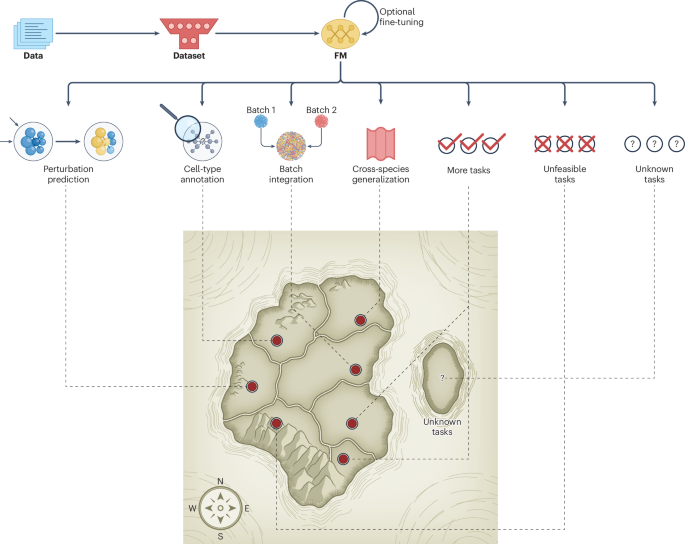
Rigorous Evaluation: The Imperative for Biomedical Foundation Models
Evaluating large biomedical AI models presents unique challenges beyond traditional computational biology. Establishing robust, transparent, and community-driven benchmarking is crucial.

Ensuring Accountability as AI Transforms Scientific Discovery
Artificial intelligence is revolutionizing scientific research, from astronomy to drug development. However, building public and scientific trust requires transparency and human oversight.

Robotic Evolution: Autonomous Systems Redefine Warehouse and Logistics Efficiency
New advancements in autonomous robotics, particularly in warehouses and drone delivery, are ushering in an era of unprecedented efficiency, adaptability, and safety.