Rigorous Evaluation: The Imperative for Biomedical Foundation Models
Evaluating large biomedical AI models presents unique challenges beyond traditional computational biology. Establishing robust, transparent, and community-driven benchmarking is crucial.
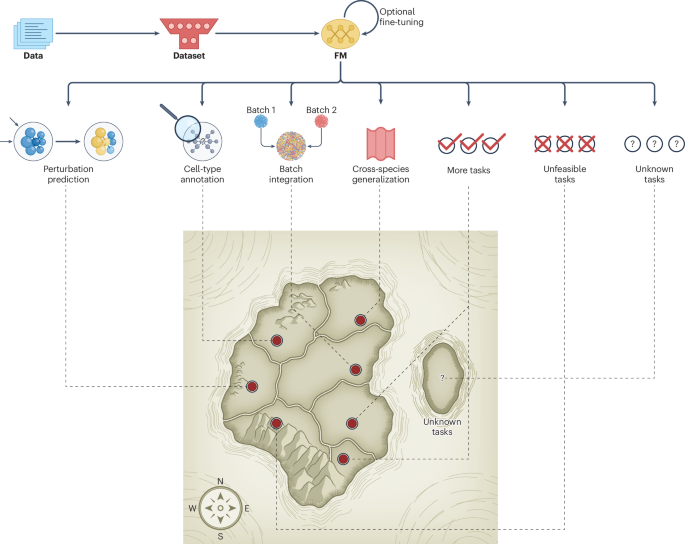
Evaluating large, versatile AI models in biomedicine demands a fundamentally new approach to benchmarking, moving beyond traditional methods to ensure scientific rigor and trustworthiness.
The New Frontier of Biomedical AI Assessment
Computational biology has long relied on clear evaluation standards to validate new methods, ensuring their reproducibility, generalizability, and reliability. Historically, assessing algorithms designed for specific tasks, such as predicting patient outcomes or the results of biological experiments, allowed for relatively straightforward measurement of accuracy and performance. However, the rise of powerful, all-encompassing artificial intelligence systems, known as foundation models, introduces an unprecedented level of complexity to this evaluation process, particularly within the biomedical field. These sophisticated models, often trained on vast and diverse datasets, are designed to capture the fundamental underlying patterns within biological data. In essence, they are parameterized representations of the very phenomena they aim to understand and predict. This inherent characteristic makes their assessment profoundly different from that of more narrowly focused algorithms, necessitating a re-evaluation of established benchmarking practices.
Rethinking Model Evaluation: Beyond Utility
The fundamental nature of foundation models means they are not merely tools to solve specific problems, but rather embody a deeper understanding of the data's inherent structures. This raises critical questions about how their limitations can be identified and measured. Traditional evaluation metrics, which often focus on a model's utility or predictive power for a predefined task, may fall short when attempting to gauge the comprehensive capabilities and potential biases of a foundation model. The scientific community must engage in a broader discussion: should these models be assessed solely on their practical applications, or is there a deeper epistemological value to consider? Can they be definitively refuted or verified in the same way a scientific hypothesis might be? These philosophical questions underscore the need for new principles to guide their benchmarking, moving beyond simple performance metrics to address the broader scientific implications of their design and deployment.
The Unique Challenges of Foundation Models
Unlike traditional machine learning models, which are typically trained for a singular purpose, biomedical foundation models are pre-trained on expansive, diverse datasets to learn broad representations. They can then be adapted to a wide array of downstream tasks, from drug discovery to disease diagnosis. This versatility, while powerful, makes conventional benchmarking difficult. A model that performs well on one specific task might still harbor biases or inaccuracies that emerge in a different context. Furthermore, the sheer scale and complexity of these models, often containing billions of parameters, make them opaque. Understanding why they make certain predictions, and whether these predictions are based on genuine biological insights or spurious correlations, is a significant challenge. Ensuring that these models are not merely statistical mimics but truly capture biological principles requires a more comprehensive and nuanced approach to validation.
Principles for Robust Benchmarking
To address these challenges, several guiding principles should inform the benchmarking of biomedical foundation models. First, transparency is paramount. The datasets used for training and evaluation must be openly accessible, diverse, and representative of real-world biological variability, helping to mitigate biases and improve generalizability. Second, the evaluation metrics themselves need to evolve. Instead of focusing solely on accuracy for specific tasks, benchmarks should incorporate measures of a model's ability to explain its reasoning, its robustness to noisy or adversarial data, and its capacity to generalize to novel biological scenarios not seen during training. Third, reproducibility and replicability must be prioritized. The scientific community needs standardized protocols and independent validation efforts to ensure that reported performance can be consistently achieved and verified by others. This includes careful attention to data leakage, a common issue in machine learning where information from the test set inadvertently influences model training, leading to inflated performance estimates.
Community-Driven Assessment and Collaboration
The responsibility for rigorous benchmarking cannot fall to individual research groups alone. A concerted, community-wide effort is essential. Drawing inspiration from successful initiatives in other areas of computational biology, such as the Critical Assessment of protein Structure Prediction (CASP) for evaluating protein folding algorithms or the Dialogue for Reverse-Engineering Assessment and Methods (DREAM) challenges, researchers can establish collaborative platforms. These platforms would facilitate independent, blind assessments of foundation models against shared, challenging datasets and tasks. Such collaborative endeavors not only provide objective evaluations but also foster innovation by identifying areas for improvement and promoting best practices. The Nature Methods article underscores that the collective scientific community has a vital role in setting standards, developing comprehensive benchmarks, and ensuring the trustworthiness and ethical deployment of these transformative AI technologies in biomedicine.
Why it matters
The development of robust benchmarking for biomedical foundation models is critical for ensuring the reliability and trustworthiness of AI in sensitive fields like healthcare and biotechnology. For in-field AI applications, particularly in diagnostics or treatment recommendations, the ability to rigorously validate these models translates directly into patient safety and efficacy. Technicians and data center operations professionals, who manage the immense computational resources required for training and deploying these models, benefit from standardized evaluations that guide resource allocation and highlight efficient, accurate architectures. The integrity of these models affects decision-making from the lab bench to clinical settings, making thorough, community-validated benchmarking an indispensable requirement for the responsible advancement of AI in biomedicine.
More from Trends
RSSDigit Robot Demonstrates Enhanced Mobility and Task Execution with Couch Relocation
Agility Robotics' bipedal humanoid, Digit, showcases its advanced capabilities by autonomously moving a couch, highlighting progress in robotic manipulation and navigation.

Ensuring Accountability as AI Transforms Scientific Discovery
Artificial intelligence is revolutionizing scientific research, from astronomy to drug development. However, building public and scientific trust requires transparency and human oversight.

Robotic Evolution: Autonomous Systems Redefine Warehouse and Logistics Efficiency
New advancements in autonomous robotics, particularly in warehouses and drone delivery, are ushering in an era of unprecedented efficiency, adaptability, and safety.
