HPE Surges on AI Demand, Navigates Supply Chain Headwinds
Hewlett Packard Enterprise significantly raised its financial forecasts, driven by robust AI-related demand, despite facing ongoing supply chain constraints.

Hewlett Packard Enterprise (HPE) has significantly revised its financial outlook upwards, propelled by robust demand for its AI-centric server and networking solutions, even as persistent supply chain bottlenecks continue to challenge its operations.
The AI Inflection Point for HPE
The technology sector is currently experiencing a profound transformation, with artificial intelligence emerging as a primary catalyst for growth across various segments. Hewlett Packard Enterprise, a long-standing provider of computing infrastructure, finds itself at the forefront of this shift. The company recently reported financial results that not only surpassed analyst expectations but also led to a substantial increase in its annual forecasts for both revenue and earnings. This positive momentum is largely attributed to the escalating demand for high-performance computing necessary to power AI workloads, encompassing everything from advanced servers to specialized networking equipment.
Cloud service providers, large enterprises, and various organizations are all significantly increasing their investments in AI infrastructure. This includes upgrading existing server fleets and expanding data center capabilities to handle the intensive computational requirements of AI models and applications. HPE's portfolio, particularly its high-powered servers and integrated networking solutions, is directly benefiting from this surge. The company’s financial leadership has indicated that the market's embrace of AI, especially within the enterprise segment, is solidifying, suggesting that this trend will continue to fuel growth well beyond the current fiscal year. The strategic investments being made now are not just for immediate capacity but are foundational for future AI development and deployment across industries.
Navigating Persistent Supply Chain Obstacles
Despite the overwhelmingly positive demand signals and upward revisions in financial guidance, HPE is not immune to the broader challenges impacting the global technology supply chain. Following the announcement of their strong quarterly results, the company's stock experienced a modest dip in extended trading, a reaction primarily linked to ongoing concerns about the availability of critical components. While demand is at an all-time high, the ability to fully meet that demand is hampered by various constraints.
Marie Myers, HPE's Chief Financial Officer, shed light on the specifics of these supply challenges in a recent discussion. She highlighted memory components as the primary bottleneck, a critical element for high-performance AI systems. Following memory, other constrained components include NAND flash storage, central processing units (CPUs), and various types of drives. Recognizing the strategic importance of securing these vital parts, HPE has proactively engaged in establishing longer-term supply agreements with its vendors. This move aims to enhance access to components and mitigate future disruptions, although the immediate impact of these agreements may take time to fully materialize. The company's inventory levels reflect this proactive purchasing strategy, showing a significant increase over the past year. This accumulation of inventory, driven by higher commodity costs and strategic acquisitions to support growing orders and backlogs, underscores the competitive environment for acquiring components essential for AI infrastructure production. The prevailing sentiment from HPE is clear: the current demand for their products far exceeds the available supply, indicating a significant untapped market potential if supply chain issues can be effectively resolved.
Financial Performance Exceeds Expectations
HPE's latest financial report painted a picture of robust performance. For the third quarter, the company reported a substantial 33.7% increase in revenue, reaching $12.21 billion. This figure comfortably surpassed the $11.91 billion anticipated by financial analysts. Similarly, adjusted earnings per share (EPS) came in at $1.11, outperforming the consensus estimate of 93 cents. These strong quarterly results provided a solid foundation for the upward revisions to the company's full-year outlook.
Looking ahead, HPE raised its fiscal year 2026 revenue growth forecast to a range of 34% to 37%, a notable increase from the previous projection of 29% to 33%. Concurrently, the adjusted earnings per share forecast for 2026 was also elevated, moving from an earlier range of $3.35 to $3.45 to a new estimate between $3.75 and $3.85. The positive outlook extends into fiscal year 2027 as well, with revenue growth now projected at 13% to 17%, up from 8% to 12%, and adjusted EPS growth expected to be between 16% and 20%, an improvement over the prior 12% to 16% forecast. These revised projections underscore the company's confidence in the sustained growth of the AI market and its own strategic positioning within it. HPE's performance echoes the positive forecasts recently issued by competitors such as Dell and Super Micro, highlighting a broader industry trend where significant spending by major technology firms on AI infrastructure, expected to exceed $730 billion this year, is translating into substantial growth for hardware providers.
Expanding Strategic Partnerships
In a strategic move to further solidify its position in the rapidly evolving AI landscape, HPE also announced an expanded collaboration with Oracle. This partnership is specifically designed to support the scaling of Oracle's global AI infrastructure. HPE will be deploying its Juniper Networking equipment across Oracle's AI data centers, providing the high-speed, low-latency connectivity essential for demanding AI workloads. This collaboration not only strengthens HPE's footprint within the AI ecosystem but also positions Juniper Networking, a recent acquisition by HPE, as a key enabler of large-scale AI deployments.
The alliance is structured to integrate HPE's robust server and networking hardware with Oracle's extensive cloud services and AI software platforms. This synergy is intended to offer comprehensive solutions for enterprises looking to build and deploy advanced AI capabilities. As part of this expanded partnership, HPE has also issued Oracle warrants to purchase shares of HPE common stock, indicating a deeper financial and strategic alignment between the two technology giants. This type of inter-company collaboration is becoming increasingly common as tech firms pool resources and expertise to meet the immense and complex demands of the AI era, particularly in building out the foundational infrastructure required for next-generation AI applications.
Why it matters
For those operating in the AI, telecom, and data center sectors, HPE's trajectory offers critical insights. The intense demand for AI servers and networking, despite supply constraints, signals a sustained investment cycle in digital infrastructure. This directly impacts data center operators who must rapidly scale capacity, and telco providers needing to upgrade networks to handle the immense data traffic generated by AI applications. For in-field technicians and infrastructure specialists, it highlights the increasing complexity and high-performance requirements of new installations and maintenance, particularly concerning advanced cooling systems and high-bandwidth interconnects like those from Juniper. The persistent supply chain issues also underscore the importance of long-term planning and diversified sourcing strategies for component acquisition in these critical infrastructure build-outs. As reported by Reuters, the clear message is that AI is driving unprecedented demand, reshaping investment priorities and operational strategies across the board.
More from Trends
RSS
Insufficient Source Material Provided
The provided source content for rewriting was incomplete, consisting only of navigation links and subscription prompts, with no actual article text.
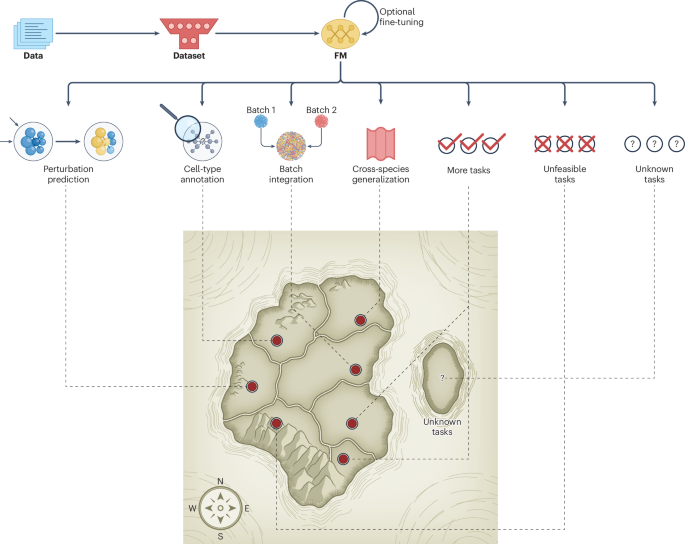
Rigorous Evaluation: The Imperative for Biomedical Foundation Models
Evaluating large biomedical AI models presents unique challenges beyond traditional computational biology. Establishing robust, transparent, and community-driven benchmarking is crucial.
Digit Robot Demonstrates Enhanced Mobility and Task Execution with Couch Relocation
Agility Robotics' bipedal humanoid, Digit, showcases its advanced capabilities by autonomously moving a couch, highlighting progress in robotic manipulation and navigation.
