Robotics and AI: Unlocking the Past, Preserving the Future of Cultural Heritage
Advanced robotics and artificial intelligence are being deployed to protect, document, and revitalize global cultural heritage, including both tangible and intangible forms.

Robotics and artificial intelligence are being deployed to protect, document, and revitalize global cultural heritage, including both tangible and intangible forms.
The Digital Guardians of History
The preservation of cultural heritage faces numerous challenges, from the ravages of time and natural disasters to human-induced threats like theft and conflict. Traditional preservation methods are often labor-intensive, costly, and can sometimes be insufficient to protect fragile artifacts or inaccessible sites. A growing collaboration between robotics researchers and specialists in computer vision, virtual reality, augmented reality, archaeology, art history, and architecture is now offering innovative solutions. This interdisciplinary approach leverages advanced technologies to safeguard humanity's shared past.
The scope of cultural heritage is vast, encompassing not only physical structures and artifacts but also intangible elements such as music, language, dance, and customs. Many of these intangible forms are at risk of disappearing as global homogenization accelerates. Robotics, particularly through autonomous learning, humanoid robotics, and sophisticated human-robot interaction, presents a powerful tool to document, reproduce, and thus preserve these endangered traditions.
Robots in the Field: Exploration and Documentation
The application of robotics in cultural heritage extends from laboratory settings to remote field operations. Specialized robots are being designed to capture and reproduce intricate human gestures or choreographies, essential for preserving performance arts and traditional crafts. Furthermore, these machines can access and explore sites that are hazardous or difficult for humans to reach, such as unstable ruins, underwater archaeological sites, or locations affected by natural catastrophes. Their versatility in locomotion and manipulation is crucial for conducting detailed exploration, comprehensive mapping, and providing direct assistance to archaeologists and field historians.
Key areas of interest in this field involve developing multimodal foundation models specifically for heritage robotics, which can integrate various data types like visual, auditory, and tactile information. Spatial intelligence and advanced world models are being created to enhance robotic exploration and monitoring capabilities, allowing robots to build detailed, intelligent representations of heritage sites. The design of robots and their sensor systems is also critical for generating high-fidelity 3D models of sites and artifacts. This includes active control and path planning for flying robots that monitor heritage structures, as well as specialized underwater robots for archaeological mapping and manipulation of submerged relics.
Recreating the Past: Intangible Heritage and Restoration
Beyond documentation, robotics plays a vital role in the active recreation and restoration of cultural heritage. Human motion recognition technologies enable robots to accurately reproduce complex human movements, which is invaluable for preserving dance forms, traditional rituals, or historical craft techniques. Humanoid robots are being programmed to generate motions that faithfully replicate intangible heritage, keeping these traditions alive for future generations. Robotic manipulation is also proving instrumental in delicate tasks such as handicraft, restoration, and conservation, where precision and consistent execution are paramount.
Robotic technologies are also enhancing the experience of cultural heritage for the public. Automated robotic guides and interactive systems can provide richer, more immersive tours of historical sites and museums. These projects often combine advanced robotics with artificial intelligence to offer intelligent, personalized experiences that educate and engage visitors, making heritage more accessible and understandable. The integration of computer vision with robotics is fundamental, enabling machines to interpret visual data from heritage sites and objects, leading to more informed actions and analyses.
Collaborative Foundations and Future Directions
The ongoing work in this domain signifies a strong interdisciplinary commitment. Academics from institutions like the University of Picardie Jules Verne and the University of Bari Aldo Moro are leading efforts, bringing together expertise in robotics, computer vision, and digital heritage. Their research focuses on developing new techniques and charting future directions for how technology can help humanity address the challenges of preserving, understanding, and restoring its cultural legacy, both tangible and intangible. This collaboration was highlighted in a call for papers by Nature, inviting contributions that bridge cultural heritage and robotics-related fields.
This emerging field promises to revolutionize how we interact with and protect our past. By leveraging the precision, endurance, and analytical capabilities of robots and AI, we can ensure that the stories, traditions, and artifacts of humanity endure, despite the threats they face from natural decay, environmental changes, or human factors.
Why it matters
The advancements in robotics and AI for cultural heritage directly translate to capabilities critical for modern infrastructure and data center operations. The development of advanced sensors, spatial intelligence, and world models for heritage exploration mirrors the precision monitoring required for complex data center environments. Robot manipulation skills used in delicate restoration tasks are analogous to the precision needed for automated maintenance or repair of telecommunications equipment. Furthermore, the ability of robots to operate in inaccessible or hazardous environments for heritage preservation has direct parallels in inspecting remote telco towers, underground fiber networks, or disaster-affected infrastructure. The underlying AI for autonomous learning and human-robot interaction, refined in this context, can enhance the efficiency and safety of in-field technicians, providing AI-powered assistants or automated inspection systems in critical infrastructure. This cross-pollination of innovation drives progress in robotic durability, perception, and autonomy, benefitting a wide array of technical and operational fields.
More from Trends
RSS
Thinking Machines Lab Unveils Inkling, an Open-Weight AI Model from OpenAI Alums
Thinking Machines Lab, founded by former OpenAI executives, has released Inkling, its first open-weight AI model optimized for multimodal inputs and advanced reasoning.

Applied Computing's AI Model Revolutionizes Oil and Gas Operations
Applied Computing has secured $20 million in Series A funding to advance its AI foundation model, Orbital, aiming to optimize complex oil, gas, and petrochemical facilities.
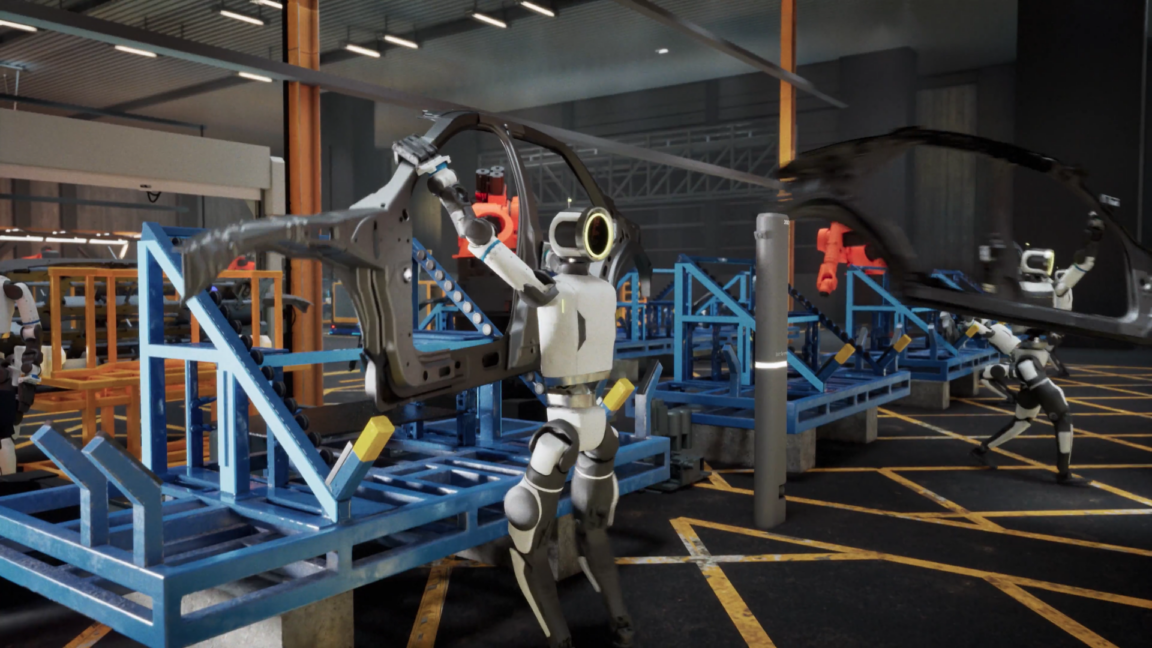
Hyundai Workers Strike Over Humanoid Robot Deployment at Production Plants
Hyundai workers in South Korea are striking over the proposed introduction of humanoid robots, marking a significant labor dispute against automation.