Advancing Human-Computer Interaction Through Enhanced Hand Gesture Recognition
A new AI framework leverages fuzzy logic and directional optical flow to significantly improve the accuracy and robustness of hand gesture recognition for human-computer interfaces.
A new AI framework leverages fuzzy logic and directional optical flow to significantly improve the accuracy and robustness of hand gesture recognition for human-computer interfaces.
The Challenge of Interpreting Hand Gestures
Human hands are incredibly expressive, capable of conveying complex meaning through movement. This natural form of communication, arguably humanity's earliest, presents a compelling opportunity for intuitive human-computer interaction (HCI). Imagine controlling devices, navigating virtual environments, or communicating across language barriers simply with a wave or a flick of the wrist. However, despite decades of research, translating these nuanced, dynamic human gestures into reliable machine-understandable commands remains a formidable challenge. The complexities are numerous: varied lighting conditions, hands partially obscuring themselves (self-occlusion), diverse hand poses, cluttered backgrounds, and the inherent variability in how different individuals perform the same gesture all contribute to the difficulty. These real-world scenarios make robust gesture recognition a persistent goal in fields like computer vision and pattern recognition.
Traditional methods often struggle with what researchers term 'depth ambiguity' and the problem of 'occluded hand joints.' This means cameras find it hard to accurately determine how far away parts of the hand are from each other or the camera, and when fingers or parts of the hand hide other parts. Furthermore, distinguishing intentional gestures from accidental movements is critical. An effective system must not only recognize predefined gestures but also 'spot' them correctly within a stream of continuous hand motion, filtering out unintentional or meaningless actions. Despite rapid advancements in imaging technology and computational power, achieving a system that is both highly accurate and computationally efficient for real-time applications has proven elusive.
A Novel Approach to Gesture Recognition
Recent research introduces an innovative framework designed to tackle these persistent issues in hand gesture recognition. This new method moves beyond many existing limitations by focusing on an optimized local descriptor that models dynamic hand movements as a series of 'fuzzy directional optical flow' features. Optical flow refers to the pattern of apparent motion of objects, surfaces, and edges in a visual scene caused by the relative motion between an observer and the scene. By making this directional information 'fuzzy,' the system can better handle the inherent uncertainties and variations in hand motion data.
This approach utilizes the often-underestimated properties of directional optical flow. These features are known for their invariance, reliability, and robustness, making them ideal for capturing the subtle nuances of hand movement regardless of minor changes in execution. The framework essentially builds a temporal series – a sequence over time – of these fuzzy directional features, creating a rich, descriptive model for each moving gesture. This temporal modeling is crucial for understanding gestures, which are by nature dynamic events rather than static poses.
The Role of Machine Learning in Interpretation
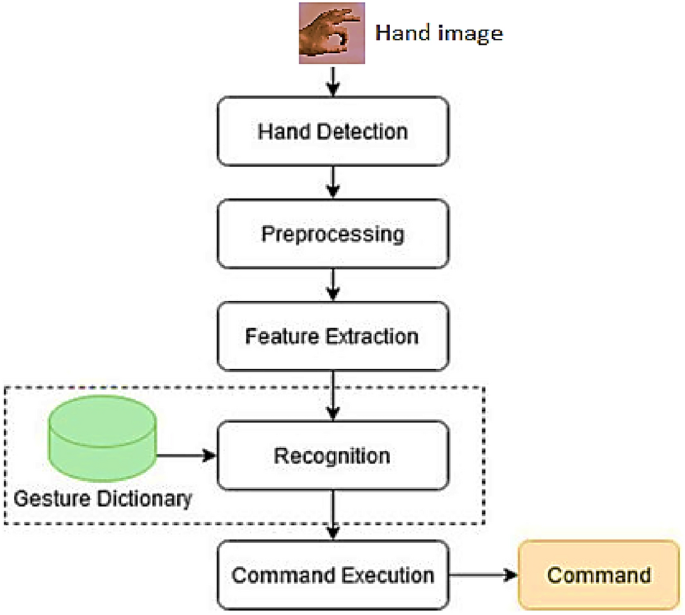
Once the hand movements are transformed into these sophisticated fuzzy directional optical flow features, a machine learning classifier is employed to interpret them. The researchers chose the Gentle AdaBoost (GAB) classifier for this task. GAB is a variant of the AdaBoost algorithm, known for its strong performance in classification tasks. Its advantages include ease of use, requiring minimal parameter tuning, and a lower sensitivity to errors in the training data compared to some other AdaBoost versions. This makes it a practical choice for developing robust gesture recognition systems.
During the training phase, the GAB classifier learns to associate specific patterns of these normalized fuzzy features with particular hand gestures. The normalization process ensures that the features are treated consistently, preventing any single feature from disproportionately influencing the classification. By training on a diverse dataset, the system develops the ability to differentiate between various gestures and identify them accurately even when presented with new, unseen hand movements.
Promising Results and Real-World Applicability
The efficacy of this new framework was rigorously evaluated using a comprehensive dataset of gestures. This dataset incorporated a large and varied collection of gesture streams, simulating the unpredictable nature of real-world environments. The results were highly encouraging, with the proposed model achieving an accuracy of 98.39%. This figure compares very favorably with other state-of-the-art methods documented in existing literature. Crucially, this high level of accuracy was achieved without compromising computational efficiency or stability, making it suitable for practical applications.
Beyond simple recognition, the experimental findings also validated the model's ability to 'spot' meaningful hand gestures within continuous hand movements. This is a significant breakthrough because it means the system can effectively extract intended gestures while simultaneously ignoring invalid gesture instances that might arise from unintentional hand motions. This capability is paramount for creating truly intuitive and user-friendly human-computer interfaces, where users expect their actions to be understood accurately without constantly having to be overly precise.
Towards Ubiquitous Gesture Control
The development of motion-sensing devices like the Leap Motion Controller and Microsoft Kinect has played a pivotal role in making vision-based hand gesture recognition a practical reality. These relatively inexpensive technologies allow for the capture of high-resolution video and precise information about hand poses, fueling the growth of HCI. The ability to control computers, navigate virtual realities, and interact with robots using natural hand movements is becoming increasingly mainstream. The work published in Nature by Bakheet and Al-Hamadi represents a significant step forward in this domain.
This robust deployment of hand gesture recognition in uncontrolled, real-world scenarios holds immense promise for a wide array of applications. From enhancing security systems and enabling more intuitive control in virtual and augmented reality to facilitating communication through sign language translation, the potential impact is vast. While challenges remain in highly dynamic environments, particularly concerning rapid changes in appearance, viewpoint, and complex backgrounds, the progress made by this fuzzy directional optical flow approach brings us closer to a future where gesture control is as natural and seamless as spoken language.
Why it matters
This advancement in hand gesture recognition holds substantial implications for various in-field applications, particularly in robotics, augmented reality, and complex machinery operation. Technicians performing intricate tasks, often with gloved hands or in environments where touchscreens are impractical, could benefit from intuitive gesture controls. In data centers, this technology could enable hands-free navigation of complex visual interfaces or control of robotic assistants for infrastructure maintenance. Telecommunication field engineers might use gestures to interact with diagnostic tools or deploy network components, enhancing efficiency and safety. The ability to accurately interpret and filter gestures reliably, even amidst environmental distractions, paves the way for more natural and less encumbered human-machine collaboration in critical operational settings.
More from Trends
RSS
Amazon's Delivery Driver Smart Glasses Raise Significant Privacy Concerns
Amazon is reportedly deploying smart glasses for its delivery drivers that capture thousands of images per shift, sparking privacy debates and questions about data handling.

The Dawn of Autonomous AI Agents: A New Frontier in Personal Computing
A new generation of AI agents, exemplified by OpenAI's Dots and Meta's Muse, promises to transform how we interact with technology by autonomously managing complex tasks.

Beyond the Hype: Examining Real-World AI Deployment in the Enterprise
Industry leaders from Anthropic, Gamma, and Clay are convening to discuss the critical transition of AI from proof-of-concept to sustained, impactful enterprise integration.