Amazon's Delivery Driver Smart Glasses Raise Significant Privacy Concerns
Amazon is reportedly deploying smart glasses for its delivery drivers that capture thousands of images per shift, sparking privacy debates and questions about data handling.

Amazon's forthcoming smart glasses for delivery drivers, designed to enhance delivery logistics, are poised to continuously capture thousands of images, raising substantial privacy concerns for both drivers and the public.
The New Eyes on the Street
Amazon is reportedly introducing advanced smart glasses for its delivery personnel, a development that promises to significantly transform the last-mile delivery experience. These glasses are equipped with cameras intended to record the environment constantly during a driver's shift, capturing numerous images as part of an effort to optimize delivery processes. This technology is designed to feed visual data into Amazon's AI Wellspring platform, an initiative aimed at refining logistics and efficiency. While the stated purpose is operational improvement, the extensive image capture capability of these devices immediately brings privacy implications to the forefront, particularly for individuals and private properties in the vicinity of deliveries.
Reports suggest that these smart glasses could generate several thousand images during a typical delivery route. This volume of visual data collection is unprecedented for civilian-facing operations and warrants a thorough examination of its implications. When questioned about the possibility of customers opting out of this data collection, a representative from Amazon indicated that the company had not considered such a provision. This response underscores a potential oversight in anticipating public privacy expectations, particularly given the broad scope of visual information that will be amassed.
A History of Surveillance and Worker Scrutiny
This is not Amazon’s first foray into using advanced surveillance technology in its delivery operations. The company has previously implemented AI-powered cameras inside delivery vehicles. These in-vehicle systems were intended to monitor driver behavior for safety and efficiency, but they have also been a source of contention. Drivers have reported numerous issues, including instances where the AI cameras allegedly misidentified routine actions, such as fastening seatbelts or taking a sip of coffee, as infractions. There have also been reports of footage from these internal cameras being improperly accessed or leaked, eroding trust and raising serious questions about data security and employee privacy.
These prior experiences with in-vehicle surveillance technology provide a crucial context for understanding the concerns surrounding the new smart glasses. The extensive data collection from the glasses, which will capture external environments, amplifies these existing anxieties. The perception among some drivers is that these technologies are more about surveillance than support, a sentiment that could be exacerbated by the constant external recording capabilities of the new smart glasses. The recurring theme of surveillance technology in Amazon’s logistics network highlights a pattern of deploying systems that prioritize operational control, sometimes at the expense of privacy or worker comfort.
Navigating Privacy in a Public Space
Amazon has attempted to address some privacy concerns by outlining how the collected images will be processed. The company claims that its systems will automatically blur recognizable features such as faces and license plates before any images are passed on for human review. This automated anonymization step is presented as a safeguard to protect individual privacy. However, the effectiveness and reliability of such blurring technologies in all scenarios remain a subject of debate, particularly with the sheer volume of images expected to be processed.
Despite these assurances, several critical questions about data governance persist. Amazon has reportedly confirmed that law enforcement agencies could obtain images from the smart glasses with a warrant. This raises questions about the scope of access and the potential for these images to be used in legal or investigative contexts beyond Amazon’s stated operational purposes. More importantly, the company has not specified how long these images will be stored, which is a fundamental aspect of data privacy policy. Furthermore, there will reportedly be no mechanism for customers to view images that Amazon has captured of them or their property, nor will they have the ability to request the deletion of such photos. This lack of transparency and control over personal data collected in public and semi-public spaces represents a significant privacy gap.
The Technical and Ethical Landscape of Constant Capture
The image quality from the smart glasses is described as comparable to the quick snapshots drivers currently take to confirm package delivery. While this might suggest a lower resolution that limits detailed identification, the sheer quantity of images taken throughout a shift presents its own set of challenges. A vast collection of even moderately detailed images can, when aggregated and processed by sophisticated AI, reveal patterns and information that individuals might not intend to share.
The integration of these glasses into Amazon’s AI Wellspring platform signifies a broader ambition to leverage artificial intelligence for hyper-efficient logistics. This involves using AI to analyze visual data for route optimization, package placement verification, and potentially identifying delivery obstacles or safety hazards. From a technical standpoint, managing and processing thousands of images per driver, across a vast network of delivery personnel, represents a significant data management and computational undertaking. The ethical implications, however, often lag behind the technological advancements, creating a tension between innovation and individual rights.
Why it matters
This development holds significant implications for the intersection of AI, data privacy, and field operations. For AI and data center professionals, it highlights the immense infrastructure demands for processing and storing petabytes of visual data, along with the complexity of developing AI algorithms for real-time anonymization and analysis. For telco operators, it showcases a growing reliance on high-bandwidth, low-latency connectivity to transmit such large volumes of data from mobile devices in the field. This situation underscores the critical need for robust data governance frameworks, clear consent mechanisms, and transparent data retention policies. The ongoing debate around Amazon's smart glasses serves as a precedent for how augmented reality and AI tools will reshape the privacy landscape in various industries, prompting closer examination of how data is collected, used, and protected in operational environments.
More from Trends
RSS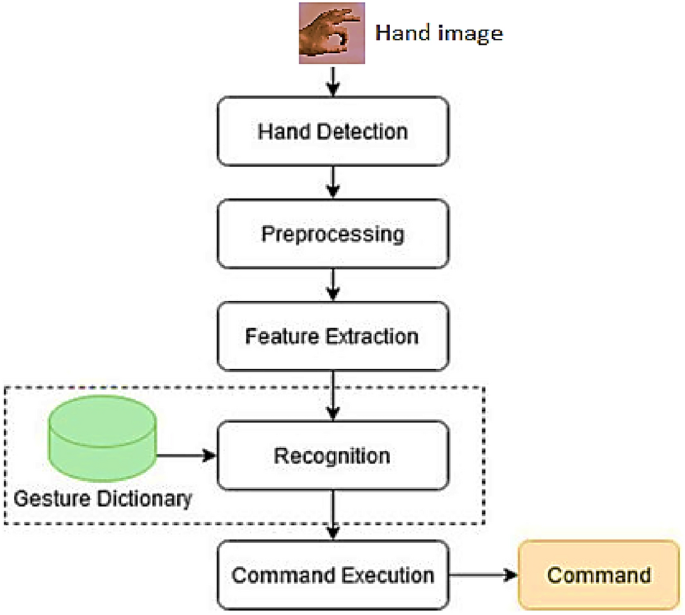
Advancing Human-Computer Interaction Through Enhanced Hand Gesture Recognition
A new AI framework leverages fuzzy logic and directional optical flow to significantly improve the accuracy and robustness of hand gesture recognition for human-computer interfaces.

The Dawn of Autonomous AI Agents: A New Frontier in Personal Computing
A new generation of AI agents, exemplified by OpenAI's Dots and Meta's Muse, promises to transform how we interact with technology by autonomously managing complex tasks.

Beyond the Hype: Examining Real-World AI Deployment in the Enterprise
Industry leaders from Anthropic, Gamma, and Clay are convening to discuss the critical transition of AI from proof-of-concept to sustained, impactful enterprise integration.