AI Agents on the Horizon: Milestones for Widespread Adoption
AI agents are poised to become ubiquitous, but three critical milestones must be met: transforming software development, establishing trust through verification, and democratizing agent creation.

AI agents are poised to become ubiquitous, but three critical milestones must be met: transforming software development, establishing trust through verification, and democratizing agent creation.
Every significant technological shift reaches a point where its experimental phase gives way to widespread integration, becoming an indispensable part of daily life and work. For artificial intelligence agents, that tipping point is rapidly approaching. While many organizations are still navigating the complexities of AI adoption, early innovators are already leveraging agents to address real-world challenges, ranging from expediting software development cycles to refining customer service operations. Despite these early successes, a broader societal and industrial adoption hinges on several key advancements.
Swami Sivasubramanian, VP of Agentic AI at Amazon Web Services, highlights that many entities find themselves hesitant at the outset, confronted by a multitude of choices and uncertainties regarding initial implementation. He identifies clear milestones that AI agents must achieve before they can fundamentally reshape how we live and work.
Unlike passive generative AI, agents are designed for action. Sivasubramanian defines them as autonomous software systems capable of reasoning, planning, and adapting to execute tasks on behalf of human users or other systems. A user simply states a goal, and the agent proceeds to formulate a plan, generate necessary code, utilize appropriate tools to resolve the problem, synthesize the results, and even learn from failures to improve its future performance. Tasks that might have previously consumed weeks of research and development can now be completed in a matter of hours or even minutes. This efficiency explains why agents are already being deployed in diverse fields such as software engineering, pharmaceutical research, precision agriculture, and architectural design. In this evolving landscape, humans transition into roles as expert guides, overseeing projects and validating outcomes, much like a peer review process.
Achieving greater efficiency, fostering innovation, and enabling smarter operational methods are compelling aspirations. To deliver these benefits at scale, Sivasubramanian indicates that agents must fulfill three pivotal milestones: the process of software construction must undergo a fundamental transformation, unwavering trust in agent performance must be established and verified, and the ability to create AI agents must be made accessible to a broader audience.
Revolutionizing Software Development
Before AI agents become commonplace for the general public, they will first integrate deeply into the workflows of those who build our digital world: software engineers, developers, architects, and designers. For agents to achieve mainstream acceptance, Sivasubramanian emphasizes that these builders must perceive them as genuinely useful and engaging.
Currently, agents assist developers in application building and debugging code. Agent-powered developer tools are gaining traction, allowing developers to offload repetitive tasks and concentrate on strategic outcomes rather than intricate details. Beyond basic support, agents can also empower developers at a higher level, aiding in the conceptualization of system architectures. This is a crucial and often time-intensive area where making the correct choices is paramount. For instance, developers frequently face the challenge of selecting the optimal computing resources from hundreds of options for a specific application. This decision requires simultaneously considering numerous factors, such as expected data volume, usage patterns, and deployment environments.
While such critical decisions will remain, Sivasubramanian predicts that agents will increasingly manage these complexities. This shift will enable developers to direct their focus to the core objectives of what they are building, rather than being preoccupied with the procedural aspects of how the work will be accomplished.
Building and Validating Trust
The second, and perhaps most critical, obstacle for widespread agent adoption is the establishment of trust. Agents, by their nature, are not infallible and will inevitably make errors. The challenge lies in verifying an agent's reasoning to confidently allow it to act autonomously. Encouragingly, Sivasubramanian notes that the underlying systems, tools, and environments agents interact with are already in place. Existing methods allow for mathematically proving whether a system or program adheres to its specifications and functions as intended.
One established method for ensuring reliability is automated reasoning. This field of computer science seeks to provide guarantees about expected system behavior. Rooted in mathematical logic, with origins tracing back to ancient Greece and Aristotle's early analyses of logical syntax, automated reasoning today involves algorithmic searches for proofs within mathematical logic. This approach can also be applied to validate the correctness of agentic reasoning. To achieve this, a feedback loop must be created between an automated reasoning solver and the agent itself. The solver employs formal methods to mathematically represent correct specifications and desired behaviors for a given process, task, or environment.
Consider a developer using an agent to construct an API call for a specific tool or service. The automated reasoning solver would verify the generated code before the agent presents its final output. If the solver identifies any discrepancies, it would recommend changes. The agent could then use this feedback to make adjustments and attempt the task again. This iterative process between the agent and solver continues until the code is proven correct. Because the system's intended logic is distilled into mathematical proofs, this verification process can occur with remarkable speed, often in less than 100 microseconds for 95 percent of cases. This is akin to having an incredibly fast, precise fact-checker providing real-time guidance toward verifiable accuracy. Sivasubramanian concludes that the integration of agentic AI and automated reasoning will be instrumental in making agents sufficiently trustworthy for widespread implementation.
Democratizing Agent Creation
The final milestone involves expanding the ability to create AI agents beyond specialized developers to a much wider user base. An illustrative example comes from the Amazon Ads team, which has faced the ongoing challenge of producing high-quality creative content, including images, videos, and ad copy, for advertising campaigns. Traditionally, developing sophisticated ad creative demands substantial financial investment and resources, often costing tens of thousands of dollars and requiring weeks of work. This process is expensive because every stage, from audience research to conceptualization and final asset production, has typically been manual.
Amazon introduced agentic AI to streamline this workflow. With user-friendly tools from Amazon Ads, users can instruct AI agents to analyze a brand's online presence to gather insights into product details, audience signals, and value propositions. The agent then leverages this understanding to collaboratively brainstorm, through natural language conversations, multiple creative concepts that align with the advertiser's brand voice, all while articulating the reasoning behind each approach. In the concluding phase, agents generate professional-grade video and display advertisements, complete with storyboards, motion graphics, animations, music, and voiceovers. This significantly reduces the time required, allowing advertisers to complete the entire creative process in hours rather than weeks.
However, this example focuses on using agents, not on building them. The question then becomes how we can empower anyone to build AI agents. Sivasubramanian states that while any developer proficient in Python can currently create a functional agent, true democratization will only occur when the pool of individuals capable of agent creation dramatically expands. He suggests that interfaces enabling agent construction need to become accessible to general users without requiring deep technical skills, ideally by embedding these capabilities into existing, familiar tools.
The Agentic Future: A Glimpse
When these milestones are reached, Sivasubramanian envisions that the construction and utilization of agents will become an invisible infrastructure, as fundamental and taken for granted as electricity. Yet, agents will unlock extraordinary capabilities. He predicts they will accelerate the formation of new companies, scientific research, and problem-solving across every sector. Medical advancements will occur more rapidly, and new discoveries will proliferate. Sivasubramanian emphasizes that the most promising aspect of this transformation is not merely what agents can accomplish, but how they will amplify human creativity and ambition. When the final barriers between conceptualization and implementation dissolve, innovation will progress at an unprecedented pace, he believes. The core question is not if AI agents will reshape our world, but rather what we will choose to build once they do.
Why it matters
The widespread adoption of AI agents will fundamentally alter the operational landscape for critical infrastructure sectors, including telcos and data centers. As agents become proficient in managing complex tasks from network optimization and predictive maintenance to automated fault resolution, human technicians will shift from reactive problem-solving to strategic oversight, system design, and the validation of agent performance. This transition demands a significant upskilling of the workforce, focusing on AI ethics, automated reasoning, and collaborative human-AI workflows. Data centers will see increased efficiency through agent-managed resource allocation and energy optimization, while telcos can leverage agents for dynamic network configuration and enhanced customer service, leading to more resilient, efficient, and intelligent infrastructure operations.
More from Trends
RSS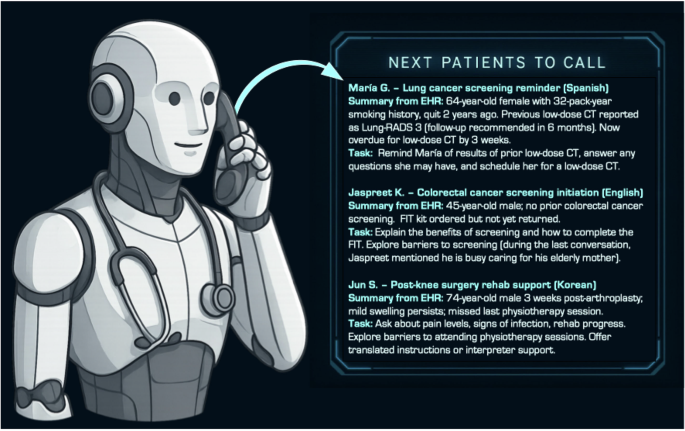
Voice AI Set to Reshape Healthcare Communication
Generative AI voice agents, leveraging large language models, are poised to revolutionize patient engagement and administrative tasks within healthcare.

DeepMind's Nobel Recognition: A Catalyst for New Scientific Frontiers
Google DeepMind's AlphaFold, a protein-folding AI, has earned a Nobel Prize, sparking discussion about AI's role in fundamental scientific breakthroughs.
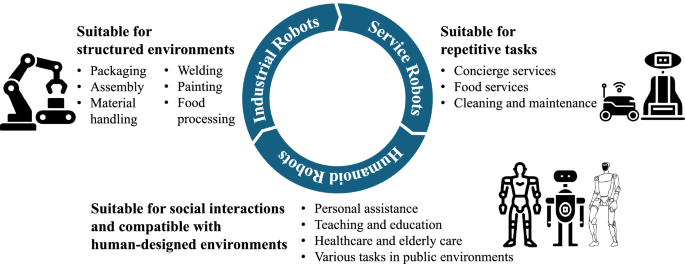
Humanoid Robots to Fill Service Gap in Future Public Transport
As autonomous vehicles replace human staff in public transport, humanoid robots could step in to provide essential passenger assistance and safety, enhancing inclusivi