Voice AI Set to Reshape Healthcare Communication
Generative AI voice agents, leveraging large language models, are poised to revolutionize patient engagement and administrative tasks within healthcare.
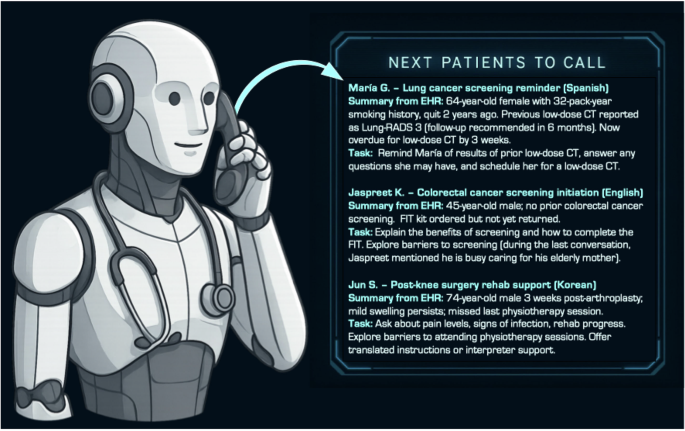
Generative AI voice agents, powered by advanced large language models, are set to profoundly transform patient interaction and operational efficiency across healthcare systems.
The Communication Imperative in Modern Medicine
Effective communication forms the bedrock of healthcare, influencing everything from accurate diagnoses to patient engagement in treatment plans. Despite its critical role, the modern healthcare system faces significant challenges in maintaining high-quality, personalized communication at scale. Constraints such as limited time, widespread staffing shortages, and increasing administrative burdens often hinder clinicians from dedicating sufficient attention to patient dialogue. This environment makes it difficult to deliver the individualized attention that patients require and deserve. Generative AI voice agents emerge as a powerful new solution to address these long-standing issues.
Unlike conventional chatbots that operate on rigid, pre-programmed scripts and are primarily suited for narrow, repetitive tasks, generative AI voice agents represent a substantial leap forward. These advanced conversational systems are built upon large language models (LLMs) that have been trained on vast datasets, including medical literature, anonymized patient conversations, and other relevant information. This extensive training enables them to not only comprehend natural speech in real time but also to generate unique, context-aware responses. Instead of merely selecting from a predefined list of replies, these agents can formulate novel sentences and adapt their messaging to precisely match a patient's individual concerns and the specifics of their query.
This generative capability allows AI voice agents to handle the complexities inherent in medical conversations. They can identify and clarify incomplete or contradictory statements, discern subtle nuances in how patients describe their symptoms, and integrate diverse data points from electronic health records or previous interactions. This dynamic and adaptable approach means they are better equipped to navigate unexpected questions and clinical subtleties that frequently arise during medical dialogues, all while maintaining a natural, conversational flow.
Expanding Clinical Reach and Improving Outcomes
The advent of generative AI voice agents opens up a myriad of new applications that were previously impractical for traditional chatbots. These agents can effectively triage symptoms, conduct daily check-ins for individuals managing chronic conditions, monitor medication adherence, and escalate critical concerns directly to clinicians. Through regular, proactive check-ins, they possess the potential to detect early indicators of clinical deterioration, such as shifts in symptom descriptions or mood changes. This early detection facilitates timely interventions, potentially averting crises before they escalate.
Preliminary evaluations underscore the promise of this technology. One large-scale safety assessment, involving over 307,000 simulated patient interactions, with each reviewed by licensed clinicians, indicated that generative voice agents could achieve medical advice accuracy rates exceeding 99%, with no instances of potentially severe harm. While these findings are based on a preprint and are yet to undergo peer review, they suggest that with appropriate oversight, these AI voice agents could become invaluable partners in delivering high-quality, patient-centered care. Beyond direct patient interaction, these agents can streamline administrative functions, addressing billing inquiries, verifying insurance details, sending appointment reminders, and facilitating rescheduling. They can also minimize the burden of travel for patients facing mobility challenges or geographical barriers by identifying opportunities for virtual appointments, consolidating multiple appointments on the same day, and assisting with transport arrangements.
Furthermore, AI voice agents can serve as crucial navigators for patients with complex medical needs or limited health literacy. They can enhance pre-appointment education, ensuring patients are better informed and prepared, leading to more meaningful clinical encounters. Several generative AI voice agents are already commercially available from companies like Hippocratic AI, Hyro, and Orbita. These solutions range from automating basic tasks like appointment scheduling and prescription refills to supporting more intricate and personalized interactions such as symptom triage, chronic disease monitoring, and medication adherence programs. For instance, Pair Team, a medical group serving high-need Medicaid beneficiaries, developed an AI agent to schedule appointments with physician offices, freeing up community health workers to focus on building stronger patient relationships.
Driving Population Health and Equity
Perhaps most significantly, generative AI voice agents create unprecedented opportunities to improve population health outcomes, an endeavor previously constrained by resource limitations. For the first time, healthcare systems can deploy proactive, personalized outreach strategies to entire populations. This capability can significantly boost the uptake of preventive services by sending tailored reminders for cancer screenings, vaccinations, or follow-up appointments. These agents can adapt their language and tone to suit a patient’s health literacy level or cultural background, ensuring inclusivity and effectiveness.
A compelling example of this is a recent study involving a multilingual generative AI voice agent designed to enhance colorectal cancer screening rates among underserved communities. The AI agent conducted personalized, language-concordant outreach calls, achieving higher engagement among Spanish-speaking patients compared to English speakers. This included more than double the fecal immunochemical test (FIT) opt-in rate (18.2% versus 7.1%) and longer call durations (6.05 minutes versus 4.03 minutes). This outcome highlights how thoughtfully designed and deployed AI voice agents can diminish disparities in traditionally underserved populations and improve engagement with preventive care, as noted in Nature.
In emergency scenarios, these agents can provide rapid, population-wide responses. During extreme weather events, they can monitor at-risk seniors for heat-related symptoms, remind them to stay hydrated, and confirm access to essential medications and support services. In a pandemic, AI agents can screen for symptoms and offer isolation guidance. During wildfire seasons, they can identify patients with respiratory conditions, advise on air quality precautions, and provide real-time guidance without requiring an influx of human staff.
Overcoming Hurdles to Widespread Adoption
Despite the considerable potential, widespread implementation of generative AI voice agents faces several technical and operational challenges. A primary technical hurdle is latency. Generative AI models, particularly those based on large-scale transformers, are computationally intensive. This can lead to noticeable pauses during conversations, disrupting the illusion of human-like interaction and potentially diminishing user experience. Optimizing model performance and the underlying hardware infrastructure will be crucial to overcoming this.
Why it matters
For those in AI development, infrastructure management, and telecommunications, the rise of generative AI voice agents in healthcare presents a significant opportunity and a complex challenge. The demand for low-latency, high-reliability AI processing will drive innovation in edge computing, specialized hardware like GPUs, and robust network architectures capable of supporting real-time conversational AI at scale. Telco providers will need to ensure reliable, high-bandwidth connections to facilitate seamless interactions, while data center operators will manage the immense computational resources required for training and deploying these sophisticated LLMs. The integration of these AI agents into existing healthcare IT systems will also require careful planning and robust API development, emphasizing data security and privacy compliance. This evolution underscores a critical need for cross-industry collaboration to build the foundational infrastructure necessary for this transformative technology to truly flourish within the medical field, impacting everything from patient engagement to the operational workflows of healthcare professionals and the underlying digital systems that support them.
More from Trends
RSS
AI Agents on the Horizon: Milestones for Widespread Adoption
AI agents are poised to become ubiquitous, but three critical milestones must be met: transforming software development, establishing trust through verification, and democratizing agent creation.

DeepMind's Nobel Recognition: A Catalyst for New Scientific Frontiers
Google DeepMind's AlphaFold, a protein-folding AI, has earned a Nobel Prize, sparking discussion about AI's role in fundamental scientific breakthroughs.
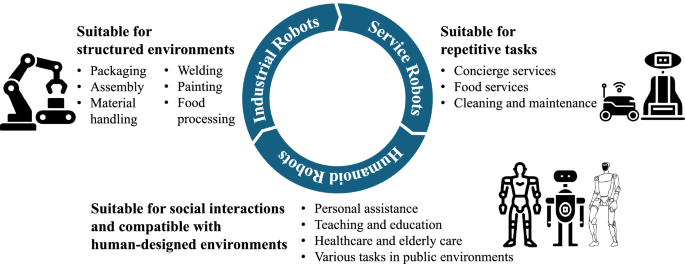
Humanoid Robots to Fill Service Gap in Future Public Transport
As autonomous vehicles replace human staff in public transport, humanoid robots could step in to provide essential passenger assistance and safety, enhancing inclusivi