DeepMind's Nobel Recognition: A Catalyst for New Scientific Frontiers
Google DeepMind's AlphaFold, a protein-folding AI, has earned a Nobel Prize, sparking discussion about AI's role in fundamental scientific breakthroughs.
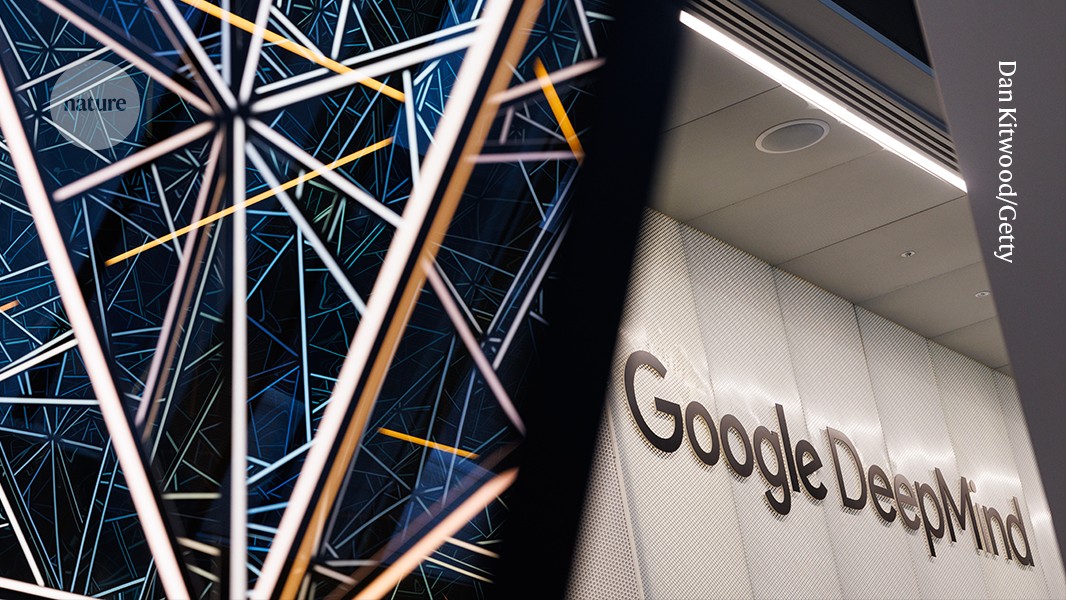
Google DeepMind's AlphaFold project has received a Nobel Prize, highlighting artificial intelligence's growing impact on fundamental scientific discovery, particularly in biology and medicine.
The Nobel Nod for AlphaFold
The scientific community recently witnessed a landmark event: Google DeepMind's AlphaFold project was awarded a Nobel Prize. This recognition underscores a significant shift in how fundamental scientific breakthroughs are achieved, with artificial intelligence now playing a central and often indispensable role. AlphaFold's pioneering work in predicting protein structures with unprecedented accuracy has not only revolutionized structural biology but also validated the potential of AI to accelerate discovery across various scientific disciplines. This award elevates AI from a mere tool to an integral partner in the pursuit of profound knowledge.
The genesis of DeepMind, founded by Demis Hassabis, Shane Legg, and Mustafa Suleyman, was rooted in an ambitious vision: to solve intelligence itself and then utilize that intelligence to address other major problems. This philosophy has guided the company's trajectory, leading to remarkable achievements in fields ranging from gaming with AlphaGo to complex scientific challenges with AlphaFold. The Nobel committee's decision acknowledges not just a technical triumph but also the profound implications of AlphaFold for understanding life's basic building blocks and developing new therapeutics.
AlphaFold's Impact on Biology
AlphaFold's primary contribution lies in its ability to accurately predict the 3D structure of proteins from their amino acid sequences. Proteins are the workhorses of biology, responsible for virtually all cellular functions, and their precise shape dictates their role. Traditionally, determining protein structures was a laborious, time consuming, and often impossible experimental process. Techniques like X-ray crystallography and cryo-electron microscopy could take years and still fail to yield results for many proteins.
AlphaFold changed this paradigm. By leveraging deep learning, it learned the intricate physical and chemical rules governing protein folding, enabling it to predict structures with accuracy comparable to experimental methods. This capability has opened doors for researchers worldwide, providing access to structural information for millions of proteins, including those involved in diseases, metabolic pathways, and environmental processes. Scientists can now swiftly obtain structural models, significantly accelerating drug discovery, enzyme engineering, and basic biological research.
For instance, the immediate availability of accurate protein structures can streamline the identification of drug targets, aid in designing novel inhibitors, and even facilitate the creation of synthetic proteins with desired functions. This has a ripple effect, reducing the time and cost associated with early-stage research and development in pharmaceuticals and biotechnology. The broad accessibility of AlphaFold's predictions through databases has democratized structural biology, making advanced research tools available to a wider scientific community.
Beyond Protein Folding: DeepMind's Broader Ambitions
While AlphaFold stands as a monumental achievement, it represents just one facet of DeepMind's expansive scientific agenda. The company continues to push the boundaries of AI research, exploring applications in diverse fields. One notable area is materials science, where AI is being used to predict the properties of new materials and discover novel compounds with specific characteristics, such as superconductors or high-performance alloys. Similar to protein folding, the traditional approach to materials discovery involves extensive experimental trial and error. AI can drastically reduce this by simulating interactions at an atomic level.
Another significant focus for DeepMind is climate science. AI models are being developed to improve weather forecasting, optimize energy grids, and understand complex climate systems. By processing vast datasets, these AI systems can identify patterns and make predictions that human-driven models might miss, offering potential solutions for mitigating climate change and adapting to its effects. For example, AI can optimize the dispatch of renewable energy sources, balance supply and demand, and manage energy storage more efficiently.
DeepMind is also actively engaged in general AI research, aiming to develop more powerful and versatile AI systems capable of tackling a broader range of intellectual challenges. This includes work on reinforcement learning, which trains AI agents to learn through trial and error in complex environments, and large language models, which exhibit sophisticated understanding and generation of human language. These foundational advancements are critical for building future AI systems that can reason, plan, and generalize across different domains, moving closer to the ambitious goal of general artificial intelligence.
The Ethical and Practical Considerations of AI in Science
The rise of AI in scientific discovery brings with it a host of ethical and practical considerations. The sheer power of these tools, while beneficial, necessitates careful governance and responsible deployment. One key concern is the potential for bias in AI models, particularly if the training data is not representative or contains inherent societal biases. In scientific contexts, biased AI could lead to misinterpretations or perpetuate inequalities in research outcomes, for example, in medical diagnostics or drug development where certain demographic groups might be underrepresented in data.
Another important aspect is the 'black box' problem, where the decision-making process of complex AI models can be opaque. Understanding why an AI makes a particular prediction or recommendation is crucial for scientific validation and trust, especially when those predictions inform critical applications like drug design or clinical diagnoses. Researchers are actively working on developing more interpretable AI models to address this challenge, ensuring that scientific discoveries facilitated by AI are not just accurate but also explainable.
Furthermore, the increasing reliance on AI raises questions about intellectual property and attribution in scientific discovery. When an AI system co-discovers a new molecule or predicts a novel structure, how is credit assigned? Establishing clear guidelines for intellectual property generated by AI is becoming an urgent task. The collaborative nature of AI-driven research also requires new models for publication, peer review, and data sharing, balancing openness with commercial and national security interests.
The Future Landscape of AI-Driven Research
The Nobel Prize for AlphaFold marks not an end, but a profound new beginning for AI in scientific research. This recognition will likely accelerate investment and innovation in AI-driven discovery across an even wider spectrum of disciplines. We can anticipate AI tools becoming increasingly sophisticated, capable of not only predicting but also hypothesizing, designing experiments, and even conducting them autonomously in virtual or robotic labs.
Future AI systems might move beyond individual tasks to integrate multiple scientific domains, connecting insights from materials science with biological applications, or linking climate models with agricultural innovations. This interdisciplinary approach, supercharged by AI, holds the promise of tackling some of humanity's most complex challenges, from sustainable energy to curing intractable diseases. The ongoing work at DeepMind and similar institutions, as noted by Nature, suggests a trajectory where AI will be an indispensable partner in every major scientific endeavor, continually redefining the frontiers of knowledge.
Why it matters
For industries reliant on complex data processing and predictive analytics, such as telecommunications, data centers, and advanced manufacturing, the Nobel recognition of AlphaFold signals a powerful validation of AI's capability to deliver profound, fundamental breakthroughs. The principles behind AlphaFold's success – deep learning on vast datasets to model complex systems – are directly transferable. This has implications for optimizing network infrastructure, predicting hardware failures in data centers, and developing intelligent automation for maintenance and operations. Technicians and engineers in these fields will increasingly work alongside AI tools, leveraging their predictive power to enhance efficiency, preempt issues, and innovate solutions, thereby transforming operational paradigms and skill requirements across the board.
More from Trends
RSS
AI Agents on the Horizon: Milestones for Widespread Adoption
AI agents are poised to become ubiquitous, but three critical milestones must be met: transforming software development, establishing trust through verification, and democratizing agent creation.
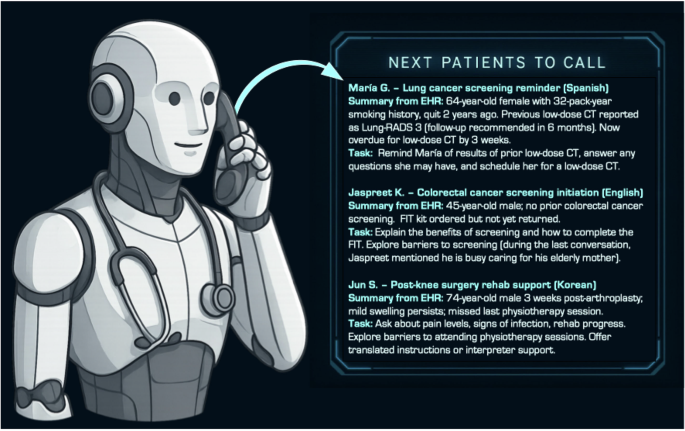
Voice AI Set to Reshape Healthcare Communication
Generative AI voice agents, leveraging large language models, are poised to revolutionize patient engagement and administrative tasks within healthcare.
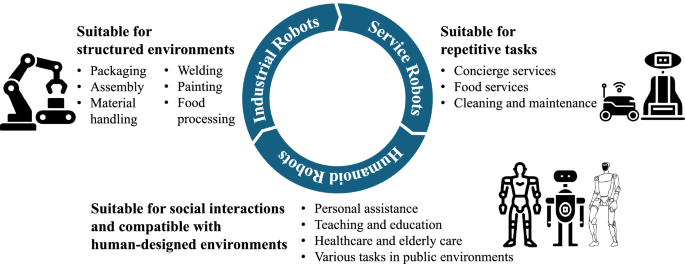
Humanoid Robots to Fill Service Gap in Future Public Transport
As autonomous vehicles replace human staff in public transport, humanoid robots could step in to provide essential passenger assistance and safety, enhancing inclusivi