Caterpillar Leverages Decades of Automation Experience for Broad AI Deployment
Caterpillar, a veteran in industrial automation, is applying its extensive experience from automating mining operations to the wider deployment of artificial intelligence across its products and internal processes.

Caterpillar is leveraging its long-standing expertise in automating heavy machinery in harsh environments to inform its strategic, broad-scale integration of artificial intelligence, transforming both its products and operational infrastructure.
From Remote Mines to AI Frontiers
For decades, industrial behemoth Caterpillar has been at the forefront of automation, particularly in the demanding realm of mining. This journey began with the recognition that factors like labor shortages and the inherent dangers of mining operations made automation not just beneficial, but often essential. The company has since developed and deployed a range of autonomous solutions, including haul trucks, drilling equipment, underground loaders, and dozers. Beyond the hardware, Caterpillar's autonomous toolkit encompasses sophisticated software for command centers, fleet management systems, and even remote terrain intelligence capabilities. This deep dive into practical, large-scale automation in the physical world has uniquely positioned Caterpillar to tackle one of the most significant challenges facing businesses today: the effective integration and deployment of artificial intelligence.
Many organizations find that developing AI is only half the battle, with the true hurdle being its seamless integration into daily operations. Caterpillar's Chief Technology Officer, Jaime Mineart, highlighted this during a recent appearance at the Ai4 conference. Mineart explained that the valuable lessons learned from automating complex, remote mining sites are now being directly applied to more dynamic environments. This includes diverse settings such as general job sites, quarries, and various construction projects, marking a significant expansion of the company's autonomous capabilities beyond its traditional mining stronghold.
AI in Action: Enhancing Field Operations and Product Offerings
Caterpillar's strategic pivot involves not only applying AI internally but also embedding it into its core product offerings. A prime example of this is the Cat AI Assistant, a sophisticated tool designed to empower field technicians directly on site. This assistant allows technicians to use voice commands to access critical information while working on machinery. They can pull up detailed repair procedures, troubleshoot potential issues, and identify necessary replacement parts, all before commencing a repair. This hands-free, intelligent support streamlines maintenance workflows, reduces downtime, and improves the accuracy of diagnostics.
The effectiveness of the Cat AI Assistant, and many of Caterpillar's other AI initiatives, is underpinned by the company's vast repository of proprietary data. Caterpillar boasts an impressive global network of approximately 1.6 million connected assets, generating over 16 petabytes of structured data. This immense dataset, accumulated over years of operation and monitoring, provides the foundational intelligence for its AI models. Beyond field support, AI is also being utilized for site scanning to generate precise digital twins. These virtual replicas are invaluable for analyzing manufacturing operations, optimizing layouts, and predicting potential issues before they arise in the physical world. Furthermore, like many large enterprises, Caterpillar is leveraging AI across its broader corporate functions and in its software development lifecycle, employing AI agents to modernize legacy code, generate and test new software components, and detect defects earlier in the development process.
The Human Element in an Automated Future
While technological advancements are crucial, Mineart emphasized that the true challenge in deploying both autonomy and physical AI lies in integrating these technologies into customer job sites and existing workflows. This necessitates a fundamental rethinking of how people interact with technology and how current processes must adapt. It is not merely about introducing new machines or software, but about transforming the entire operational ecosystem.
To navigate this shift, Caterpillar is leaning heavily on the institutional knowledge and practical expertise of its seasoned machine operators. These experienced individuals play a vital role in training AI systems, providing invaluable insights that have been accumulated over decades of hands-on work. As machines become more autonomous, the roles of these operators are evolving. Instead of directly controlling a single machine, many are transitioning to overseeing multiple machines remotely from centralized command centers. This shift requires new skills and a different approach to work, underscoring the need for significant investment in workforce development.
Recognizing this critical need, Caterpillar has committed substantial resources to upskilling its employees. The company plans to invest an impressive $100 million over the next five years specifically for training its 118,000-strong workforce in areas such as AI, autonomy, and robotics. This investment aims to ensure that Caterpillar's employees are not just prepared for, but are integral to, the future of work within the company, facilitating a smooth transition into new roles that leverage advanced technologies.
Economic Impact and Future Outlook
Caterpillar's proactive embrace of AI and autonomy is not only about operational efficiency and technological leadership, but also about capitalizing on broader market trends. The global boom in AI infrastructure, particularly the burgeoning demand for data centers and their associated power requirements, is directly benefiting Caterpillar's bottom line. The company reported an all-time high quarterly revenue of $20.5 billion in the second quarter, a significant portion of which was driven by its power-generation division. This segment experienced a remarkable 72% spike in sales, reaching $3.10 billion.
Joe Creed, Caterpillar's CEO, noted that the demand for cloud computing and generative AI infrastructure shows no signs of slowing down. This sustained growth trajectory in AI infrastructure means a continued need for the power generation equipment that Caterpillar supplies, positioning the company favorably within the evolving technological landscape. As detailed in a TechCrunch report, Caterpillar's extensive history in rugged, large-scale automation provides a unique foundation for navigating the complexities of AI deployment, leveraging past successes to inform future strategies across diverse industries.
Why it matters
Caterpillar's strategic approach to AI deployment offers a critical lesson for industries reliant on complex physical infrastructure, such as telco, data centers, and advanced manufacturing. Their experience demonstrates that successful AI integration extends far beyond software development; it requires a deep understanding of operational environments, a commitment to retraining the workforce, and the ability to leverage decades of practical, real-world data. For data center operations, the demand for Caterpillar's power generation equipment directly reflects the scaling needs of AI infrastructure, highlighting the symbiotic relationship between advanced computing and robust physical utilities. The company's focus on equipping field technicians with AI-powered tools also sets a precedent for enhancing in-field maintenance and diagnostics, a model that can be directly applied to managing and troubleshooting sophisticated network infrastructure and industrial control systems. This integrated perspective underscores that AI's true value is unlocked when it transforms both digital and physical operations, supported by a skilled and adaptive workforce.
More from Trends
RSSNew AI Model Enhances Medical Image Diagnosis with Hierarchical Attention
Researchers have developed an advanced AI model, based on the Swin Transformer, to significantly improve the accuracy of medical image classification by focusing on diverse feature levels, from macro-scale lesions to minute anatomical details.
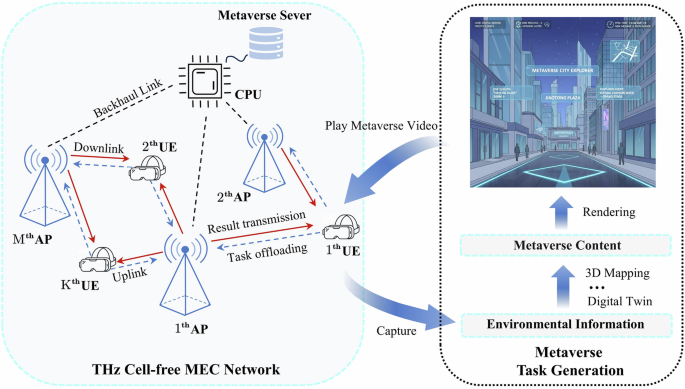
Terahertz Cell-Free Networks Harness AI to Power the Metaverse
New research introduces a novel network architecture combining Terahertz communication, cell-free MIMO, and AI-driven mobile edge computing to meet the extreme demands of the Metaverse.

Humanoid Robots: Evolution Beyond Expectation
The future of humanoid robots is unfolding in ways few predicted, moving past science fiction ideals to find practical applications in diverse sectors.
