Context-Aware AI Shields Immersive Worlds from Spatial Threats
A new framework called CAUSE brings personalized AI agents and portable policy engines to augmented and virtual environments, rethinking real-time user security.
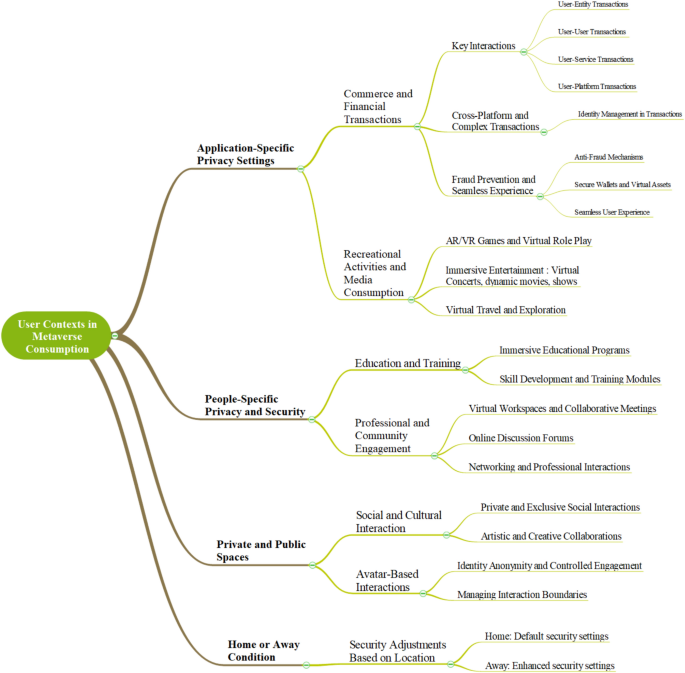
Researchers have designed an automated, AI-driven security framework called CAUSE to protect users across augmented and virtual environments through real-time threat classification and portable safety policies.
Immersive computing transforms how individuals interact with software, moving computing away from static two-dimensional displays and placing it directly into shared spatial environments. While augmented reality and virtual reality ecosystems present massive opportunities for collaboration, telepresence, and digital commerce, they also introduce complex attack vectors that conventional cybersecurity tools were never built to handle. In an interactive 3D landscape, security compromises are not limited to stolen credentials or compromised databases. They manifest as intrusive avatar behaviors, spatial harassment, real-time identity spoofing, and silent exfiltration of behavioural telemetry.
To counter these vulnerabilities, a research initiative has introduced the Context-Aware User Security Enhancement model, known as CAUSE. The system provides an automated, user-centric defense architecture designed to sit between an immersive platform and the individual user. By combining continuous context analysis, machine-learning-driven threat detection, and a portable policy engine, CAUSE seeks to restore user agency and establish verifiable safety parameters across fragmented immersive ecosystems.
The breakdown of static security in spatial computing
Traditional digital security models rely heavily on rigid boundaries, explicit authentication checkpoints, and static permissions. In cloud architectures and web applications, an identity provider validates a credential, issues a cryptographically signed token, and grants access to discrete endpoints. Once inside, the user interacts through predefined form fields, buttons, and document trees.
Spatial computing environments invalidate these core assumptions. Interactions in mixed reality are fluid, spontaneous, and non-deterministic. Avatars share continuous physical and virtual coordinate spaces, moving freely without discrete API calls for every gesture or proximity shift. Furthermore, immersive hardware continuously captures high-fidelity sensory data, including room geometry, eye-tracking patterns, head movements, and ambient audio streams.
These dynamics expose users to immediate personal risks. Incidents in popular consumer virtual environments have already demonstrated that unwanted physical proximity and virtual assault cause genuine physiological and psychological distress. Unlike a harassing message on a text forum, spatial misconduct triggers real nervous-system responses due to the brain's processing of stereoscopic depth and spatialized audio.
Beyond social harms, fluid identities make cross-platform verification notoriously difficult. Users often rotate pseudonyms, trade digital assets across decentralized networks, and shift between proprietary platforms with disparate moderation standards. Relying on host platforms to police user safety has proven inadequate. Centralized platforms typically apply broad, retroactive moderation that fails to catch real-time threats before harm occurs. CAUSE reorients this model by moving security enforcement to the edge of the user experience.
Core components of the CAUSE framework
The CAUSE framework operates through three primary mechanisms: a personalized AI agent, a context-aware policy engine, and an interoperability translation gateway. Rather than delegating safety to the platform operator, the architecture equips the individual with an autonomous protective agent that continuously monitors incoming spatial, contextual, and environmental signals.
The personalized AI agent acts as a local security sentinel. It evaluates incoming data streams, such as the trajectory of neighboring avatars, unexpected transaction requests, and environmental sensor access. When the agent observes behaviors that deviate from safe baselines or approach restricted thresholds, it does not wait for a cloud moderator to review an abuse ticket. It evaluates the risk tier instantly and invokes local countermeasures.
Directing this agent is the user-defined policy engine. Under CAUSE, users establish granular security preferences that reflect their comfort levels and risk tolerance. These policies govern geometric distance thresholds, communications filters, data-sharing restrictions, and transaction limits. For example, a user can mandate that any unfamiliar avatar crossing a two-meter perimeter must be automatically muted, blurred, or deflected into a separate rendering layer.
The policy engine interprets these instructions dynamically, adapting enforcement depending on the scenario. In a public virtual plaza, strict isolation rules may apply by default, whereas in an authenticated corporate meeting room, permissions can automatically relax to allow collaborative 3D modeling and uninhibited audio sharing.
Real-time risk modeling and lightweight classification
Proactive protection in wearable hardware requires exceptional computational efficiency. Head-mounted displays and spatial computing glasses operate under tight thermal, battery, and processing constraints. Complex, multi-billion-parameter neural networks running continuous inference directly on wearable chipsets would cause severe latency, draining battery reserves and inducing motion sickness.
To solve this challenge, the researchers behind CAUSE evaluated targeted machine-learning classifiers capable of operating rapidly on contextual telemetry. The evaluation focused on classifying interactions into low, moderate, and high-risk tiers using behavioral features such as spatial velocity, proximity changes, transaction volume, and interaction history.
In simulated testing, a Decision Tree classification model emerged as an exceptionally effective solution for edge execution. The classifier achieved an overall accuracy of 94.45% across three distinct risk categories, while delivering a recall rate of 90.83% specifically for high-risk threats. Prioritizing high-risk recall ensures that genuine security breaches and spatial aggression are intercepted before they reach the user, minimizing false negatives that could compromise safety.
Because decision tree algorithms execute deterministically with minimal computational overhead, they can run alongside rendering engines without degrading framerates or taxing system memory. This makes CAUSE viable not only on tethered, high-performance computing rigs, but also on standalone mobile headsets where processing budgets are strictly conserved.
Solving the cross-platform policy dilemma
A critical failure of modern immersive systems is fragmentation. A user who configures personal safety boundaries within one ecosystem often loses those configurations the moment they transition to an external service or independent virtual room. Current virtual worlds operate as disconnected walled gardens, each enforcing arbitrary safety baselines and isolated identity schemas.
CAUSE addresses this fragmentation through an interoperability gateway designed for policy migration. Under this paradigm, a user's security profile is decoupled from the host platform. When moving between heterogeneous virtual spaces, the gateway packages the user's security manifests into a standardized, transportable format.
Upon entering a new environment, the gateway negotiates with the host system's native runtime APIs, translating the user's policy declarations into the platform's corresponding rendering and access hooks. If an external world does not support an explicit spatial boundary feature natively, the CAUSE agent enforces the policy client-side by manipulating local rendering buffers, muting unauthorized audio feeds, and blocking unauthorized outbound sensory data. This decoupled architecture ensures that protection remains persistent and uniform, regardless of the target platform's internal security capabilities.
In findings published by Nature, the authors demonstrated that unifying policy migration with context-aware machine learning bridges the gap between passive platform moderation and active personal defense, charting a path toward trustworthy consumer immersive spaces.
Why it matters
While the CAUSE framework was evaluated primarily within consumer virtual environments, its architectural principles directly address the emerging operational risks facing enterprise field operations, telecommunications, and industrial data centers.
Field technicians increasingly rely on enterprise augmented reality headsets to inspect complex fiber routes, verify data center server racks, and execute remote plant repairs. In these mission-critical environments, AR hardware overlays live telemetry, schematic diagrams, and remote video feeds directly onto the technician's line of sight. An unverified context stream, malicious digital injection, or misconfigured spatial interface can distract an engineer, obscure warning indicators on high-voltage equipment, or leak sensitive facility layouts.
Furthermore, as telecommunications operators deploy 5G advanced and private edge computing nodes to manage industrial spatial twins, securing the pipeline between physical infrastructure and digital representation becomes paramount. Lightweight, context-aware frameworks like CAUSE illustrate how local AI agents can authenticate data feeds, filter external digital interference, and enforce strict spatial perimeters without burdening edge networks with excessive latency. Securing spatial computing is no longer just about personal comfort in virtual rooms, but about maintaining operational integrity in industrial reality.
More from Trends
RSSHardening Smart Cities: How Diffusion Models and Blockchain Form an Edge Defense Matrix
A new framework combines generative diffusion, spatial-frequency neural networks, and lightweight blockchain to secure smart city IoT deployments with over 99% accuracy.

Hong Kong Emerges as an Incubator for Wearable AI and Novel Tactile Interfaces
Startups backed by Hong Kong's technology ecosystem are bringing multimodal models and machine learning materials into smart glasses, tactile sensors, and field-ready wearables.

Google and Synaptics Bring Open-Source Coral AI Silicon to Wearables and Edge Hardware
Synaptics and Google have introduced the Astra SR200 silicon family, bringing open-source Coral NPU architecture to battery-powered wearables and industrial edge sensors.
