Navigating the Regulatory Maze of Convergent Technologies
The convergence of synthetic biology, AI, and automation is creating a regulatory labyrinth, threatening to stifle crucial scientific collaboration and innovation.
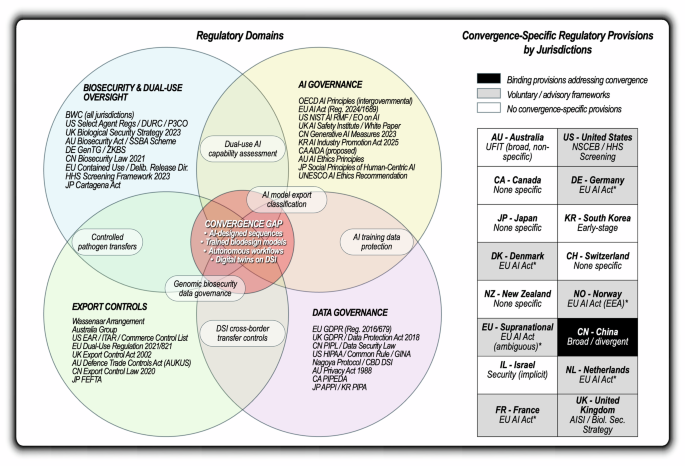
The rapid convergence of synthetic biology, artificial intelligence, and automation is generating unprecedented regulatory challenges, with existing frameworks proving inadequate for these complex, interdisciplinary research frontiers.
A New Era of Scientific Convergence
The landscape of scientific discovery is undergoing a profound transformation. At its forefront is the powerful convergence of synthetic biology, artificial intelligence (AI), and automation. This confluence, often abbreviated as SynBioxAI, is rapidly accelerating research and development in areas like drug discovery, advanced biomanufacturing, environmental remediation, and sustainable agriculture. AI systems are now capable of generating novel hypotheses and designing complex biological structures. These designs are then executed and refined by highly automated, robotic biofoundries, which can translate theoretical concepts into functional biological systems with unprecedented speed. The traditional design-build-test-learn cycle, once a lengthy, months-long endeavor, can now be completed in a matter of days, with the frontier moving towards fully autonomous, AI-directed experimental systems requiring minimal human oversight.
The Organisation for Economic Co-operation and Development (OECD) has recognized SynBioxAI as a domain of immense transformative potential. However, it also highlights a critical problem: the pace of governance, safety protocols, and strategic intelligence in this field lags significantly behind the rapid advancements in technical capability. This creates a challenging environment for researchers and institutions seeking to push the boundaries of what's possible.
The Governance Gap: A Structural Challenge
The core challenge facing SynBioxAI is not incidental, but structural. Regulatory frameworks have historically evolved to address specific fields. Synthetic biology, for instance, operates within a well-defined set of legislative instruments and regulations in many jurisdictions. In contrast, AI technologies have developed at an astonishing pace, with commercial applications often outpacing legislative oversight. When these two distinct regulatory cultures intersect within a single convergent project, the result is far more complex than a simple accumulation of rules. The layers of complexity are not just additive, they are interactive and multiplicative.
Consider a research project that combines AI-driven protein design with automated biofoundry construction, and potentially involves the release of engineered organisms into the environment. Such a project could simultaneously trigger requirements across a multitude of regulatory domains. These include biosecurity screenings, AI transparency mandates, export controls, data sovereignty rules, benefit-sharing obligations, institutional ethics reviews, and public engagement expectations. Each of these areas is typically governed by different legal instruments, often in different jurisdictions, administered by various authorities, and operating under distinct evidentiary standards and timelines. This creates a labyrinthine compliance landscape that can be daunting, if not prohibitive, for international collaboration.
Unpacking Regulatory Friction: Scenarios and Stakes
To better understand these friction points, researchers conducted a comprehensive cross-jurisdictional analysis of the regulatory landscape across sixteen nations. They mapped the interactions across four critical governance domains: biosafety and biosecurity, artificial intelligence governance, export controls and technology protection, and data governance. This analysis revealed significant ambiguities where novel SynBioxAI creations often fall between established regulatory categories, creating compliance vacuums or overlaps.
The study further utilized seven realistic international collaboration scenarios to demonstrate how regulatory friction escalates. These scenarios spanned a range of plausible near-term SynBioxAI applications involving varying combinations of biological, computational, data-intensive, and cross-border research activities. For example, a collaboration between a lab in one country developing AI for novel drug discovery and a biofoundry in another country designing the biological components, with data sharing across borders, quickly encounters a web of differing national rules on data privacy, intellectual property, dual-use concerns, and even the definition of what constitutes a 'biological agent' or 'AI system' under respective laws. This scenario-based testing confirmed that regulatory friction is indeed multiplicative, creating exponential challenges for international partnerships.
Towards Regulatory Interoperability: The RIOT Framework
The fundamental premise emerging from this research is that achieving global regulatory harmonization across these diverse jurisdictions is neither realistic nor necessarily desirable. Different societies will, quite reasonably, arrive at different conclusions regarding the governance of powerful convergent technologies, reflecting their unique values and priorities. Instead, the focus should shift toward achieving regulatory _interoperability_. This concept emphasizes the capacity for institutions operating under disparate frameworks to collaborate effectively by ensuring their governance postures are transparent, mutually understandable, and operationally compatible.
To this end, the study proposes the SynBioxAI Regulatory Interoperability Toolkit (RIOT). This practical, seven-lens institutional framework is designed to empower research institutions to navigate regulatory divergence efficiently and transparently. The RIOT framework helps organizations assess and understand the various regulatory demands and how they interact in complex, multi-jurisdictional projects. By adopting such a toolkit, institutions can proactively identify potential conflicts, establish clear communication protocols, and develop strategies to bridge governance gaps, rather than treating compliance as a reactive, cost-intensive burden. The research, detailed in Nature, suggests that institutions that strategically develop this interoperability capacity will gain a significant advantage in the increasingly globalized realm of SynBioxAI collaboration.
Why it matters
The complex regulatory landscape surrounding SynBioxAI has direct implications for sectors heavily reliant on advanced technology, including telecommunications, data centers, and advanced manufacturing. The rapid advancements in AI and automation within synthetic biology necessitate robust and clear guidelines to ensure safe and ethical development while fostering innovation. For telcos, this could impact the security and data governance of networks supporting AI-driven biofoundries or biological data exchanges. Data center operators will face increasing demands for secure, compliant infrastructure to host the massive datasets generated and processed by SynBioxAI systems, requiring adherence to diverse international data sovereignty and security regulations. Technicians across these fields will need to adapt to new compliance requirements, potentially requiring specialized training in cross-domain regulatory understanding. Without a proactive approach to regulatory interoperability, the very infrastructure supporting these scientific breakthroughs could become a bottleneck, hindering critical advancements and global collaboration.
More from Trends
RSSSecuring the Augmented Frontier: AI-Powered Defenses for Immersive Environments
A new AI-driven security framework leverages neural cellular automata to protect augmented reality applications from privacy breaches and data threats, demonstrating significant risk reduction.
New AI Model Enhances Medical Image Diagnosis with Hierarchical Attention
Researchers have developed an advanced AI model, based on the Swin Transformer, to significantly improve the accuracy of medical image classification by focusing on diverse feature levels, from macro-scale lesions to minute anatomical details.
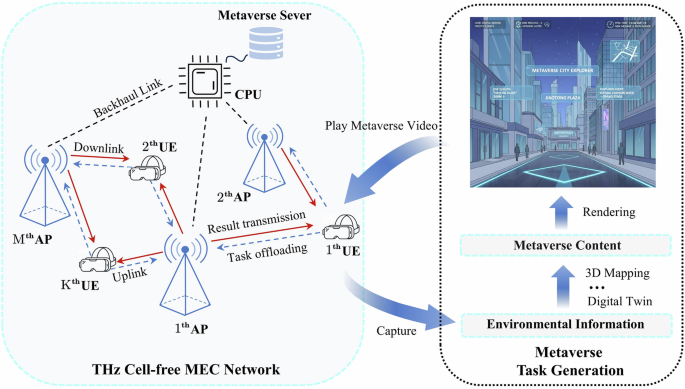
Terahertz Cell-Free Networks Harness AI to Power the Metaverse
New research introduces a novel network architecture combining Terahertz communication, cell-free MIMO, and AI-driven mobile edge computing to meet the extreme demands of the Metaverse.

