Securing the Augmented Frontier: AI-Powered Defenses for Immersive Environments
A new AI-driven security framework leverages neural cellular automata to protect augmented reality applications from privacy breaches and data threats, demonstrating significant risk reduction.

Augmented reality applications, critical in fields from healthcare to industrial training, are facing a sophisticated new defense mechanism against privacy and security threats, utilizing neural cellular automata for dynamic, adaptive protection.
The Rising Tide of Augmented Reality and its Vulnerabilities
Augmented reality, or AR, is swiftly moving from niche technology to a fundamental tool across numerous sectors. Its ability to overlay digital information onto the real world offers transformative potential in areas like advanced healthcare diagnostics, intuitive navigation within smart cities, and highly efficient industrial training and collaborative work environments. However, this growing integration comes with inherent challenges. The very nature of AR systems involves the continuous capture and streaming of rich multimedia content, along with the real-time exchange of sensitive sensor data. This constant flow of information creates a fertile ground for privacy invasions and security breaches. The risks are substantial, ranging from unauthorized access to AR streams and the illicit capture of visual or sensor data, to sophisticated inference attacks that could deduce sensitive personal or operational details from seemingly innocuous data patterns.
Traditional security measures, often designed for static or less dynamic digital environments, struggle to keep pace with the fluid, context-aware, and highly interactive nature of AR. The sheer volume and variety of data, coupled with the need for low-latency processing, demand a new paradigm in cybersecurity. Without robust, adaptive defenses, the widespread adoption and trustworthiness of AR technologies could be severely hampered, limiting their potential to revolutionize how we interact with information and the world around us.
Introducing Neural Cellular Automata for Adaptive Security
To address these complex security and privacy challenges, researchers have developed an innovative approach that integrates a novel Neural Cellular Automata, or NCA, layer directly into AR frameworks. Unlike previous security models, this NCA layer is not a static defense system. Instead, it is designed to actively learn and adapt to the intricate, evolving behaviors characteristic of augmented reality environments. This learning capability allows it to understand the typical data flows, user interactions, and environmental cues within a given AR application.
The core strength of the NCA lies in its ability to perform localized state evaluations. This means it can analyze individual components of the AR data stream and assess their spatial dependencies and distributed behavioral patterns. By understanding how different pieces of data relate to each other in time and space, the NCA can establish a baseline for normal operations. This granular understanding enables the system to dynamically enforce critical security functions. It facilitates real-time, spatial-temporal anomaly detection, identifying deviations from expected behavior that could signal an intrusion or attack. Furthermore, the NCA layer implements adaptive access control, adjusting permissions and restrictions based on the context and detected activity. It also integrates sophisticated encryption mechanisms, ensuring that sensitive data remains protected throughout its transmission. This multi-faceted, intelligent security layer represents a significant leap forward in safeguarding AR ecosystems.
How the NCA Layer Operates and Protects
The operational mechanism of the NCA layer is highly sophisticated, yet designed for efficiency. For each individual data stream within an AR environment, the NCA layer establishes a specific set of rules. These rules are not hardcoded but are dynamically learned and refined based on the observed behavior of the AR system and its users. The layer constantly monitors activities within the AR environment, looking for any patterns or events that diverge from the learned norms. This continuous vigilance is crucial for detecting subtle, evolving threats that might bypass conventional security protocols.
Central to its function is the adaptive neural model for anomaly detection. When an unusual pattern is identified, the NCA doesn't just flag it; it uses its neural network capabilities to assess the nature and severity of the anomaly, dynamically adjusting its response. This might involve tightening access controls, re-authenticating users, or triggering advanced encryption protocols. Complementing this, the NCA layer also incorporates an optimized key generation algorithm. This algorithm works in conjunction with symmetric encryption techniques to ensure that data transmission is secure, but critically, it does so with minimal computational overhead. This focus on efficiency is paramount for AR systems, which require real-time processing and cannot afford significant delays introduced by heavy security measures. The intelligent integration of detection, access control, and efficient encryption allows the NCA layer to provide comprehensive, agile protection for AR applications.
Empirical Validation and Promising Results
The efficacy of this advanced security framework has been rigorously tested through experimental evaluations. The results demonstrate a high level of performance across key security metrics. The system achieved an impressive intrusion detection rate of 96.8 percent, indicating its strong capability to identify malicious activities attempting to compromise the AR environment. In terms of access control, the framework showed a decision accuracy of 94.3 percent, effectively ensuring that only authorized entities could access specific data and functionalities, adapting permissions as necessary based on detected behavior.
Crucially for performance-sensitive AR applications, the overhead associated with the encryption process remained remarkably low, at below 6 percent. This minimal computational impact ensures that the security measures do not unduly hinder the real-time responsiveness and immersive experience that AR users expect. Further post-deployment analysis under simulated attack conditions provided compelling evidence of the system's overall robustness. This multi-layered privacy mechanism was found to reduce measurable AR security and privacy risks by over 85 percent, according to the research published in Nature. These significant results underscore the potential of neural cellular automata to create a more secure and trustworthy foundation for the expanding world of augmented reality.
Why it matters
This breakthrough in AR security has profound implications for various fields, particularly those relying on complex digital infrastructures and real-time data processing. For AI development, it demonstrates how intelligent systems can be leveraged not just for application functionality but also for their inherent security, creating self-defending environments. In the telecommunications sector, securing high-bandwidth, low-latency AR streams is critical for 5G and future networks that underpin immersive experiences. The efficient encryption and anomaly detection capabilities mean telcos can offer more secure AR services without sacrificing performance. For data center operations, which host the vast computational power required for AR, this framework highlights the importance of adaptive, AI-driven security at the application layer, reducing the risk of data exfiltration and unauthorized access to sensitive information. Furthermore, field technicians utilizing AR for diagnostics or remote assistance will benefit immensely from robust, transparent security, ensuring their critical operational data remains confidential and integrity is maintained. This research paves the way for wider, safer adoption of AR across mission-critical applications by enhancing trust and mitigating digital risks.
More from Trends
RSS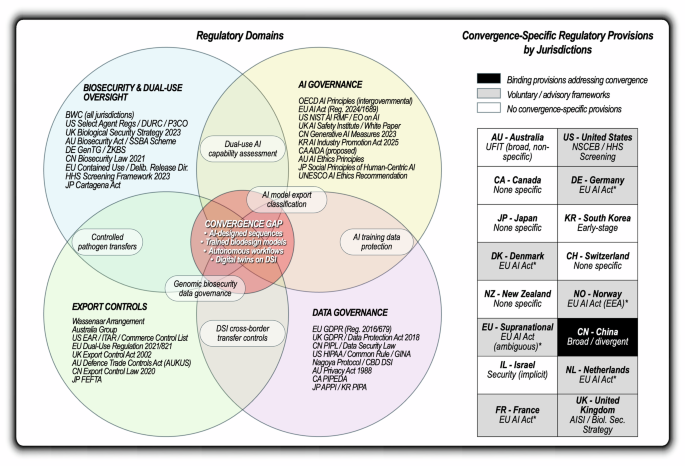
Navigating the Regulatory Maze of Convergent Technologies
The convergence of synthetic biology, AI, and automation is creating a regulatory labyrinth, threatening to stifle crucial scientific collaboration and innovation.
New AI Model Enhances Medical Image Diagnosis with Hierarchical Attention
Researchers have developed an advanced AI model, based on the Swin Transformer, to significantly improve the accuracy of medical image classification by focusing on diverse feature levels, from macro-scale lesions to minute anatomical details.
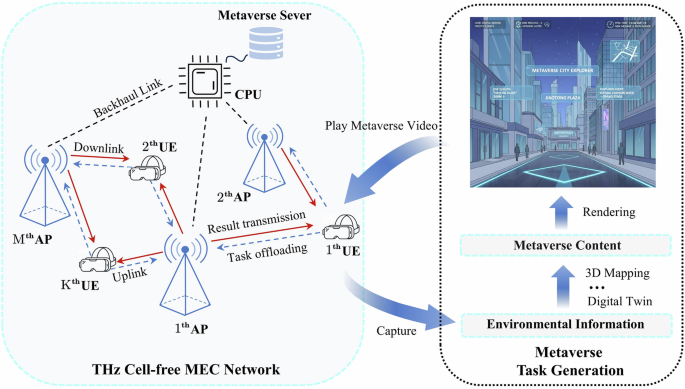
Terahertz Cell-Free Networks Harness AI to Power the Metaverse
New research introduces a novel network architecture combining Terahertz communication, cell-free MIMO, and AI-driven mobile edge computing to meet the extreme demands of the Metaverse.
