Offshoring the Compute Boom: Washington Looks to Southeast Asia for Data Centers
Facing domestic grid bottlenecks and community backlash, US officials are promoting offshore AI infrastructure and chip manufacturing in the Philippines.

TL;DR: Facing mounting domestic pushback over energy and land use, the United States is pitching the Philippines as a primary offshore hub for AI data centers and semiconductor manufacturing.
The Diplomatic Welcome Meets Street-Level Resistance
When US officials touched down in Manila for high-level bilateral and regional talks, the ceremonial reception offered all the standard trappings of state diplomacy. Government leaders presented an eager front, signaling ready alignment with American technological ambitions. Outside the airfield and through the thoroughfares of the capital, however, the atmosphere told a sharply different story. Demonstrators gathered with picket signs, organized chants, and symbolic street theater, voicing direct opposition to what they termed foreign exploitation of local resources.
At the center of their discontent is Pax Silica, an international diplomatic and industrial framework led by Washington. The stated purpose of the initiative is to construct a resilient, Western-aligned supply chain for the hardware that underpins artificial intelligence. This includes everything from the extraction and refining of critical minerals to the fabrication of advanced semiconductors and the operation of hyperscale data centers. To its advocates, the initiative offers allied nations a stable umbrella of economic security and technological advancement. To local civic and environmental groups, it looks like an effort to offload the heavy environmental and infrastructural burdens of AI onto a developing country that is already grappling with unstable power and climate vulnerabilities.
The Mechanics of Pax Silica
To understand why Manila has become a target for this infrastructure push, one must examine the broader ambitions of American industrial policy. The race to build increasingly large generative AI models requires an unprecedented volume of computing capacity. Modern model training and enterprise inference clusters demand specialized silicon, vast real estate, and round-the-clock power supplies running into hundreds of megawatts per campus.
Pax Silica is designed to knit together allied supply chains so that critical minerals, lithography tools, component packaging, and server farms remain out of geopolitical reach from Beijing. In Latin, the term evokes historic eras of imperial stability, promising peace and prosperity through technological dominance. Yet the initiative fundamentally requires physical territory. While design talent and venture capital remain heavily concentrated in American innovation corridors, the actual physical footprint of compute must sit on solid ground, plugged into high-voltage transmission lines and deep water cooling supplies.
By including the Philippines in this orbit, American policymakers hope to secure a strategic foothold in Southeast Asia. The island nation offers geographic proximity to vital Pacific shipping lanes and established submarine communications cables. Moreover, the long historical and military ties between Washington and Manila provide a familiar legal and diplomatic channel for American multinational firms seeking friendly overseas operating environments.
Pushing Infrastructure Beyond Domestic Backyards
This outward pivot is not happening in a vacuum. It is the direct consequence of an escalating crisis inside the United States, where local municipalities and utilities are pushing back against the physical footprint of computing infrastructure. In historic data center capitals such as Northern Virginia, municipal planning boards and county supervisors have begun freezing approvals, questioning utility rate adjustments, and introducing strict zoning moratoriums.
American residents who live near existing hyperscale clusters have raised alarms over the droning noise of industrial cooling equipment, the consumption of millions of gallons of municipal water daily, and the threat of rising residential power bills. Semiconductor manufacturing plants supported by federal subsidies have faced similar scrutiny over toxic chemical management, wastewater treatment, and slow grid hookups. In several states, electrical utilities have warned that connecting proposed server facilities would exhaust available capacity, requiring utilities to delay the retirement of fossil-fuel generators or construct costly new high-voltage transmission corridors at taxpayer expense.
Because of these domestic bottlenecks, policymakers and technology executives are searching for locations where land, regulatory clearances, and utility access can be expedited. Less affluent nations, hungry for foreign direct investment and keen to build domestic technology sectors, have emerged as attractive alternatives. Proponents promise that hosting these installations will create high-paying engineering jobs, attract advanced telecommunications links, and elevate host countries into major players in the digital economy.
The Resource Equation in Developing Grids
The economic promises made to host nations often run into hard physical constraints. While data centers generate headline-grabbing investment figures, their operational profiles are uniquely asymmetrical. They bring massive capital expenditures during the initial buildout phase, but once operational, their permanent staffing requirements are remarkably modest compared to traditional industrial manufacturing plants.
At the same time, their utility requirements are relentless. An island grid like that of the Philippines already faces structural challenges, including comparatively high wholesale electricity prices, frequent seasonal supply deficits, and heavy reliance on imported fossil fuels alongside nascent renewable projects. Diverting large blocks of base-load generation to power artificial intelligence hardware creates serious tradeoffs. If a regional utility dedicates significant capacity to high-density compute clusters, local manufacturing, residential consumers, and municipal services must compete for what remains.
Water consumption presents another immediate engineering hurdle. Evaporative cooling systems, which remain common across high-performance compute architectures, draw heavily on local aquifers and municipal reservoirs. In regions prone to extreme weather fluctuations and extended dry seasons, diverting millions of liters of fresh water toward server racks is a recipe for social and environmental friction. These real-world complications explain why initial reporting by The Verge on the Manila diplomatic push highlighted such a profound division between government enthusiasm and grassroots resistance.
Subsea Routes and Telecom Realignment
Moving critical compute infrastructure across the Pacific also carries complex implications for telecommunications and operational resilience. Artificial intelligence applications do not exist in isolation. They require rapid, redundant connectivity to route petabytes of training data and return real-time inference responses to global end users.
Placing massive facilities in Southeast Asia accelerates the need for modern subsea fiber cables that bypass regional chokepoints. Network operators and cloud providers are already spending billions to construct diverse routes across the western Pacific, seeking paths that minimize seismic exposure and avoid politically sensitive maritime corridors. Developing data centers in the Philippines requires coordinated upgrades to terrestrial fiber backbones, regional landing stations, and carrier-neutral meet-me rooms to ensure that capacity can be efficiently distributed across international boundaries.
These facilities cannot function simply as isolated server sheds. They require an ecosystem of specialized technical logistics, reliable secondary power supplies like battery backup farms and backup generators, and sophisticated physical security. If regional grids falter, operators must rely on islanded power strategies, including dedicated microgrids, to prevent catastrophic outages during model training runs.
Why it matters
The push to establish data centers and semiconductor capacity in Southeast Asia signals that the constraints of the AI boom are now driving international foreign policy. For technicians, data center engineers, and field operators, this migration alters the geography of infrastructure deployment. It demands the training of specialized local labor forces capable of commissioning high-density liquid cooling, managing ultra-high-voltage power distribution, and maintaining mission-critical hardware in tropical environments.
For telecommunications providers, it accelerates the timeline for deploying trans-Pacific subsea fiber and high-capacity backhaul networks to support distributed compute. As western communities increasingly reject the physical costs of digital infrastructure, global operational resilience will depend not just on writing advanced software, but on how effectively field technicians and utility planners can manage the physical strains of power, water, and connectivity in developing grids worldwide.
More from Trends
RSS
Inside China's Coordinated Campaign to Build an AI-Native Generation
With mandatory curricula, entrance exam integration, and rural AI tutors, China is executing a massive state push to achieve universal AI literacy across 200 million students by 2030.
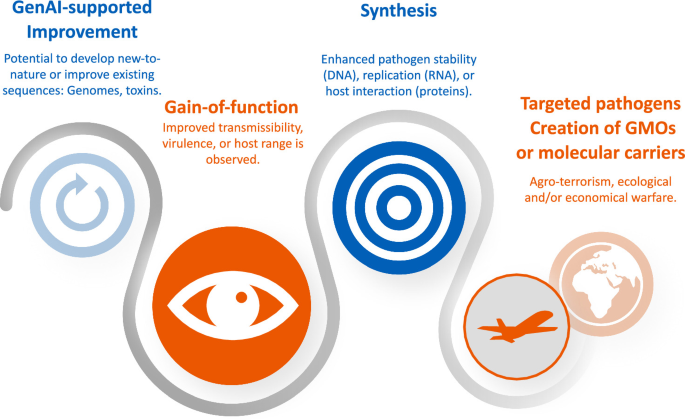
Securing Generative Biology: Inside the Defence-in-Depth Push for Biological AI
As AI models advance from generating protein structures to viable viral genomes, biosecurity researchers outline a multi-layered defence across data, models, and DNA synthesis.

Anthropic Mathematician Claims Proof of the Riemann Hypothesis Using Claude
A researcher at Anthropic claims to have proved the Riemann hypothesis with Claude, igniting excitement and skepticism across the global mathematics community.