Securing Generative Biology: Inside the Defence-in-Depth Push for Biological AI
As AI models advance from generating protein structures to viable viral genomes, biosecurity researchers outline a multi-layered defence across data, models, and DNA synthesis.
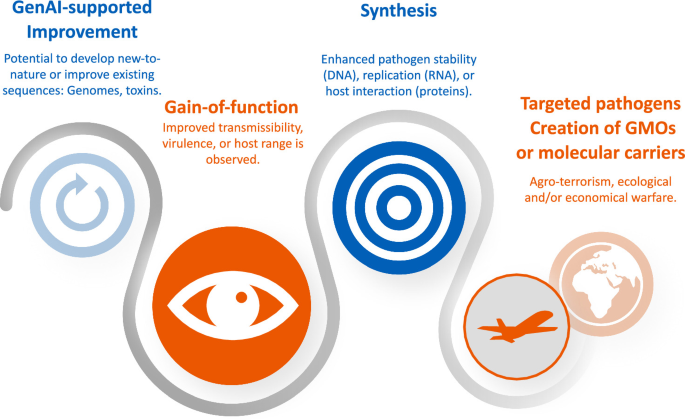
As generative biological foundation models make it easier to design functional proteins and viable viral genomes, researchers and security specialists are calling for a coordinated defence-in-depth framework across datasets, model weights, and physical DNA synthesisers.
The Rapid Shift to Generative Biology
Life sciences are undergoing an irreversible shift from descriptive observation to predictive, algorithmic engineering. For decades, molecular biology relied on painstakingly mapping natural organisms, isolating enzymes, and testing genetic variants through trial and error. Today, high-throughput measurement tools, long-read sequencing platforms, and automated wet labs have combined to generate massive biological datasets. This deluge of genomic information has outgrown traditional statistical software, creating the ideal training ground for biological foundation models.
Generative artificial intelligence applied to biology does not merely classify or predict static structures. Models trained on massive corpora of amino acids, proteins, and full genomes learn the underlying statistical grammar of life. Recent architectures, such as protein diffusion systems and whole-genome language models, can propose novel biological sequences from scratch. Researchers have already used these models to design bespoke enzymes, high-affinity binders for targeted therapeutics, and customised bacteriophages intended to neutralise antibiotic-resistant bacteria.
The timeline for biological engineering has collapsed. What previously required months of wet-lab mutagenesis can now be drafted in silicon in seconds. However, the exact architectural breakthroughs that allow an AI system to create an enzyme capable of degrading environmental toxins can also be directed toward the generation of dangerous biological agents, immune-evasive toxins, or enhanced pathogens.
A Growing Structural Asymmetry
The fundamental security tension in biological AI stems from a widening operational mismatch. Computational sequence generation now massively outpaces physical synthesis and empirical validation. An engineer running a biological foundation model can generate millions of functional genetic sequences in an afternoon. Synthesising, culturing, and verifying even a tiny fraction of those candidates in a physical laboratory requires significant time, equipment, and biological containment.
Because the software barrier to entry has dropped dramatically, the skills required to generate potentially dangerous genetic material have plummeted. In recent demonstration studies, researchers showed that fine-tuning a pre-trained genome language model on roughly 14,000 viral genomes allowed the system to generate functional variants of the phi X 174 bacteriophage. Following computational filtering and laboratory assembly, dozens of the generated sequences yielded fully viable, infectious phages that differed notably from natural reference strains. The experiment proved that generative models do not merely reproduce known data. They can interpolate and design novel, replicating biological entities with high fidelity.
When biological capability becomes purely a matter of compute and prompt engineering, the conventional barriers that previously kept biological weapons out of the hands of non-state actors begin to erode. Physical containment alone cannot mitigate the risk if the blueprints for dangerous pathogens can be designed by automated systems and executed on commercial hardware.
The Limits of Training Data Filtering
Initial discussions around AI safety in biotechnology often focused on data curation, suggesting that public repositories should simply redact pathogenic sequences. However, researchers now acknowledge that data-level hygiene is an incomplete shield. The complete genetic sequences of history's most devastating pandemic pathogens and regulated biological threat agents have sat in public, unclassified databases for decades. Reversing that availability is practically impossible.
Furthermore, generative models do not require specific pathogen blueprints in their foundational pre-training corpus to be hazardous. Biological grammar is conserved across life. A model trained exclusively on non-pathogenic bacteria and standard eukaryotic genomes still learns the mechanics of viral capsids, cell penetration, and protein folding. A bad actor who secures an open-weights biological model can fine-tune it using a tiny private dataset of toxic proteins or dangerous viruses. Experiments evaluating model safeguards have repeatedly shown that adversarial fine-tuning can strip away software-level guardrails with startlingly few computational resources.
Consequently, security researchers argue that data governance must be treated as only one early barrier in a wider operational chain. While repositories must exercise greater care in distributing high-risk functional annotations, data filtering cannot be relied upon as a standalone safeguard.
Securing the Physical Bottleneck: Gene Synthesis
If digital data and open-weights models are difficult to fully bottle up, the physical bottleneck of modern biotechnology remains tangible: nucleic acid synthesis. A digital sequence generated by an AI model remains harmless lines of text until it is assembled into real DNA or RNA strands.
Commercial gene synthesis providers represent the primary choke point between digital design and physical biology. Currently, major synthesis companies operate under voluntary industry standards to screen incoming customer orders against databases of known pathogens and regulated toxins. Yet this screening framework was built for exact sequence matching against historical databases. It is ill-equipped for generative AI designs, which may introduce extensive sequence permutations that retain lethal biological function while slipping past automated string-matching filters.
Closing this gap requires modernising synthesis screening through AI-driven functional prediction tools that assess what a sequence does, rather than just what it looks like in a database. At the same time, security experts stress that screening must expand beyond centralised commercial providers. The emergence of compact, benchtop DNA and RNA synthesisers threatens to decentralise production directly into private facilities. Without cryptographically locked firmware, customer verification, and continuous cloud-based compliance monitoring built into benchtop synthesiser hardware, physical screening protocols could quickly become obsolete.
An Integrated Framework for Defence-in-Depth
To move beyond fragmented solutions, a recent policy perspective published in Nature outlined an integrated defence-in-depth model emerging from the interdisciplinary Wübben Sandpit conference. The initiative assembled specialists across computational biology, biosecurity, ethics, and regulatory policy to map the entire life cycle of biological AI.
The resulting strategy rejects the idea that a single technical fix or legal restriction can eliminate dual-use biological risks. Instead, it proposes overlapping, complementary barriers across four distinct levels:
1. Upstream Data Governance: Establishing responsible access protocols for sensitive sequence-to-function databases, improving audit trails for genomic datasets, and discouraging the public distribution of weaponisable functional data. 2. Model Evaluation and Distribution: Instituting rigorous pre-release red-teaming for biological foundation models, defining standard safety benchmarks, and applying structured access mechanisms such as secure hosted APIs for the most capable model weights. 3. Hardware and Synthesis Verification: Mandating universal, legally binding customer and sequence screening across all commercial gene synthesis providers, alongside cryptographic hardware protections on benchtop synthesis equipment. 4. Institutional and Wet-Lab Oversight: Strengthening reporting channels within universities, biotechnology incubators, and contract research organisations to catch illicit physical testing before generated agents leave the laboratory.
The authors emphasised that these safeguards must not be treated as bureaucratic friction. Far from slowing scientific progress, transparent and predictable security standards provide the operational certainty that biotechnology ventures, cloud providers, and academic laboratories need to innovate without risking public safety or catastrophic accidents.
Why It Matters
For engineers, infrastructure specialists, and operations managers working across high-performance computing, the governance of biological AI is rapidly moving from an academic question to a daily operational reality. The frontier models used in biological sequence design require specialised compute clusters, accelerated networking, and vast memory footprints comparable to advanced enterprise large language models.
As regulatory frameworks in Europe and North America mature, operators of data centres, cloud hosting platforms, and high-performance compute facilities will increasingly face compliance obligations regarding the biological workloads running on their infrastructure. This could encompass automated workload verification, secure hardware enclaves for biological inference, and identity verification for researchers leasing compute clusters for genomic fine-tuning. Technicians maintaining enterprise AI pipelines will need to implement stricter audit logging and provenance tracking to ensure that powerful biological models are neither exfiltrated nor trained on restricted sequences. Ultimately, securing biological AI will depend as much on the integrity of physical compute infrastructure and hardware controls as on the algorithms themselves.
More from Trends
RSS
Inside China's Coordinated Campaign to Build an AI-Native Generation
With mandatory curricula, entrance exam integration, and rural AI tutors, China is executing a massive state push to achieve universal AI literacy across 200 million students by 2030.

Offshoring the Compute Boom: Washington Looks to Southeast Asia for Data Centers
Facing domestic grid bottlenecks and community backlash, US officials are promoting offshore AI infrastructure and chip manufacturing in the Philippines.

Anthropic Mathematician Claims Proof of the Riemann Hypothesis Using Claude
A researcher at Anthropic claims to have proved the Riemann hypothesis with Claude, igniting excitement and skepticism across the global mathematics community.