Persona AI Seeks to Streamline Humanoid Development with a Standardized Platform
Persona AI, co-founded by Radford Pratt, aims to bring order to the chaotic humanoid robotics industry by offering a unified software platform.

The burgeoning humanoid robotics industry is experiencing rapid growth, but a lack of standardized software infrastructure is creating significant development hurdles, a challenge Persona AI seeks to address.
The Humanoid Robotics Landscape: A Tower of Babel
The field of humanoid robotics is characterized by intense innovation, with numerous startups pushing the boundaries of what these machines can achieve. However, this dynamic environment also presents a substantial challenge: a fragmented software ecosystem. Each new humanoid robot often requires a bespoke software stack, leading to duplicated efforts, increased development costs, and slower progress. This situation is akin to a Tower of Babel, where different teams speak different technical languages, hindering collaborative advancement. The complexity extends from basic movement controls to sophisticated AI capabilities, making the integration of new features or hardware exceptionally difficult.
Traditionally, robotics companies have built their software from the ground up, a strategy that made sense when the field was less mature and specialized requirements dominated. However, as humanoid robots become more sophisticated and their potential applications broaden, this approach is proving unsustainable. The current paradigm forces engineers to spend valuable time on foundational software development rather than focusing on core innovation or specific application-layer challenges. This inefficiency impedes the pace of progress and raises the barrier to entry for new players, despite the increasing interest and investment in the sector.
Persona AI's Vision: A Unified Software Platform
Persona AI, a company co-founded by Radford Pratt, is attempting to change this paradigm by introducing a standardized software platform designed to manage the complexities of humanoid robot operation. Their goal is to provide a comprehensive, off-the-shelf solution that handles everything from low-level motor control to high-level task execution and human-robot interaction. By offering a unified system, Persona AI aims to streamline the development process, allowing robotics companies to focus their resources on differentiating their products rather than reinventing fundamental software components.
The company envisions a future where humanoid robot developers can integrate Persona AI's platform and immediately begin building applications, much like app developers leverage mobile operating systems. This approach could significantly reduce the time and expense associated with bringing new humanoid robots to market. The platform is designed to be adaptable, catering to various hardware configurations and functional requirements, thus offering a flexible solution for a diverse industry. The ambition is not merely to provide software, but to establish a de facto operating system for humanoid robotics, fostering greater interoperability and accelerating innovation across the board.
Addressing Key Challenges in Humanoid Development
One of the primary difficulties in humanoid robotics is achieving smooth, coordinated movement and robust interaction with the environment. This involves complex physics, real-time sensor data processing, and precise motor control, often across dozens of degrees of freedom. Persona AI's platform is engineered to abstract away much of this complexity, offering developers higher-level commands and APIs. This means engineers can instruct a robot to perform a task, such as picking up an object, without needing to program each individual joint movement or sensor interpretation from scratch.
Furthermore, the platform focuses on creating a 'calm experience' for both developers and end-users. For developers, this translates to predictable behavior, clear documentation, and efficient debugging tools. For end-users, it means robots that operate reliably, respond intuitively, and interact safely and effectively in human environments. This emphasis on user experience is crucial for the wider adoption of humanoid robots, as trust and ease of use will be paramount for their integration into everyday life and industrial settings. The platform also aims to facilitate the integration of advanced AI capabilities, such as natural language processing and adaptive learning, making robots more intelligent and versatile.
The Path to Industry Standardization
The success of Persona AI's vision hinges on its ability to achieve broad adoption across the humanoid robotics industry. Historically, establishing a new industry standard is a challenging endeavor, often requiring a combination of superior technology, strategic partnerships, and a compelling economic argument. Persona AI intends to demonstrate that its platform offers significant advantages in terms of reduced development cycles, lower costs, and enhanced robot capabilities. By providing a stable and scalable foundation, they hope to attract a critical mass of developers and manufacturers.
This standardization could lead to a virtuous cycle: as more companies adopt the platform, a larger ecosystem of tools, applications, and skilled personnel will emerge, further solidifying its position as an industry standard. This would also enable greater collaboration within the sector, allowing different research groups and companies to build upon shared foundations rather than duplicating efforts. The company is actively engaging with leading humanoid robotics startups and established players to showcase the benefits of a unified software approach, aiming to build consensus around its proposed solution.
The Potential Impact on Human-Robot Collaboration
Looking ahead, the long-term impact of a standardized software platform for humanoids extends beyond manufacturing efficiencies. It could fundamentally change how humans interact with and utilize robots. With a common operating system, it becomes easier to develop universal applications and interfaces, much like how mobile apps work across different phone brands. This could accelerate the deployment of humanoids in various sectors, from logistics and manufacturing to healthcare and personal assistance.
Moreover, a cohesive software environment could foster more natural and intuitive human-robot collaboration. If robots speak a common software language, they can be programmed to understand and respond to human cues more effectively, leading to safer and more productive interactions. The vision, as articulated by Radford Pratt and Persona AI, is to move beyond disparate, complex systems to a future where humanoid robots are easily programmable, reliably functional, and seamlessly integrated into human society, creating a more harmonious and efficient environment for all. This transformative approach to humanoid software development was highlighted in a recent article from IEEE Spectrum.
Why it matters
This shift towards a standardized software platform for humanoid robots is highly relevant to AI, technicians, telco, and data centre operations. For AI development, it provides a stable and consistent environment to train and deploy advanced models for robot perception, decision-making, and interaction, reducing the overhead of custom integrations. Technicians will benefit from common diagnostic tools and training methodologies across different robot models utilizing the platform, simplifying maintenance and troubleshooting. Telco and data centre operators will see increased demands for robust, low-latency connectivity and high-performance computing as these standardized humanoids become more prevalent, requiring resilient network infrastructure and scalable data processing capabilities to manage vast streams of sensor data and control commands in real-time.
More from Trends
RSS
AI Agents on the Horizon: Milestones for Widespread Adoption
AI agents are poised to become ubiquitous, but three critical milestones must be met: transforming software development, establishing trust through verification, and democratizing agent creation.
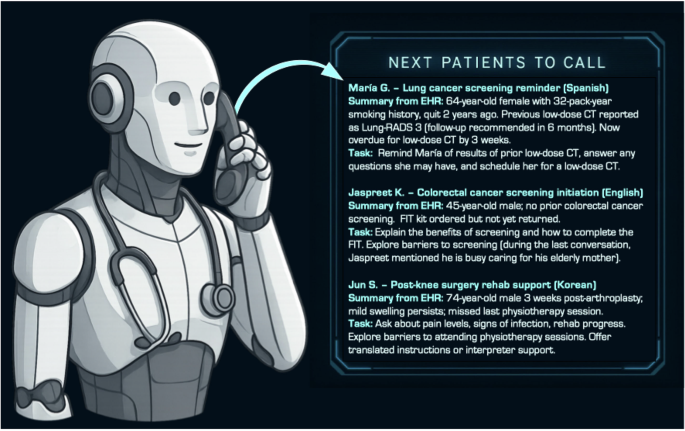
Voice AI Set to Reshape Healthcare Communication
Generative AI voice agents, leveraging large language models, are poised to revolutionize patient engagement and administrative tasks within healthcare.
DeepMind's Nobel Recognition: A Catalyst for New Scientific Frontiers
Google DeepMind's AlphaFold, a protein-folding AI, has earned a Nobel Prize, sparking discussion about AI's role in fundamental scientific breakthroughs.