Viture's Vonder Glasses Aim to Personalize Life Through AI-Driven 'Memory Mapping'
Viture's new Vonder smart glasses, unlike previous models, focus on AI-driven personal assistance and 'memory mapping' without a virtual display or camera, emphasizing privacy.

Viture's new Vonder smart glasses introduce an AI assistant designed to learn from a user's verbal interactions, creating a personal 'memory graph' to offer proactive insights and improve daily life.
The Evolution of Wearable AI: A Shift Towards Personal Intelligence
In the rapidly evolving landscape of wearable technology, a new product from smart glasses manufacturer Viture is poised to redefine the relationship between users and artificial intelligence. The company, previously known for its virtual display glasses catering to gamers and entertainment enthusiasts, has unveiled its latest innovation: the Vonder AI glasses. This new device represents a significant pivot for Viture, moving away from immersive visual displays to focus on a deeply personal, auditory-driven AI assistant that aims to understand and augment a user's daily life without an integrated camera or virtual screen.
David Jiang, co-founder and CEO of Viture, shared a compelling anecdote that illustrates the core philosophy behind the Vonder glasses. He recounted how, during his 10-year-old son's tennis tournaments, his tendency to loudly critique his son's performance was flagged by the nascent AI assistant in his Vonder glasses. The AI, recognizing a pattern of unhelpful behavior from his speech, provided a message advising a more supportive approach. Jiang claims this intervention not only shifted his parenting style but also enhanced his relationship with his son, highlighting the potential for this technology to foster self-improvement and personal growth. He describes the Vonder glasses as more than just a tool for summarization, envisioning them as a catalyst for becoming a better individual.
This personal narrative underscores Viture's ambition to create a wearable device that transcends basic utility. The Vonder glasses are designed to meticulously map a user's thoughts, experiences, and objectives, then translate these into a digital framework. This concept of a 'memory graph' or digital vision board, generated solely through verbal interaction, marks a departure from conventional smart glasses that often rely on visual input or augmented reality displays. Viture, with headquarters in both California and Beijing, is pushing the boundaries of what a discreet, everyday wearable can achieve in the realm of personal AI.
Design, Functionality, and Multi-Model AI Integration
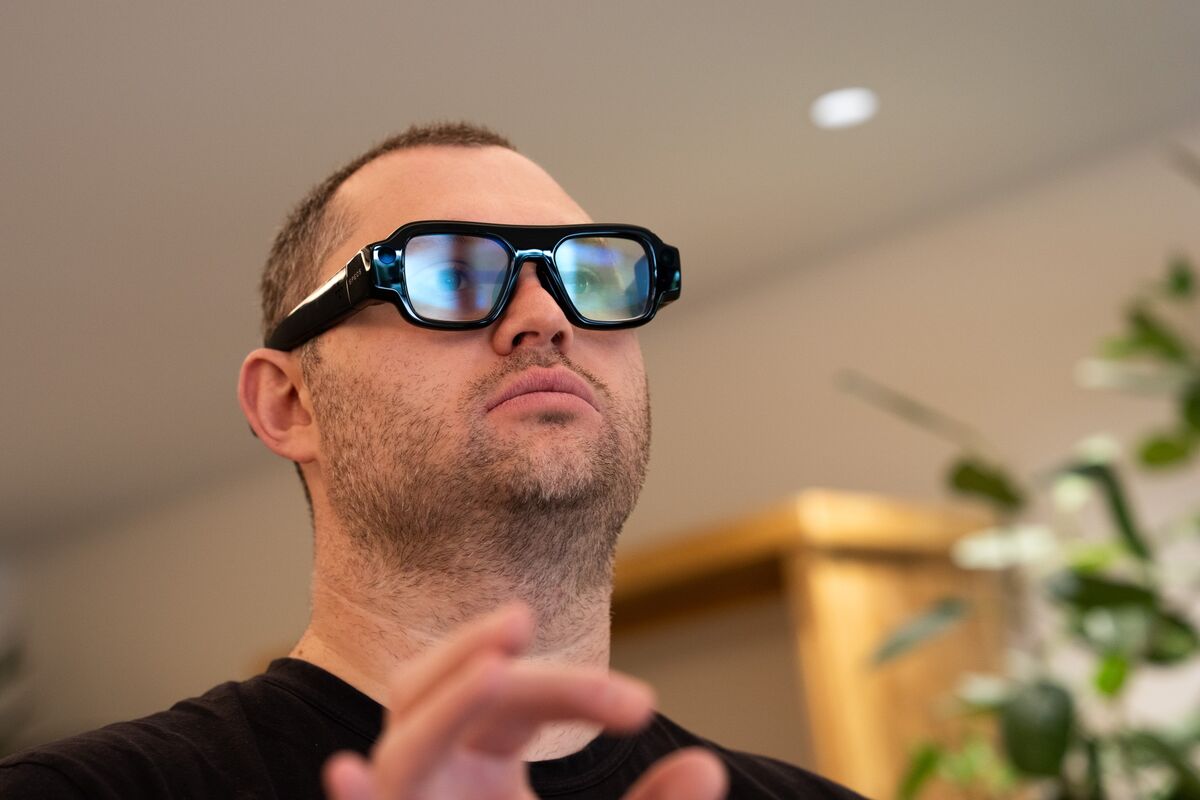
Breaking from Viture's established product line, which includes devices like the Viture One and Viture Beast known for projecting screens directly into a user's vision via USB-C, the Vonder glasses prioritize subtlety and natural aesthetics. They are engineered to look and feel like conventional eyewear, addressing common concerns about the comfort and appearance of previous smart glass iterations. The Vonder line, named to evoke a sense of wonder, intentionally omits cameras, a design choice that speaks directly to a heightened societal awareness of privacy in wearable tech.
Functionally, the Vonder glasses integrate microphones and speakers within their arms, enabling a range of capabilities from playing music and relaying navigation directions to facilitating phone calls. The central innovation lies in their built-in AI assistant, which operates by dynamically leveraging an array of prominent large language models. Depending on the complexity and nature of a user's query or interaction, the Vonder AI can access and integrate responses from models such as OpenAI’s ChatGPT, Anthropic’s Claude, Google’s Gemini, or even DeepSeek. This strategic multi-model approach allows the system to select the most efficient and cost-effective AI for any given task, optimizing both performance and resource utilization.
With a price point of $299, the Vonder glasses offer practical customization options, including prescription lens compatibility and a variety of frame styles and lens types (clear, transition, or shaded). Preorders are slated for late September, with shipments expected to commence in November. This accessible pricing, combined with a focus on discreet design and robust AI functionality, positions Vonder as a competitive entry in the burgeoning smart glasses market.
Prioritizing Privacy: A Contrast to Competitors
One of Viture's explicit goals with the Vonder glasses is to distinguish itself from other smart glass brands, particularly those associated with Meta's Ray-Ban smart glasses, which have faced public scrutiny over privacy concerns related to their integrated cameras. Viture emphatically states its intention to create a product that functions primarily as a good pair of glasses, with integrated technology that respects user privacy as a paramount concern. The absence of a camera is a direct response to the widespread apprehension surrounding always-on recording devices in public and private settings.
To ensure transparency regarding data collection, the Vonder glasses feature a small blue indicator light on the arm that illuminates when audio is actively being recorded. While this light is less prominent than those on some competing devices, it signifies Viture's commitment to informing users and those around them about recording status. Crucially, the glasses are designed to collect data primarily when the wearer is speaking. Although a 'meeting mode' can be activated to record ambient audio, the default operational mode relies on bone-conduction sensors embedded in the frames. These sensors passively capture the wearer's own vocal vibrations throughout the day, providing an innovative method for personal data input with an estimated 16 hours of battery life.
This approach to data capture and privacy is central to the Vonder experience. By focusing on the wearer's spoken input and avoiding external visual recording, Viture aims to cultivate a sense of trust and comfort, encouraging users to integrate the glasses seamlessly into their daily routines without privacy anxieties that have plagued other smart wearable technologies. The emphasis is on personal augmentation rather than external surveillance, distinguishing Vonder in a crowded market.
The Memory Graph: A Digital Reflection of Self
At the heart of the Vonder AI's functionality is its ability to construct a 'personal memory graph'. As the glasses collect and interpret a user's verbal interactions throughout the day, the AI assistant processes this information to identify patterns, recurring themes, and significant details. This sophisticated system aims to understand contexts, linking disparate pieces of information to form a comprehensive digital representation of the user's experiences, preferences, and interests. Whether it's tracking frequented coffee shops, noting participation in sports, or remembering personal reflections, the glasses endeavor to build a rich tapestry of the wearer's life.
This accumulated data is then visualized within a companion application as an intricate web graphic, showcasing the interconnectedness of various life events and topics. Jiang provided a demonstration illustrating how his Vonder glasses had maintained a detailed record of his activities and thoughts over several months. He could effortlessly query the AI for coffee shop recommendations tailored to his caffeine preferences or seek insights into his recent stress levels. The technology exhibits a proactive intelligence, surfacing relevant information or ideas that align with the user's ongoing considerations. For example, it might recall previous discussions about hiring decisions or planning for significant announcements, offering timely prompts and suggestions. In a notable instance, the AI even prepared a dossier on an interviewer, pulling relevant background information and suggesting topics for discussion, showcasing its capacity for anticipatory assistance.
This 'memory graph' isn't merely a passive archive; it's designed to be an active, evolving component of the user's cognitive toolkit. By organizing and recalling personal data in an intuitive manner, the Vonder glasses aim to offload some of the mental burden of memory and organization, potentially freeing up cognitive resources and enhancing personal productivity and self-awareness.
The Promise of Proactive Personal AI
The Vonder glasses represent a significant leap in the ambition of wearable AI. While previous smart glasses often focused on augmenting reality with visual overlays or providing basic digital assistant functions, Viture's new offering delves into a much more intimate domain: the user's internal world of thoughts, memories, and aspirations. By constructing a dynamic, verbal-driven 'memory graph,' the Vonder AI assistant aspires to be a proactive companion, anticipating needs, offering timely insights, and even facilitating self-reflection.
This proactive capability sets Vonder apart. Instead of merely responding to explicit commands, the AI is designed to learn from continuous, passive listening (of the wearer's voice) and verbal interactions, building a comprehensive understanding of the individual's life patterns. This understanding then allows the AI to offer suggestions, remind users of past commitments, or even, as in CEO David Jiang's anecdote, provide gentle guidance on interpersonal behavior. The integration of multiple large language models further enhances its utility, ensuring that the AI can handle a wide spectrum of queries and analytical tasks with optimal efficiency.
Ultimately, Viture is betting on the idea that people are ready for an AI that is less about displaying information and more about understanding and enhancing their personal journey. The Vonder glasses are presented as a tool for self-improvement and personal organization, an ever-present digital confidant that can help users navigate their complex lives by providing context, recall, and even a form of gentle, intelligent nudging. This vision of an empathetic, discreet, and deeply personalized AI marks a new direction for smart wearables, aiming to integrate intelligence seamlessly into the fabric of daily existence.
Why it matters
For those in AI, telecom, and data center operations, Viture's Vonder glasses highlight critical trends. The multi-model AI approach necessitates robust, flexible backend infrastructure capable of dynamically routing queries to various LLMs, emphasizing demand for specialized compute resources and efficient network latency. The continuous passive listening and on-device processing for constructing a 'memory graph' push the boundaries of edge AI, requiring advanced low-power processors and secure local data handling. Furthermore, the focus on privacy through bone-conduction sensors and the absence of external cameras offers a blueprint for developing AI devices that prioritize user trust, influencing future design choices for industrial wearables or field technician tools where data sensitivity is paramount. This shift towards deeply personalized, constantly learning AI will drive innovations in distributed intelligence and secure data architectures across the technology ecosystem.
More from Trends
RSSError: Article Content Unavailable
The full content of the source article 'The era of AI warfare has arrived' was not provided, as the URL led to a paywall. Therefore, a rewrite cannot be generated.

GlobalFoundries and Marvell Strengthen Partnership to Boost High-Speed AI Data Center Connectivity
GlobalFoundries and Marvell Technology have expanded their manufacturing agreement, significantly increasing production capacity for crucial silicon germanium (SiGe) chips.
Snap's Bold Vision for Augmented Reality with Specs and Verizon
Snap Inc. is pushing forward with its ambitious augmented reality glasses, Specs, priced at $2,195, forging a key partnership with Verizon to enhance consumer adoption.
