Apple Prepares Lightweight Smart Glasses in Strategic Shift Toward Ambient AI
Apple's upcoming smart glasses pivot away from bulky spatial headsets toward sleek, voice-driven hardware built around upgraded Siri intelligence and ambient edge compute.

Apple is preparing to enter the connected eyewear market with a lightweight, display-free device focused on voice-driven artificial intelligence, compact silicon, and tethered edge processing.
A Pragmatic Pivot from Spatial Computing
The broader hardware industry spent years treating augmented reality as an optics-first problem. The dominant assumption held that wearable computing would only arrive once engineers could project high-resolution, full-colour digital holograms onto transparent lenses within a standard spectacle frame. That engineering barrier, however, remains stubborn. Optical waveguides suffer from severe efficiency losses, battery packs remain heavy, and thermal dissipation inside acetate or titanium frames is notoriously unforgiving.
Apple appears to have recalibrated its roadmap in response to these physical constraints. Rather than attempting to shrink down the immersive display stack of the Vision Pro, the company is preparing an entirely different class of head-worn hardware. Codenamed N50, the project strips away visual displays entirely. Instead of projecting pixels into the user's field of view, the device acts as a discreet audio, sensor, and microphone interface anchored by conversational artificial intelligence.
This shift reflects a broader market lesson demonstrated by consumer uptake of audio-first camera frames. Users have shown willingness to adopt connected eyewear when the hardware looks indistinguishable from standard designer frames, weighs very little, and provides immediate utility through voice queries and audio capture. By eliminating displays and optical engines, Apple avoids the bulky housings, severe thermal throttles, and brief battery runs that have hobbled consumer heads-up displays for more than a decade.
Inside Project N50: Silicon, Power, and Form Factor
The engineering choices underpinning N50 highlight Apple's reliance on its mature mobile and wearable supply chains. Rather than developing an entirely bespoke, high-power silicon platform for the glasses, engineers have adapted architecture from the company's smartwatch processors. These chips, long optimised for stringent thermal ceilings and low power draw, provide sufficient compute to manage on-device sensor fusion, basic computer vision tasks, and audio encoding without overheating against the wearer's temples.
Software execution follows a similar minimalist philosophy. The glasses reportedly run a pared-down derivative of visionOS. Stripped of spatial rendering pipelines, real-time hand-tracking frameworks, and stereoscopic compositors, this lightweight operating system focuses on low-latency audio input and output, device telemetry, and fast handoffs to local compute hubs.
Industrial design priorities centre on keeping the profile noticeably slimmer than current competing models on the market. In doing so, power delivery becomes the primary operational bottleneck. Battery cells integrated into spectacle arms provide limited operational reserve. To counter this, Apple has devised an ultra-compact magnetic charging mechanism, roughly the footprint of a small mint, engineered to affix to the frames even while the user is actively wearing them. This allows quick field top-ups without forcing the wearer to take the device off and stow it in a charging case.
Voice-First Interface and Deep Application Hooks
A head-worn wearable devoid of a display relies entirely on voice and situational awareness to deliver value. For Apple, this makes the glasses a direct physical manifestation of its overhauled Siri architecture. The product's functional viability hinges directly on Apple Intelligence and its expanded application intent system, which allows the assistant to execute fine-grained, cross-application commands on behalf of the user.
Previous voice interfaces struggled on standalone wearables because their capabilities ended at simple weather lookups, timers, and basic media controls. The updated software framework lets developers expose specific parameters and user actions to the system model. On a pair of glasses, this means an operator can instruct the device to log an entry in an enterprise tracking application, query an inventory status, or capture an image and route it directly into a specific project channel, all without pulling a phone from a pocket.
By releasing these application hooks on smartphones ahead of the glasses' commercial release, Apple creates an established developer ecosystem before the hardware even ships. When the device launches, third-party services will already have structured endpoints ready for voice navigation, mitigating the typical cold-start problem that undermines novel hardware categories.
Network Independence and Edge Compute Challenges
While the smartphone remains the central processing engine for heavy computational workloads, the N50 frames are not entirely passive accessories. The inclusion of dedicated Wi-Fi hardware grants the glasses a tier of operational autonomy.
In standard use, the glasses offload complex image recognition and large language model inference to a paired iPhone over an energy-efficient wireless protocol. However, integrated Wi-Fi enables the frames to maintain core network functions even when separated from the host handset. Users working within a provisioned office, warehouse, or campus network can continue streaming audio, capturing data, and transmitting basic system queries without carrying a phone on their person.
This architecture represents a hybrid topology. Local on-frame silicon manages direct input and privacy indicators. Local-area networks bridge the device to external endpoints, and secondary edge devices handle intensive computation. Balancing battery life across these three states remains a delicate technical problem, particularly when processing streaming audio over extended duty cycles.
As first detailed in ongoing reporting from The Verge, the product is tracking toward a formal unveiling at Apple's Worldwide Developers Conference, with shipments anticipated before the close of the year. The long timeline between developer preview and consumer availability underscores how critical external app integration is to the platform's utility.
Industrial Precedents and Wearable Realities
Although Apple markets its wearable hardware primarily to mainstream consumers, the specifications of the N50 point to immediate parallel utility in professional environments. Field service teams, maintenance personnel, and logistics workers have long relied on audio cues and voice-activated cameras to record documentation and maintain operational logs hands-free.
Past attempts to introduce enterprise smart glasses often failed because the hardware was heavy, visibly conspicuous, and burdened by clunky displays that obstructed peripheral vision. Technicians working in close quarters, inside equipment cabinets, or up on utility infrastructure frequently found monocular optical pods distracting or dangerous.
An audio-centric, lightweight frame circumvents those workplace safety concerns. If a wearable can accurately capture images of barcode tags, equipment serial plates, or physical damage while feeding real-time context back to remote dispatch systems, it accomplishes eighty percent of an industrial technician's workflow without the ergonomics penalties of an immersive helmet or visor.
Why It Matters
For enterprise technology leaders, data centre engineers, and telecommunications field operations, the entry of Apple into lightweight smart glasses marks an important inflection point. It validates ambient, voice-mediated AI as the primary human interface for field computing, leaving behind the requirement for awkward heads-up displays in everyday workflows.
In practical terms, field technicians inspecting high-density server racks or splicing fibre in utility vaults require two hands on their tools. A reliable, lightweight voice interface with standalone campus Wi-Fi capability enables real-time diagnostics, remote assistance, and automated ticketing directly from the equipment floor. As these devices generate a continuous stream of ambient audio and computer-vision telemetry, local network infrastructure and enterprise edge models will need to evolve to support rapid, private, low-latency processing at scale.
More from Trends
RSS
Inside China's Coordinated Campaign to Build an AI-Native Generation
With mandatory curricula, entrance exam integration, and rural AI tutors, China is executing a massive state push to achieve universal AI literacy across 200 million students by 2030.
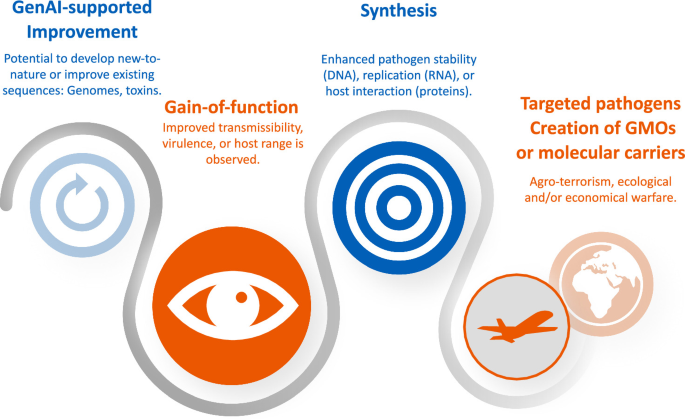
Securing Generative Biology: Inside the Defence-in-Depth Push for Biological AI
As AI models advance from generating protein structures to viable viral genomes, biosecurity researchers outline a multi-layered defence across data, models, and DNA synthesis.

Offshoring the Compute Boom: Washington Looks to Southeast Asia for Data Centers
Facing domestic grid bottlenecks and community backlash, US officials are promoting offshore AI infrastructure and chip manufacturing in the Philippines.