Apple Prepares Smart Glasses Powered by Agentic Siri Architecture
Apple is designing lightweight smart glasses around a deeply integrated, agentic Siri, shifting its spatial computing strategy toward everyday ambient intelligence.
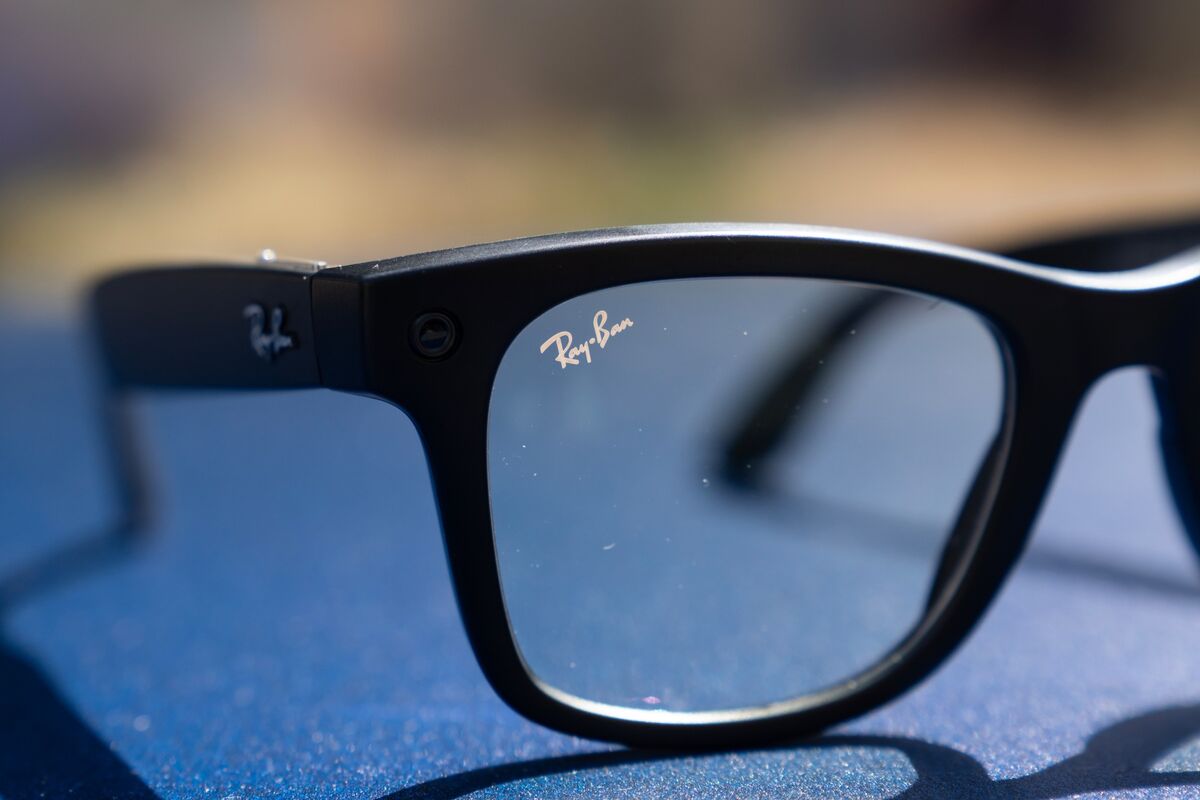
Apple is positioning a revamped, agentic Siri at the core of its upcoming smart glasses, shifting its wearable strategy toward lightweight, screenless ambient computing.
For years, consumer technology executives treated augmented reality as a display problem. Hardware roadmaps focused heavily on micro-OLED panels, complex waveguide optics, and wide field-of-view passthrough sensors designed to render virtual graphics over physical reality. Yet the commercial reality of spatial computing has exposed severe friction points: bulky headsets, short battery runtimes, and high retail prices that deter mass adoption.
Apple is now pivoting toward a far lighter, software-first approach. Rather than forcing a display into every wearable frame, the company is preparing a pair of smart glasses designed to replicate the everyday appeal of standard eyewear. At the heart of this hardware push lies an ambitious overhaul of Siri, transforming the legacy voice assistant into an agent capable of reading screen context, executing multi-step actions across native applications, and interpreting real-time visual input.
The Ambient Pivot: Siri as the Primary Interface
Smart glasses without high-density displays face an obvious design challenge: the absence of a touch surface or visual feedback loop. Without a touchscreen to tap or a floating window to click, the interaction layer must shift entirely to voice, audio cues, and computer vision. If the interface software fails to understand user intent on the first attempt, the hardware becomes useless.
This reality explains why Apple has tied its wearable glasses roadmap directly to the deep reconstruction of Siri. The project departs sharply from the isolated, query-and-response mechanics that defined the assistant for more than a decade. The upcoming model relies on an action-oriented engine that taps into deep application programming interfaces across the operating system.
By granting the assistant programmatic control over application features, Apple intends to allow users to trigger complex workflows simply by speaking naturally. A wearer looking at a product, a piece of industrial hardware, or a document will be able to ask the glasses to analyze the scene, extract relevant data, cross-reference an existing database, and send an update to a colleague. In this paradigm, Siri is no longer an ancillary feature. It is the operating system itself.
Beyond Voice Queries: The Agentic Engine
Making this transition work requires fundamental architectural shifts across Apple's software stack. Traditional voice assistants operate on rigid intent mapping. If a user command falls outside a narrow set of predefined parameters, the software defaults to web searches or issues an error.
By contrast, Apple's modern architecture focuses on contextual grounding and tool use. When a user issues a command, the underlying model breaks the goal down into sequential steps, determines which internal or third-party applications possess the right permissions, and executes the sequence autonomously.
On a pair of glasses equipped with front-facing camera sensors and directional microphones, this agentic capability gains physical dimensions. The multimodal system does not just listen to the audio stream; it continuously pairs audio prompts with visual context from the camera. The device can identify an electrical panel, detect a serial number, retrieve recent maintenance records from an enterprise system, and summarize diagnostic steps directly into the wearer's open-ear speakers.
To manage this without draining a tiny frame-mounted battery, Apple relies on a hybrid processing model. Lightweight visual recognition and wake-word triggers run locally on low-power silicon embedded in the frame. Complex reasoning, deep application parsing, and generative tasks are offloaded to a tethered iPhone or to Apple's private cloud infrastructure. This split-compute design keeps the glasses cool, light, and capable of all-day wear.
Hardware Compromises and the Lessons of iPhone Duo
Developing lightweight ambient hardware involves severe engineering compromises. Apple has repeatedly encountered the hard physical limits of miniaturization across its portfolio, a tension recently highlighted by engineering challenges with the iPhone Duo.
On the dual-screen and foldable front, Apple pushed hard to integrate its proprietary Face ID sensor array into early prototypes, only to confront strict internal deadlines and thermal constraints that forced hard compromises on production schedules. Similar trade-offs govern the smart glasses initiative. Building a device that weighs under 50 grams requires stripping away high-power processors, active cooling fans, and bulky glass prisms.
The resulting hardware is expected to resemble conventional frames like Meta's Ray-Ban series, relying on a durable plastic chassis, dual camera modules, discrete temple speakers, and low-latency wireless radios. By eschewing optical displays in initial models, Apple avoids the thermal bottlenecks that plagued early spatial devices while reducing manufacturing costs.
This restraint marks a critical evolution in corporate product strategy. Rather than holding back a product category until transparent waveguide optics reach commercial maturity, Apple is willing to ship an audio-first, camera-enabled product that delivers immediate utility through conversational AI.
The Competitive Landscape: Challenging Meta's Lead
Apple is not entering an uncontested market. Meta has already validated the screenless smart glasses category with its Ray-Ban collaboration, proving that consumers are willing to wear connected frames if the styling remains indistinguishable from standard fashion eyewear. Meta's success caught much of Silicon Valley off guard, demonstrating that ambient AI assistance coupled with simple camera capture resonates more broadly with everyday consumers than bulky virtual reality gear.
However, Apple holds a significant structural advantage: the depth of its personal ecosystem. Meta's glasses must operate as an isolated accessory, passing data through an external companion app that sits atop third-party mobile operating systems. Apple, by contrast, can weave smart glasses directly into iOS, iPadOS, and macOS at a kernel level.
A command spoken into Apple's smart glasses can manipulate native system states, trigger local Shortcuts routines, authenticate purchases via biometric handshakes with an Apple Watch, and move files seamlessly into iCloud. For corporate users, Apple's enterprise management framework offers established security profiles, allowing IT administrators to govern camera permissions, data storage, and network routing using the same tools they use for enterprise iPhones.
As reported by Bloomberg, Apple's executive leadership has increasingly focused on accelerating these software integrations to ensure the company does not fall behind rival AI platforms that are quickly deploying their own multimodal hardware.
Why It Matters
For enterprise environments, telecom infrastructure, and industrial operations, the shift from bulky headsets to lightweight, AI-driven smart glasses represents a practical turning point for field technology.
Technicians working in data centers, cell towers, and power substations require unencumbered vision and both hands free to handle tools, cabling, and delicate circuitry. Heavy mixed-reality visors often introduce eye strain, balance problems, and physical discomfort during extended shifts in cramped server corridors. A pair of lightweight glasses that look like safety frames but carry multimodal AI changes the equation.
A technician standing before a high-density server rack can query port mapping, verify fiber-optic patch connections, and log equipment serial numbers simply by looking at the hardware and speaking a prompt. The agentic system can automatically populate maintenance tickets, query central infrastructure databases, and confirm that cable runs match network schematics in real time.
By trading intrusive optical projections for audio feedback and agentic automation, Apple is building an interface designed for the physical workforce. The future of enterprise spatial computing may not be a floating screen that obscures reality, but an invisible assistant that silently understands it.
More from Trends
RSS
Inside China's Coordinated Campaign to Build an AI-Native Generation
With mandatory curricula, entrance exam integration, and rural AI tutors, China is executing a massive state push to achieve universal AI literacy across 200 million students by 2030.
Securing Generative Biology: Inside the Defence-in-Depth Push for Biological AI
As AI models advance from generating protein structures to viable viral genomes, biosecurity researchers outline a multi-layered defence across data, models, and DNA synthesis.

Offshoring the Compute Boom: Washington Looks to Southeast Asia for Data Centers
Facing domestic grid bottlenecks and community backlash, US officials are promoting offshore AI infrastructure and chip manufacturing in the Philippines.