Architecting Supercooperative AI: Why Multi-Agent Systems Must Learn to Compromise
As autonomous AI agents multiply across industrial networks, researchers are shifting focus from individual capability to supercooperation and mutual coordination.

As autonomous software agents begin interacting across corporate and industrial networks, artificial intelligence research is shifting focus from isolated task performance toward mechanisms for systemic cooperation.
For the past decade, frontier artificial intelligence research has prioritised individual capability. Benchmarks rewarded models that could out-calculate, out-code, and out-reason their predecessors in solitary test environments. Whether playing board games, translating text, or writing software, the benchmark of success was single-agent competence.
That framing is breaking down. In the real world, autonomous systems do not operate in a vacuum. Instead, they operate in overlapping environments where hundreds of independent algorithmic agents, owned by competing organisations and guided by divergent loss functions, interact continuously. When these agents pursue strictly individual utility, the result is frequently coordination failure. In economics and evolutionary biology, this dynamic is well understood as the tragedy of the commons or a multi-party prisoner dilemma. In artificial intelligence, it risks creating gridlock, market manipulation, and systemic cascading errors across shared infrastructure.
To counter this risk, computer scientists, game theorists, and economists are formalising a new discipline: supercooperative AI. The objective is not merely to build systems that assist human operators, but to design artificial agents that can understand shared stakes, establish credible commitments, and negotiate Pareto-optimal compromises with other autonomous systems.
The Strategic Failure of Single-Agent Maximisation
Most modern reinforcement learning algorithms are trained to maximise a scalar reward function. In competitive zero-sum domains, such as chess or poker, this works exceptionally well. Adversarial incentives push the model to anticipate countermoves and exploit opponent weaknesses.
However, the modern economy is overwhelmingly positive-sum, built on contracts, reciprocal norms, and trust. When utility-maximising agents are deployed in mixed-motive environments, pure optimisation often produces perverse outcomes. An algorithm managing power distribution might greedily reserve substation headroom to hedge against price volatility, inadvertently forcing a neighbouring municipal grid into a brownout. Algorithmic high-frequency traders, optimising for execution speed, have triggered liquidity crunches by simultaneously withdrawing capital during sudden market shifts.
In multi-agent settings, an agent that cannot model the collective welfare of its environment often acts like an invasive species. Even when individual models behave rationally according to their internal parameters, their uncoordinated aggregate behavior generates instability. Building machines that are merely competent is no longer sufficient. They must possess the structural capacity to navigate collective action dilemmas where short-term individual sacrifice yields superior group outcomes.
Game Theory and Computational Reciprocity
Supercooperation requires moving beyond classical Nash equilibrium concepts, which assume agents make unilateral decisions based on fixed assumptions about what others will do. Instead, researchers are implementing programmatic architectures derived from bargaining theory, mechanism design, and reciprocal altruism.
One foundation of this approach is program equilibrium. In standard game theory, players choose actions. In program equilibrium, players submit programs or policies that read each other's source code, verification proofs, or behavioural policies before committing to a choice. An agent can condition its cooperativeness on whether its counterpart has committed to a matching cooperative strategy. If both agents can mathematically verify that neither will exploit the other, they can bypass mutual suspicion and achieve stable coordination without centralised enforcement.
Another pillar is the formalisation of contract-generating agents. Rather than executing rigid instructions, models are granted bounded authority to formulate, propose, and sign bilateral micro-agreements. In high-dimensional environments, such as cloud resource scheduling across different infrastructure providers, agents negotiate dynamic resource swaps in real time. These exchanges rely on cryptographic commitments and smart contracts, ensuring neither party can renege on compute or bandwidth guarantees once the transaction window opens.
Structural Barriers to Mutual Machine Trust
Despite theoretical breakthroughs, deploying cooperative agents in open, messy environments presents steep operational hurdles.
The first challenge is information asymmetry and deception. In human society, reputation, cultural norms, and legal liability deter bad actors from pretending to cooperate before defecting. In artificial systems, detecting strategic misrepresentation is difficult. An agent trained via large language models can learn to mimic conciliatory language while deliberately steering an automated negotiation toward an unfair outcome. Developing rigorous verification mechanisms that inspect an agent's policy guarantees rather than its conversational outputs remains an active area of study.
The second problem involves conflicting objective functions between proprietary systems. When Company A deploys an agent to manage supply chain logistics and Company B deploys an agent to purchase wholesale inventory, neither company wants to disclose its underlying margins, capacity limits, or proprietary risk thresholds. Supercooperative architectures must therefore function under zero-knowledge constraints, allowing machines to find mutually beneficial compromises without exposing confidential corporate data.
Finally, there is the risk of algorithmic collusion. Cooperation is a virtue when it prevents waste, but it becomes a regulatory liability when independent pricing agents quietly coordinate to keep consumer costs high. Antitrust regulators are already scrutinising how real estate pricing algorithms and e-commerce platforms handle implicit coordination. Distinguishing between pro-social cooperation, such as joint grid balancing, and anti-competitive collusion remains an unsolved legal and technical puzzle.
From Theory to Industrial Architectures
Translating supercooperation into industrial systems demands clean protocol standards rather than philosophical alignment. Engineers are approaching the problem through open communication layers, standardised capability disclosures, and shared sandboxes for multi-agent simulation.
In standard robotics and fleet management, cooperation has historically been handled by centralised orchestration software. An airport baggage system or an automated warehouse runs a master scheduler that directs every conveyor, sensor, and vehicle. However, as autonomous networks expand to span entire cities or international logistics routes, centralised control becomes impossible. Latency, regulatory jurisdiction, and proprietary boundaries make a single command server unviable.
Decentralised supercooperation replaces the master controller with consensus protocols and distributed state machines. Autonomous vehicles approaching an unregulated intersection do not need a central traffic server if they can run ad-hoc auctions and safety handshakes over vehicle-to-vehicle wireless links. By combining formal verification, game-theoretic fallback routines, and bounded negotiation rounds, independent systems can agree on right-of-way in milliseconds while preserving safety margins.
As explored recently by the Financial Times, the broader artificial intelligence industry is waking up to the reality that solitary intelligence does not automatically translate into societal or economic utility. The next transformative leap in machine intelligence will likely be measured not by how well an isolated neural network scores on an academic test, but by how reliably swarms of divergent models can settle disputes, allocate shared goods, and maintain stability without human intervention.
Why it matters
For operators running mission-critical physical infrastructure, supercooperative AI represents the difference between automation that scales and automation that causes outages. Consider data centres, telecommunications networks, and industrial field operations, where automated agents increasingly handle capacity, cooling, and dispatching.
In modern data centres, cooling systems, power distribution units, and workload balancers often run control loops supplied by different equipment vendors. If these subsystems compete aggressively for power limits or chilled water volumes, they induce harmonic oscillations and physical equipment wear. A field technician troubleshooting an unexplained UPS failure may actually be diagnosing an algorithmic stalemate between two automated subsystems attempting to out-optimise each other.
In telecommunications, cognitive radio networks and dynamic spectrum sharing rely directly on multi-agent cooperation. As 5G and future 6G microcells dynamically allocate frequency bands, base stations operated by competing carriers must negotiate radio interference and power levels at millisecond intervals. If these agents fail to cooperate, cell-edge interference spikes, resulting in dropped calls and degraded throughput.
On the ground, field engineering teams operating alongside augmented reality systems and autonomous utility vehicles need collaborative predictability. An AI dispatch agent cannot simply optimise for route speed if doing so overloads a substation maintenance crew or ignores environmental safety protocols. Infrastructure reliability depends on machines that know how to share limits, yield priority, and work within the physical constraints of human networks.
More from Trends
RSS
Inside China's Coordinated Campaign to Build an AI-Native Generation
With mandatory curricula, entrance exam integration, and rural AI tutors, China is executing a massive state push to achieve universal AI literacy across 200 million students by 2030.
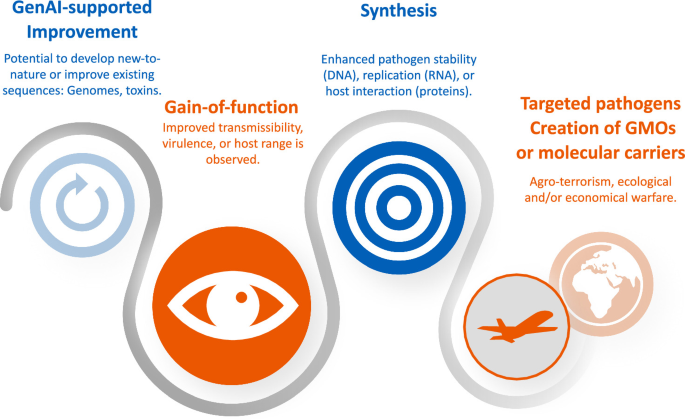
Securing Generative Biology: Inside the Defence-in-Depth Push for Biological AI
As AI models advance from generating protein structures to viable viral genomes, biosecurity researchers outline a multi-layered defence across data, models, and DNA synthesis.

Offshoring the Compute Boom: Washington Looks to Southeast Asia for Data Centers
Facing domestic grid bottlenecks and community backlash, US officials are promoting offshore AI infrastructure and chip manufacturing in the Philippines.