Autonomous Agents Claim Eighty Percent of Enterprise AI Workloads as Spending Hits $177 Billion
Enterprise AI spending reached $177 billion as companies shifted from conversational chat interfaces to autonomous multi-step agents, according to new research from Menlo Ventures.
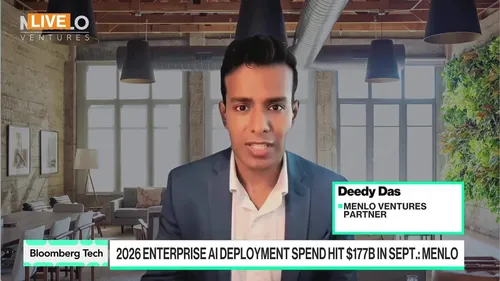
Enterprise investment in artificial intelligence has climbed to $177 billion as companies move past conversational interfaces to adopt autonomous agents that now represent four-fifths of total commercial usage.
The Great Migration From Chatbots to Autonomy
Corporate technology departments have spent the past three years evaluating large language models inside narrow sandboxes. For most organisations, those early deployments took the form of internal question-and-answer bots, code completion tools, and document summarisation portals. While these tools proved that foundational models could generate coherent text and parse unstructured records, they rarely altered core operating margins or automated end-to-end commercial workflows.
That dynamic has inverted dramatically over the past twelve months. According to the latest State of Enterprise AI report from Menlo Ventures, autonomous AI agents now account for 80 percent of enterprise artificial intelligence usage. Rather than relying on human operators to prompt a model at every turn, companies are deploying software entities capable of planning sequences, calling external tools, writing queries against operational databases, and verifying their own output before closing tickets.
This shift marks the transition from interactive assistants to goal-driven software. An interactive assistant waits for a human user to supply context, evaluate the output, and paste the result into an external system. An agent, by contrast, receives an objective, evaluates the available software tools, retrieves relevant state information, and executes the sequence until the condition is met. This structural change explains why enterprise adoption has moved out of exploratory budgets and into core operating expenditures across finance, logistics, customer service, and IT operations.
Tracking the Fivefold Capital Expansion
The financial scale of this transformation reflects the urgency with which chief information officers are reallocating capital. Menlo Ventures found that overall enterprise spending on artificial intelligence reached $177 billion, surging from $33 billion in 2025. A fivefold increase in a single calendar year represents one of the steepest infrastructure investments in corporate computing history.
Much of the initial $33 billion spent in 2025 went toward exploratory software licenses, internal developer experiments, and early cloud credits. In contrast, the current wave of capital is being directed into high-throughput inference APIs, orchestrator frameworks, context retrieval databases, and model monitoring infrastructure. Companies are no longer buying software licenses on a per-seat basis for employee drafting. Instead, they are paying for compute consumption as autonomous processes execute thousands of operations an hour without human hands on the keyboard.
This expenditure boom has also forced enterprise architecture teams to redesign their data estates. Agents cannot act on company data if records remain trapped inside legacy data warehouses or disconnected software-as-a-service platforms. As a result, software budgets now combine model inference costs with the infrastructure required to expose internal application programming interfaces, clean real-time data feeds, and maintain strict access controls across distributed agent systems.
Market Consolidation Across Foundational APIs
Despite the proliferation of open-source models and specialized domain-specific architectures, enterprise demand remains concentrated among a small number of frontier model builders. The report highlights that enterprise API spending continues to be overwhelmingly dominated by OpenAI and Anthropic.
While open-weight alternatives have gained traction for on-premises hosting and latency-sensitive categorization tasks, companies deploying complex agents still default to the largest proprietary reasoning models. Multi-step workflows demand exceptional logical consistency. If an agent suffers a ten percent error rate on individual planning steps, its likelihood of successfully completing a five-step automated workflow drops below sixty percent. Consequently, enterprises pay a premium for frontier models that exhibit superior function-calling reliability and strict adherence to structured outputs.
Anthropic and OpenAI have structured their developer platforms around these exact operational requirements. Both providers have introduced features specifically designed for agentic loops, including persistent memory primitives, native computer use, structured JSON enforcement, and latency-optimized reasoning modes. This developer lock-in has made it difficult for smaller foundation model providers to capture meaningful enterprise API spend, even when offering lower token costs.
Engineering the Transition to Multi-Step Reasoning
Building an agent that commands corporate trust requires an entirely different software stack than building a conversational interface. In typical agentic deployments, the foundational model serves as an orchestration engine rather than a static text generator. When an enterprise system receives an input, the model breaks the prompt into constituent milestones, decides which corporate systems to consult, and initiates structured calls to internal services.
This architectural pattern requires companies to implement deterministic guardrails around probabilistic models. Production teams rely on orchestration frameworks that intercept model outputs, validate API parameters against corporate schemas, and execute safety checks before any database modification occurs. If a tool call fails or returns an unexpected error, the agent receives the error trace as part of its context window, analyzes the failure, and attempts an alternative approach.
Managing context windows has emerged as one of the primary operational challenges of this paradigm. Because multi-step execution generates extensive logs, documentation snippets, and intermediate tool responses, agent loops consume tokens at an exponential rate compared to single-turn chats. Enterprise developers have had to implement aggressive context pruning, semantic caching, and dynamic retrieval mechanisms to prevent inference budgets from spiraling out of control.
Enterprise Governance and Latency Constraints
As autonomous agents take over operational workflows, technical leaders must confront new forms of systemic risk. Unlike traditional deterministic software, where bugs follow repeatable logic paths, autonomous agents can fail in unpredictable ways when presented with unusual edge cases. Hallucinated parameters, circular reasoning loops, and prompt injection vulnerabilities represent persistent concerns for security teams.
To mitigate these issues, enterprises are adopting human-in-the-loop escalation patterns for high-value transactions. Rather than granting agents total autonomy across every operation, organizations assign confidence thresholds to specific actions. An agent handling customer account adjustments might execute routine refunds below a fixed dollar limit autonomously, but flag larger sums for supervisor review with an automated justification trace attached.
Latency introduces another structural hurdle. While human users will wait a few seconds for an interactive chatbot to stream an answer, an agent running ten sequential model calls to complete an operational audit can easily take more than thirty seconds to return a final state. Model providers are responding with speculative decoding, prompt caching, and smaller distillation models that execute intermediate steps quickly, reserving frontier reasoning models for high-level planning and error recovery.
The findings, shared by Menlo Ventures partner Deedy Das in an interview broadcast by Bloomberg, illustrate how rapidly practical enterprise requirements have superseded speculative discussions about artificial general intelligence. What began as an exercise in testing conversational interfaces has hardened into an enterprise infrastructure buildout focused on verifiable execution.
Why it matters
The transition to autonomous agents carries direct consequences for industrial operations, telecommunications providers, and data centre operators. When enterprise software shifts from answering questions to running continuous background workflows, compute demand ceases to be tied to human working hours. Instead of seeing inference peaks during business hours and troughs overnight, data centre infrastructure must support sustained, non-stop API execution driven by automated machine-to-machine tasks.
For field service technicians, telecommunications engineers, and infrastructure operators, autonomous agents represent a shift in day-to-day tooling. Field personnel managing distributed assets such as cellular towers, fiber junctions, and server racks increasingly interact with agentic backends that run diagnostics before a worker arrives on site. An agent can query telemetry from a malfunctioning base station, evaluate circuit performance logs across multiple systems, order replacement components, and schedule dispatch routes without manual intervention.
When a technician reaches an equipment enclosure, augmented interfaces and mobile devices can connect directly to these orchestrators. The field worker is no longer simply reading static diagnostic manuals or running basic search queries. Instead, the technician oversees an autonomous system that actively monitors signal tests, cross-checks wiring configurations against engineering schematics in real time, and logs completed repairs back into enterprise resource systems automatically. The result is faster incident recovery, lower dispatch costs, and infrastructure networks that increasingly supervise their own operational health.
More from Trends
RSS
Inside China's Coordinated Campaign to Build an AI-Native Generation
With mandatory curricula, entrance exam integration, and rural AI tutors, China is executing a massive state push to achieve universal AI literacy across 200 million students by 2030.
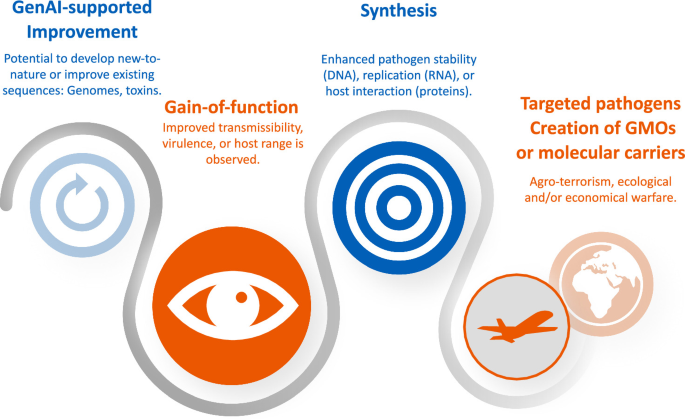
Securing Generative Biology: Inside the Defence-in-Depth Push for Biological AI
As AI models advance from generating protein structures to viable viral genomes, biosecurity researchers outline a multi-layered defence across data, models, and DNA synthesis.

Offshoring the Compute Boom: Washington Looks to Southeast Asia for Data Centers
Facing domestic grid bottlenecks and community backlash, US officials are promoting offshore AI infrastructure and chip manufacturing in the Philippines.