Beyond Black Boxes: How Foundational AI Concepts Are Rewriting Water Cycle Science
Integrating differentiable programming and functional mapping with physical laws gives researchers and engineers unprecedented precision over the planetary water cycle.
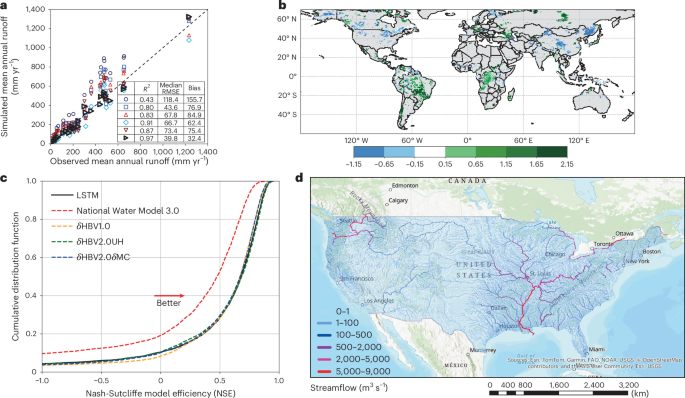
A new computational paradigm is merging the foundational concepts of artificial intelligence with classical physical laws, transforming how researchers model the planetary water cycle and manage real-world water resources.
For years, the application of artificial intelligence to earth sciences followed a predictable path. Domain specialists took standard off-the-shelf neural networks, trained them on historical inputs and outputs, and treated the models as fast pattern matchers. While this pure machine-learning approach delivered accurate short-term forecasts for river discharge or precipitation, it often failed to earn the trust of physical scientists. Standard deep neural networks disregarded fundamental physical laws like the conservation of mass, struggled to extrapolate to unseen climate extremes, and offered little scientific insight into why a specific watershed behaved the way it did.
That dichotomy between rigid physical equations and flexible data-driven black boxes is now dissolving. Instead of simply importing generic algorithms from computer vision or natural language processing, hydrologists and computational scientists are identifying the core mathematical concepts that power modern machine learning and embedding them directly into classical geophysical frameworks. This conceptual shift turns AI from a passive statistical tool into an active vehicle for physical discovery.
Moving Beyond Off-the-Shelf Architectures
Traditional hydrology relies heavily on process-based simulations. These models discretise landscapes into grids or catchments, using differential equations to calculate evapotranspiration, soil moisture percolation, groundwater recharge, and river routing. While physically grounded, they suffer from severe parameterisation bottlenecks. Many subsurface properties, such as hydraulic conductivity or bedrock depth, cannot be observed directly at scale. Scientists have had to rely on simplified empirical formulas, tuning dozens of free parameters until model outputs match sparse gauge records.
The real breakthrough comes from recognising that machine learning provides generalised methods for representation learning, operator approximation, and functional decomposition. When these capabilities are built around known governing laws, researchers no longer have to choose between physical consistency and empirical accuracy.
A central idea in this shift is expressive inductive bias. Rather than giving a blank neural network free rein to approximate any arbitrary curve, engineers design architectures whose structural assumptions reflect domain knowledge. The model is forced to respect physical constraints such as non-negative water storage and mass balance, while retaining the capacity to learn complex, nonlinear relationships from observation streams.
Constrained Learning and Differentiable Models
Among the most powerful strategies emerging from this synthesis is differentiable programming. In a differentiable hydrological model, classical physical equations and neural network layers sit within the same computational graph. Because every component in the system is mathematically differentiable, gradients can flow back and forth through physical equations and neural weights simultaneously.
This architecture enables what researchers call constrained learning. In traditional modelling, an unknown physical relationship, such as how vegetation controls transpiration under escalating vapor pressure deficits, had to be guessed or oversimplified. Under a differentiable framework, that unknown relationship is formulated as a learnable neural module embedded inside a strictly conserved mass balance equation.
The neural network learns the missing physical function directly from satellite observations and sensor data, but it cannot violate the conservation of matter to achieve a lower loss. If the network proposes an impossible water flux, the surrounding physical equations reject it. This method has dramatically reduced the volume of training data needed to achieve high predictive skill, allowing models to generalise across continents and adapt to unmonitored river basins.
Neural Operators and Generative Reconstruction
A second major hurdle in planetary water modelling is computational cost. Simulating three-dimensional groundwater movement or high-resolution overland flood waves across large spatial domains requires solving computationally demanding systems of partial differential equations. Supercomputers can take days to run high-resolution simulations, limiting their utility for real-time hazard response or multi-decade risk assessments.
Here, machine learning offers functional mapping through neural operators. Unlike standard networks that learn mappings between finite-dimensional vectors, neural operators learn mappings between infinite-dimensional function spaces. Once trained on a collection of numerical simulations, these operators approximate the solution operator of the underlying differential equations in a fraction of a second. They deliver speedups of several orders of magnitude without requiring fine-grained spatial recalibration.
Simultaneously, generative modelling provides new answers to the problem of fragmented real-world data. Earth observation datasets are inherently uneven. Satellites pass overhead at irregular intervals, cloud cover obscures optical sensors, and subsurface monitoring wells are sparsely distributed. Generative frameworks capture the underlying joint probability distributions of hydrological states, enabling conditional inference. When presented with incomplete, multiscale observations from radar, soil moisture sensors, and stream gauges, the system reconstructs a coherent, physically plausible picture of the entire waterscape.
Tackling Aquifers, Scaling Laws, and Human Consumption
These combined mathematical ideas are being applied to some of the most stubborn puzzles in environmental engineering. Groundwater sustainability is chief among them. Aquifer depletion has accelerated globally, yet monitoring deep reserves remains difficult due to poor subsurface characterisation. By pairing satellite gravity measurements from missions like GRACE with differentiable subsurface flow formulations, researchers can now infer aquifer properties and depletion rates with unprecedented local resolution.
Another enduring challenge is the scaling problem. Runoff processes behave differently across an urban catchment of ten square metres, an agricultural sub-basin of ten square kilometres, and a continental drainage system spanning thousands of kilometres. Scale mismatches have historically forced researchers to discard fine-scale models when scaling up. Differentiable multiscale models allow parameters learned at local sensor towers to inform regional predictions, capturing how macroscale river systems emerge from microscale soil dynamics.
Furthermore, these systems can account for the most erratic variable in the entire cycle: human intervention. Dams, irrigation diversions, canal systems, and municipal water withdrawals systematically distort natural water flows. Standard hydrological tools often break down in heavily managed basins because human behaviour does not follow simple fluid mechanics. Constrained learning models can isolate natural hydrological physics within one branch of the model while allowing a flexible neural network branch to absorb and predict regional water consumption patterns.
As argued in a recent paper published in Nature, AI's lasting contribution to the water sciences will not be defined by treating standard models as disposable black boxes. Instead, the profound breakthrough lies in using core machine learning ideas to build a more rigorous, hybrid approach to scientific inquiry. In turn, solving high-dimensional physical puzzles provides valuable feedback for computer science, advancing the foundational design of general AI systems.
Why It Matters
For industrial infrastructure operators, telecommunications providers, and data centre facilities, planetary hydrology is no longer an abstract environmental concern. It is an immediate operational boundary condition. Large modern data centres consume millions of litres of water daily for evaporative cooling, placing facilities at direct operational and regulatory risk in water-stressed basins. Highly accurate, localised water intelligence allows facility planners to evaluate real aquifer stress and project cooling sustainability years in advance, rather than relying on blunt regional averages.
At the same time, utility field technicians and network infrastructure teams are increasingly deployed on the frontlines of hydrological volatility. Telecommunications vaults, subterranean fibre conduits, and edge computing enclosures face mounting failure risks from localised flash floods and shifting water tables. By integrating differentiable hydrological operators into edge sensors and municipal utility consoles, field teams can receive high-resolution, predictive flood alerts hours before water reaches critical ground equipment. Merging physical laws with modern AI does more than advance academic theory; it gives infrastructure operators the operational foresight needed to harden physical assets against an increasingly unstable climate.
More from Trends
RSS
Inside China's Coordinated Campaign to Build an AI-Native Generation
With mandatory curricula, entrance exam integration, and rural AI tutors, China is executing a massive state push to achieve universal AI literacy across 200 million students by 2030.
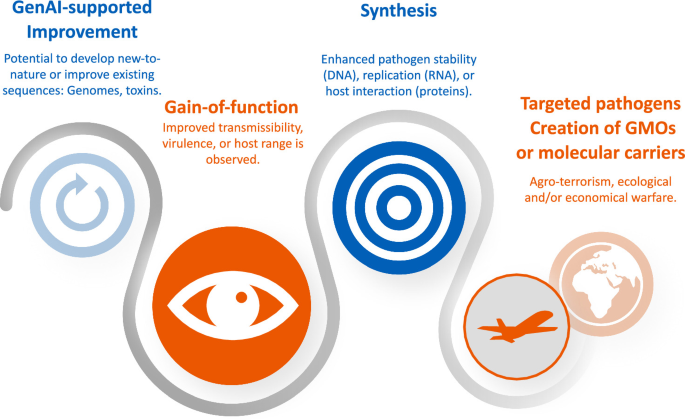
Securing Generative Biology: Inside the Defence-in-Depth Push for Biological AI
As AI models advance from generating protein structures to viable viral genomes, biosecurity researchers outline a multi-layered defence across data, models, and DNA synthesis.

Offshoring the Compute Boom: Washington Looks to Southeast Asia for Data Centers
Facing domestic grid bottlenecks and community backlash, US officials are promoting offshore AI infrastructure and chip manufacturing in the Philippines.