Beyond the Mechanical Shell: How Embodied Intelligence Is Bringing Humanoid Robots to the Frontline
Recent leaps in motion control, expressive mechanics, and multi-agent coordination are turning humanoid robots from mechanical novelties into viable industrial tools.

Advances in machine learning, spatial simulation, and expressive mechanics are transforming humanoid robots from laboratory curiosities into adaptable coworkers for complex physical environments.
For decades, the concept of a humanoid robot sat primarily in the domain of speculative science fiction or rigid biomechanical research. By conventional engineering definitions, a humanoid robot is simply a machine whose form factor echoes that of the human body. It typically features a torso, a head, two arms, and two legs, though configurations often vary to include waist-up assemblies or wheeled mobile bases. Early iterations focused strictly on the baseline mechanics of bipedal walking, an engineering hurdle that consumed billions of dollars and decades of trial and error.
Today, the paradigm has changed. The humanoid form is no longer pursued merely to prove that a machine can mimic biological balance. Instead, the convergence of vision-language-action models, soft robotics, and high-fidelity physics engines has reframed the humanoid as a general-purpose operational tool. Because the modern built world, ranging from staircases and doorway clearances to hand tools and server chassis, was designed specifically around human biomechanics, creating an intelligence housed in a human form factor offers a clear path toward seamless deployment without requiring expensive facility redesigns.
Redefining Agility and Dynamic Equilibrium
The fundamental challenge of bipedal robotics has long been balance. Classical control theory relied on carefully mapped mathematical models, where engineers calculated the zero-moment point to ensure the machine did not tip over. These systems worked adequately on polished linoleum floors in controlled laboratories, but they faltered the moment a robot encountered an uneven threshold, a slick surface, or unexpected physical contact.
Modern roboticists have largely abandoned purely pre-programmed trajectories in favour of reinforcement learning running inside high-speed simulators. By simulating millions of hours of physical interactions in a fraction of that time, systems learn how to adapt their gait dynamically to shifting terrains. This approach has pushed machines far past simple forward locomotion. Modern units can absorb sudden shoves, regain their balance mid-stride, and adjust the stiffness of their actuators to match the surface beneath them.
Agility has also evolved from coarse locomotion to split-second physical dexterity. High-speed visual tracking now allows autonomous limbs to estimate the trajectory of fast-moving objects, calculate spatial intersections, and execute precise physical interventions within milliseconds. Whether returning a high-speed projectile or bracing against an uncalibrated load, the combination of advanced vision algorithms and high-torque motors allows humanoids to react with fluid, human-like reflexes.
Solving Social Fluency and the Uncanny Valley
Deploying robots alongside human workforces involves more than mechanical competence. It requires social legibility. When human technicians share a corridor or an assembly line with a two-hundred-pound metal machine, unpredictable movement generates friction, anxiety, and operational slowdowns.
Robotics laboratories are increasingly tackling this challenge through micro-interactions and expressive movement. Engineers have begun training humanoids to execute fluid, predictable non-verbal cues, such as waving, calibrated gesturing, and natural deceleration when approaching a person. When an automated machine communicates its directional intent through subtle head tilts or eye movements, human peers instinctively understand its pathing, which significantly reduces workplace hesitation.
A major hurdle in facial interaction has been the uncanny valley, where robotic expressions appear rigid, delayed, or unnatural. Recent breakthroughs address this by using machine learning models trained on human behavioural footage. By teaching machines to synchronise subtle lip movements and micro-expressions dynamically rather than cycling through canned motor routines, researchers are producing systems that feel less artificial and far more approachable. Parallel studies in human-robot interaction demonstrate that incorporating soft materials and flexible outer surfaces further diminishes worker apprehension, paving the way for safe, shoulder-to-shoulder collaboration.
Multi-Agent Orchestration and Digital Twin Training
A single humanoid operating in isolation offers limited industrial value. Real operational utility emerges when these platforms integrate into broader multi-agent ecosystems. In complex logistics and industrial facilities, humanoids must coordinate their movements not only with human supervisors but also with automated guided vehicles, overhead cranes, and static sensor networks.
To manage this complexity, researchers are deploying deep-learning architectures derived from vehicle routing to streamline path planning. Instead of relying on a centralised controller that dictates every joint angle, multi-agent frameworks allow individual machines to form temporary operational squads. Under this decentralised model, robots can voluntarily wait for a peer to complete a physical transfer, yield right-of-way based on payload criticality, and re-route around temporary choke points without human intervention.
Digital twin technology has become the cornerstone of this coordination. Before an enterprise deploys physical hardware into a production facility, the entire environment is mapped into a physics-accurate simulation. Within this virtual replica, operators can assess how different robot kinematics perform under real-world constraints, such as narrow aisles, low-hanging cables, and ambient lighting changes. This continuous loop, where operational telemetry from the field informs the digital twin, which in turn trains the next iteration of the robot's onboard models, significantly compresses deployment timelines.
Overcoming Hardware and Energy Bottlenecks
Despite rapid algorithmic progress, physical constraints remain a significant hurdle. High-density actuators, hydraulic systems, and onboard inference computers require substantial electrical power. Current battery chemistries often limit untethered operation to between two and four hours under moderate workloads, creating an operational bottleneck for facilities that operate on round-the-clock schedules.
Addressing this limitation requires innovations on two fronts: mechanical efficiency and computational optimization. On the mechanical side, researchers are developing hybrid platforms that combine rigid skeletal structures with variable-stiffness tendons and soft pneumatic elements. These compliant mechanisms store and release kinetic energy during cyclical motions like walking, drastically reducing continuous motor draw.
Computationally, the industry is shifting toward specialized edge-AI processors and low-power neuromorphic architectures. By offloading non-critical environmental mapping to facility-wide edge servers and reserving onboard compute for real-time motor reflexes, engineers are beginning to stretch the operational runtime of bipedal units. As chronicled in robotics coverage from ScienceDaily, the convergence of tiny, energy-efficient processing units, resilient soft robotics, and distributed orchestration methods is systematically dismantling the physical limitations that once kept humanoid systems bound to test benches.
Why It Matters
For enterprise infrastructure operators, particularly in telecommunications, utilities, and hyperscale data centres, the practical maturation of humanoid robotics represents a fundamental operational shift. Today, technical facilities face a worsening shortage of skilled field engineers, even as the density and complexity of physical infrastructure accelerate.
Data centres require constant physical intervention: hot-swapping failed server blades, tracing fibre-optic patches, inspecting thermal cooling loops, and manipulating heavy hardware in confined rack rows. Most of these tasks cannot be automated using simple conveyor belts or wheeled carts, because the racks, latches, and cabling conduits were engineered around the reach, height, and dexterity of human technicians.
Humanoid platforms offer a way to bridge this gap. Equipped with spatial reasoning and fine-motor manipulation, these machines can act as on-site proxies during overnight shifts or in remote facilities, guided by remote specialists via augmented reality or executing routine maintenance independently. In remote telecommunication shelters or high-voltage sub-stations, humanoids can handle hazardous troubleshooting tasks, eliminating the need to dispatch human crews into dangerous environments. The emergence of reliable humanoid systems is not about replacing human insight, but rather about extending the reach and safety of technical personnel across an increasingly demanding physical footprint.
More from Trends
RSS
Inside China's Coordinated Campaign to Build an AI-Native Generation
With mandatory curricula, entrance exam integration, and rural AI tutors, China is executing a massive state push to achieve universal AI literacy across 200 million students by 2030.
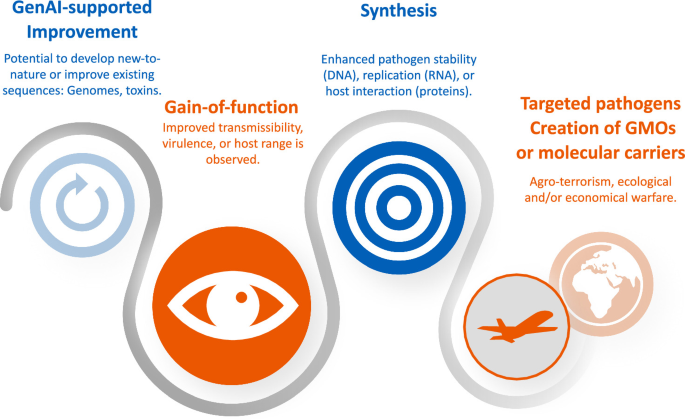
Securing Generative Biology: Inside the Defence-in-Depth Push for Biological AI
As AI models advance from generating protein structures to viable viral genomes, biosecurity researchers outline a multi-layered defence across data, models, and DNA synthesis.

Offshoring the Compute Boom: Washington Looks to Southeast Asia for Data Centers
Facing domestic grid bottlenecks and community backlash, US officials are promoting offshore AI infrastructure and chip manufacturing in the Philippines.