Federal Moonshots Go Hybrid: Inside the NSF's High-Risk X-Labs
The National Science Foundation is launching high-risk X-Labs, teaming with philanthropies and investors to fast-track foundational breakthroughs in hardware and AI.

The National Science Foundation is revamping its approach to high-risk science by establishing X-Labs, a hybrid funding model that pairs federal capital with private investors and philanthropic donors.
For decades, federal research in the United States has adhered to a predictable rhythm. Academic researchers submit proposals, committees of their peers evaluate them, and modest grants are disbursed over multi-year cycles. While this mechanism has yielded foundational discoveries across physics, chemistry, and computing, it has long faced criticism for promoting incrementalism. When grant committees grade proposals on consensus, radical, high-risk projects with an uncertain probability of success tend to be filtered out.
The National Science Foundation is now challenging that status quo. Through its burgeoning X-Labs initiative, the agency is establishing dedicated research hubs designed to pursue audacious, non-traditional engineering and scientific breakthroughs. Rather than operating purely within the walled gardens of university laboratories or government compounds, these facilities are explicitly structured to merge public capital with backing from private charities, philanthropic trusts, and commercial investors. The result is a major shift in how the state sponsors technological disruption, borrowing operational philosophies from industrial moonshot labs and defense agencies.
Dismantling Academic Conservatism
The traditional peer-review system at national science agencies serves an important fiduciary role, ensuring public tax dollars do not vanish into pseudoscience or poorly structured experiments. However, that caution comes at a measurable cost. Researchers frequently acknowledge tailoring their grant applications to match the predictable biases of evaluation panels, pitching studies that are virtually guaranteed to yield publishable results rather than pursuing erratic, high-reward concepts.
X-Labs represents an institutional acknowledgment that transformative technology rarely emerges from committee consensus. The concept borrows heavily from the Focused Research Organization model and historical predecessors like Bell Labs, Xerox PARC, and the Defense Advanced Research Projects Agency. Instead of spreading small sums of capital across hundreds of disparate university departments, the program concentrates capital into targeted, tightly managed institutions tasked with solving singular, high-friction technical bottlenecks.
In these environments, project leaders are granted substantial operational autonomy. Much like program managers at DARPA, lab directors can pivot technical strategies, reallocate funding, recruit specialized talent outside traditional tenure tracks, and decommission unproductive pathways without waiting for an annual federal grant review. Failure is treated as an expected cost of exploratory engineering, provided the technical ambitions remain sufficiently grand.
Blending Federal Capital with Private Investment
The most distinctive facet of the X-Labs initiative is its blended financial structure. Historically, federal science agencies maintained rigid firewalls between public research grants and private enterprise, primarily to prevent conflicts of interest and ensure intellectual property remained in the public commons. X-Labs dissolves parts of that divide by actively courting non-profit foundations, philanthropic entities, and forward-looking private investors as foundational co-funders.
This co-investment framework accomplishes several strategic goals. First, it multiplies the financial leverage of taxpayer funds, expanding the total capital pool available for capital-intensive hardware, fabrication equipment, and computational clusters. Deep technical research into areas like quantum networking, novel semiconductor packaging, and foundational robotics often requires millions of dollars in baseline physical infrastructure before the first experiment can run.
Second, the inclusion of outside capital alters the incentives of the research teams. Private investors and mission-driven charities bring distinct milestones to the table. While the NSF ensures projects push the boundaries of foundational science, private partners push for operational milestones, reproducibility, and viable pathways toward commercialization. By building those expectations into the foundation of each lab, the initiative aims to shorten the gestation period between basic scientific discovery and practical engineering utility.
Engineering Beyond the Silicon Ceiling
While the scope of the program spans multiple physical and biological sciences, computing infrastructure and autonomous systems sit at the center of the mandate. The broader computing sector is wrestling with physical walls, including power distribution limits inside data centres, memory bottlenecks in machine learning architectures, and the thermal constraints of advanced microelectronics. Incremental optimizations to existing silicon designs are no longer sufficient to sustain the performance curves demanded by modern artificial intelligence.
The X-Labs model is positioned to finance explorations into alternative computing paradigms that venture capital firms typically consider too speculative for early-stage equity funding. These include room-temperature optical switching, non-silicon semiconductor substrates, neuromorphic sensor arrays, and novel solid-state energy storage for decentralized equipment.
Similarly, robotics and mechanical automation stand to gain from centralized, goal-driven funding. Developing robotic platforms capable of long-duration physical labor in unstructured environments requires deep integration across materials science, edge-computing hardware, actuator design, and spatial reasoning models. By housing these disparate disciplines under a single roof, without the publish-or-perish pressures of academia, X-Labs aims to bypass the fragmented development cycles that have historically slowed physical robotics.
Closing the Valley of Death
One of the persistent vulnerabilities of Western industrial policy has been the translation gap between the laboratory bench and commercial manufacturing. American universities excel at producing theoretical breakthroughs, but domestic industries frequently fail to scale those discoveries into commercial hardware, leaving international competitors to capture the supply chain value.
By introducing philanthropic and commercial partners at the inception of research programs, the NSF hopes to dismantle this translation barrier. When private backers hold a direct stake in the institutional trajectory of a research lab, they establish organic pipelines to spin out intellectual property, license foundational patents, and assemble executive teams around promising hardware.
As reported by IEEE Spectrum, this concerted pivot toward hybrid, risk-tolerant structures demonstrates a broader realization within the American research establishment. International technological dominance can no longer rely solely on market forces or traditional university grants. Maintaining an edge in deep tech requires intentional institutional design that can absorb high failure rates in exchange for paradigm-shifting returns.
Why it matters
For operators running data centres, telecom networks, and automated industrial facilities, the trajectory of programs like X-Labs dictates the hardware landscape of the next decade. Modern digital infrastructure is increasingly constrained by thermal envelopes, grid interconnection delays, and physical component fatigue. Incremental updates to existing rack architectures will not solve the multimegawatt power demands imposed by frontier AI training and high-density inference clusters.
Breakthroughs funded through high-risk public-private labs are specifically aimed at these structural bottlenecks. Advances in photonic interconnects, novel power conversion semiconductors, and resilient edge processors will first take shape inside these cross-disciplinary institutions before reaching industrial fabrication lines.
Furthermore, field technicians and network infrastructure engineers will ultimately interact with the practical tools these moonshots yield. From autonomous physical inspection robots that operate across remote cell towers to advanced augmented reality sensors built on novel optical materials, the technologies designed to assist hands-on technical workers depend on basic science risks taken years in advance. If the X-Labs framework succeeds, it will compress the timeline required to take those vital physical tools from experimental schematics into active operational service.
More from Trends
RSS
Inside China's Coordinated Campaign to Build an AI-Native Generation
With mandatory curricula, entrance exam integration, and rural AI tutors, China is executing a massive state push to achieve universal AI literacy across 200 million students by 2030.
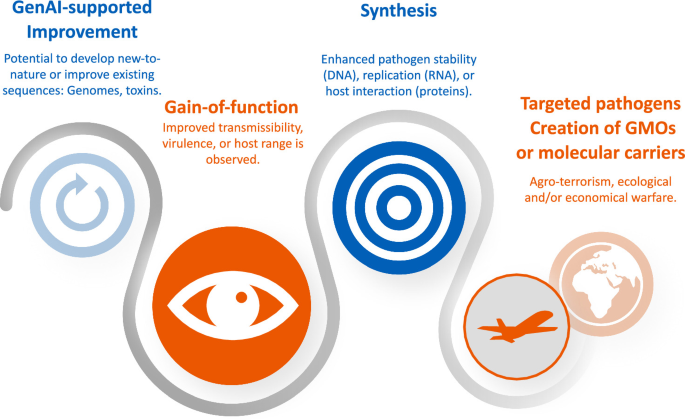
Securing Generative Biology: Inside the Defence-in-Depth Push for Biological AI
As AI models advance from generating protein structures to viable viral genomes, biosecurity researchers outline a multi-layered defence across data, models, and DNA synthesis.

Offshoring the Compute Boom: Washington Looks to Southeast Asia for Data Centers
Facing domestic grid bottlenecks and community backlash, US officials are promoting offshore AI infrastructure and chip manufacturing in the Philippines.