Google Glass and the Decade-Long Blueprint for Industrial Augmented Reality
A decade after Google Glass faltered in consumer markets, its enterprise pivot established the foundational design principles for today's field technician and industrial AR tools.

TL;DR: The trajectory of Google Glass from failed consumer gadget to factory-floor workhorse laid the technical and operational blueprint for modern enterprise heads-up displays.
When Google unveiled Project Glass in 2012, the marketing narrative focused almost entirely on civilian life. Consumers were invited to imagine navigating city streets, checking incoming text messages, taking spontaneous photos, and recording family gatherings without ever looking down at a mobile phone screen. Within two years, that consumer vision collapsed under the weight of social friction, privacy backlash, and severe battery and thermal limitations. The device became a punchline, and the Explorer program was abruptly shuttered.
Yet behind the public spectacle, an entirely different narrative was unfolding inside aircraft assembly bays, logistics warehouses, and surgical suites. Industrial operators recognised that what failed as a fashion accessory was uniquely suited for structured technical labour. When rebranded and redesigned as the Glass Enterprise Edition, the device proved that hands-free, heads-up access to data could eliminate costly errors and shave critical minutes off complex maintenance routines. While Google officially ended support for the Enterprise Edition in 2023, the engineering lessons learned over its decade-long lifecycle continue to dictate how field augmented reality hardware is designed today.
The Ambition and Stumble of Consumer Head-Mounted Displays
The original Glass prototype was an aggressive attempt to replace the smartphone screen. It relied on an optical head-mounted display consisting of a small prism projector positioned above the user's right eye, casting a virtual image equivalent to a 25-inch monitor floating a few feet away. Powered by a modest processor and controlled via voice prompts or a side-mounted capacitive touch strip, it allowed users to pull up contextual cards without breaking eye contact with the physical world.
However, the consumer market rejected the device on fundamental physical and cultural grounds. Socially, the outward-facing camera created immediate anxiety in public settings, where bystanders could not verify whether they were being recorded. Culturally, wearing hardware on one's face created an unavoidable social barrier that consumers were unwilling to normalise for minor conveniences such as reading weather forecasts or reading emails.
Technically, the hardware was mismatched to general-purpose consumer demands. The micro-projector washed out under direct sunlight, and driving both a wireless radio and a display engine quickly triggered thermal throttling. The internal battery, mounted behind the ear, struggled to deliver more than two hours of active operation. For the average individual, pulling a smartphone out of a pocket remained faster, more discreet, and infinitely more capable.
The Quiet Pivot to Enterprise Workflows
While consumer interest dried up, industrial systems integrators identified immediate value in the platform. In settings such as manufacturing lines, assembly plants, and medical clinics, the very attributes that doomed Glass as a consumer device became non-issues. In a secure data centre or a warehouse, privacy concerns regarding cameras are superseded by workplace safety and compliance monitoring. In these environments, workers do not require a stylish silhouette. They require safety certification, drop resistance, and functional utility.
Under what eventually became Google Glass Enterprise Edition, the team redesigned the chassis to clip directly onto industrial safety glasses and prescription eyewear. Hardware partners built bespoke software suites focused on three primary use cases: guided workflow checklists, real-time pick-and-pack inventory verification, and "see-what-I-see" remote assistance.
Companies like Boeing, DHL, and AGCO reported quantifiable operational improvements. In agricultural machinery manufacturing, technicians using Glass to reference wiring diagrams and assembly sequences reduced machine build times by double-digit percentages while cutting down training cycles for junior personnel. In logistics, scanning barcodes directly through the heads-up display eliminated the physical delay of picking up, aiming, and holstering handheld barcode scanners. The monocular screen was not used for deep spatial gaming or fully immersive digital graphics. It was simply an accessible digital clipboard.
Ergonomics, Battery Life, and Hardware Constraints
The industrial evolution of Glass revealed the precise technical boundaries of heads-up hardware. Wearable displays designed for an eight-hour shift must solve problems that consumer devices can afford to overlook, beginning with thermal dissipation. Placing a processor and battery against a worker's temple introduces strict thermal limits. If the device chassis exceeds skin temperature by even a few degrees, user discomfort leads to immediate abandonment.
To manage this, enterprise hardware had to shed extraneous compute. The second-generation Enterprise Edition adopted Qualcomm's Snapdragon XR1 platform, which offered hardware-accelerated computer vision and artificial intelligence processing while drawing significantly less power than general-purpose mobile chips. Optical engineers also had to balance field of view with peripheral awareness. Immersive, binocular mixed reality headsets, like Microsoft HoloLens, often obscure too much of a technician's peripheral vision, posing physical hazards in busy industrial sites with active machinery or high-voltage lines.
Monocular displays proved superior for basic workflow support precisely because they occupied a tiny fraction of the visual field. Technicians could glance up to confirm a torque specification or a pinout diagram, then return their focus to the physical task in front of them. The display acted as an informational cue rather than a spatial overlay, proving that full spatial immersion is often counterproductive during physical labour.
The Convergence of AI and Heads-Up Interfaces
When Google ultimately retired the Glass Enterprise hardware line in 2023, it was not because the concept of wearable computing in industry had failed. Rather, the hardware had run ahead of the intelligence required to make it truly autonomous. During the Glass era, most applications relied on rigid, step-by-step scripts or human-in-the-loop video calls where a remote engineer had to look through the camera feed and verbally instruct the on-site worker.
The current wave of computer vision and multimodal artificial intelligence changes this dynamic completely. Modern edge processors can now run vision models that identify loose terminal blocks, verify cable colour codes, and read analog gauges directly on the device or via low-latency local networks. Instead of an operator tapping a touch bar to manually advance an electronic manual, modern systems can visually observe the physical action, confirm completion, and automatically display the next instruction.
Voice interaction has experienced a parallel breakthrough. Early Glass users were forced to speak rigid, precise commands that struggled in loud machinery environments. Current neural voice models running on edge chips can filter ambient acoustic noise and parse natural phrasing, allowing a field engineer to ask contextual questions about system schematics without memorising syntactic voice trees.
As documented across technology retrospectives by IEEE Spectrum, the history of Google Glass demonstrates that technological utility frequently crystallises far from the consumer spotlight. What began as a misunderstood luxury gadget ended up providing the core ergonomic, operational, and software baseline for modern industrial wearables.
Why it matters
For telecommunications operators, cloud infrastructure providers, and field engineering organisations, the legacy of Google Glass is directly relevant to ongoing automation strategies. As data centres expand to support hyperscale artificial intelligence clusters, the complexity of server installation, liquid cooling maintenance, and high-density fibre splicing is outpacing traditional training pipelines.
Field technicians increasingly rely on lightweight heads-up displays paired with multimodal vision models to verify rack configurations, track cable paths, and audit installations in real time. Hands-free display technology reduces reliance on printed manuals or unwieldy tablets, decreasing human error during critical infrastructure cutovers. By proving that utility, comfort, and safety outweigh visual immersion, the industrial trial of Google Glass helped define the practical operating environment that modern data centre and telco technicians use today.
More from Trends
RSS
Inside China's Coordinated Campaign to Build an AI-Native Generation
With mandatory curricula, entrance exam integration, and rural AI tutors, China is executing a massive state push to achieve universal AI literacy across 200 million students by 2030.
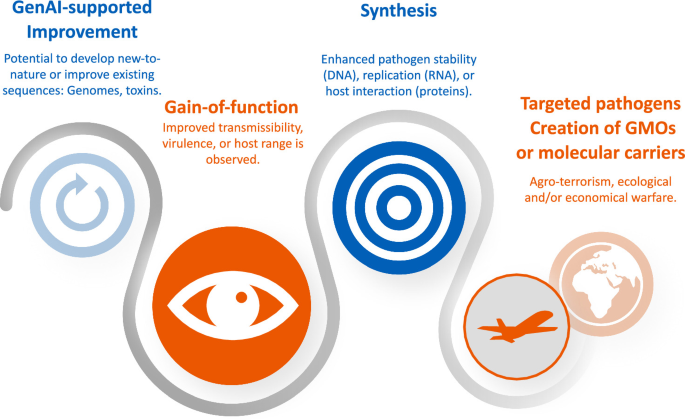
Securing Generative Biology: Inside the Defence-in-Depth Push for Biological AI
As AI models advance from generating protein structures to viable viral genomes, biosecurity researchers outline a multi-layered defence across data, models, and DNA synthesis.

Offshoring the Compute Boom: Washington Looks to Southeast Asia for Data Centers
Facing domestic grid bottlenecks and community backlash, US officials are promoting offshore AI infrastructure and chip manufacturing in the Philippines.