How Agentic AI Is Reshaping the Modern Executive Suite
CEOs are turning to autonomous AI agents to manage corporate knowledge, cut meetings, and critique strategy, fundamentally altering executive workflow.

Corporate leaders are adopting agentic AI systems as custom chiefs of staff, reshaping executive habits while raising questions about oversight, synthetic communication, and the skills needed across modern workforces.
For decades, the standard working day of a chief executive has been defined by meetings, heavy briefing binders, and a continuous stream of status updates. As corporate operations expanded in scale and complexity, the burden of synthesizing information often crowded out long-range planning. Today, a growing contingent of corporate leaders is altering that dynamic by delegating complex analytical and administrative workflows to autonomous artificial intelligence systems.
Rather than relying strictly on conversational search tools or basic text generation, executives are embedding agentic workflows directly into their daily routines. These software agents operate with defined objectives, querying private databases, evaluating agendas, and preparing executive syntheses with minimal prompting. The outcome is a measurable reallocation of executive attention away from administrative management and toward core organizational strategy.
Custom Agents and Organizational Memory
The most prominent early examples of this transition have emerged from technology leaders who treat custom agents as functional staff. Microsoft chief executive Satya Nadella has noted that he routinely works alongside ten distinct Copilot agents, treating each as an automated chief of staff dedicated to specific operational domains. Nvidia head Jensen Huang frequently references using artificial intelligence systems as personal tutors to master unfamiliar technical subjects rapidly.
Beyond Big Tech, leaders at mid-sized software firms and consultancies are engineering their own dedicated systems. At financial technology firm Duco, chief executive Christian Nentwich developed an internal monitor designed to act as an objective critic of his schedule. The agent continuously scans his meetings, outgoing messages, and project communications to ensure his daily time allocation matches his stated strategic priorities. When lower-value operational items begin to dominate his schedule, the agent flags the imbalance.
Other executives use these systems to dismantle the traditional bureaucracy of status meetings. At Airbnb, chief executive Brian Chesky built a consolidated intelligence layer trained on roughly 18,000 keynote presentations, 50,000 internal documents, and extensive operational records. By querying this unified corpus directly, Chesky has eliminated roughly half of his internal update sessions, retrieving relevant organizational facts on demand rather than relying on multi-tiered reporting chains.
Synthetic Presence and the Human Divide
While using algorithms for internal research is gaining broad acceptance, deploying artificial intelligence as an outward-facing proxy remains contentious. Some leaders have begun experimenting with synthetic media to maintain visibility during demanding schedules. Pippa Begg, chief executive of advisory firm Board Intelligence, has used an AI-generated video avatar to deliver internal staff briefings when illness prevented her from appearing in person, arguing that clear visual communication maintains organizational momentum.
Similarly, Meta has explored interactive executive avatars to help manage internal queries at scale. Yet this practice has sparked intense debate among corporate leaders regarding the boundaries of authentic leadership. Critics argue that leadership relies fundamentally on personal chemistry, judgment, and emotional presence that cannot be transferred to a synthetic model.
Nick Murray-Leslie, chief executive of Chatsworth Communications, rejects the deployment of digital stand-ins entirely. In his view, professional relationships depend entirely on personal trust, direct accountability, and human judgment. Interposing an algorithmic likeness between a leader and their team risks eroding the credibility that corporate authority requires.
Even among leaders who welcome algorithmic assistance, boundaries remain strict regarding analytical output. Rob Hornby, co-chief executive of consultancy AlixPartners, uses language models as content partners to challenge his initial arguments and identify blind spots in proposed strategies. However, Hornby insists on drafting foundational materials himself, noting that generative systems still carry significant risks of hallucinating references, misinterpreting contextual nuance, or delivering plausible but incorrect conclusions.
Changing Talent Expectations from the Boardroom Down
The executive embrace of autonomous software is inevitably reshaping expectations for the broader corporate hierarchy. When algorithms can construct slide decks, parse balance sheets, and draft board materials in minutes, the value of routine operational preparation declines. Consequently, critical thinking, interpretive clarity, and interpersonal persuasion are becoming the primary criteria by which team members are judged.
This shift has generated acute uncertainty across administrative support networks. Executive assistants, traditionally responsible for scheduling, gatekeeping, and communication workflows, face a corporate environment where software performs routine administrative tasks instantly. In response, professional bodies such as the Global PA Association have begun providing structured training to help assistants master AI tooling, repositioning their roles toward workflow orchestration, data hygiene, and strategic project management.
Furthermore, familiarity with modern AI platforms is rapidly becoming a mandatory filter for executive recruitment. Kunal Kapoor, chief executive of investment research firm Morningstar, has monitored candidate token consumption during internal hiring rounds to verify whether applicants actually leverage modern AI tools in their daily routines. Candidates who fail to exhibit meaningful adoption are increasingly viewed as ill-prepared for the pace of modern corporate management.
The Executive Adoption Gap
Despite the visibility of early adopters, the executive community remains fundamentally divided on the utility and safety of agentic systems. A recent investigation by the Financial Times highlighted that a significant portion of corporate leadership continues to approach autonomous agents with skepticism or active avoidance.
Data compiled by the US National Bureau of Economic Research reveals that more than one-fifth of corporate executives surveyed across seven major economies, including the United States, the United Kingdom, Germany, and Canada, do not use artificial intelligence tools at work at all. For many non-technical leaders, integrating complex digital assistants presents steep learning curves, persistent data privacy concerns, and unclear returns on investment.
Bridging this divide requires significant behavioral change. As Board Intelligence's Begg observed, leaders who want their enterprises to modernize must be prepared to abandon legacy management habits themselves. When senior executives actively experiment with agentic tools, they gain direct visibility into the technical boundaries, compliance hazards, and operational realities of algorithmic systems, preventing costly disconnects between boardroom ambition and organizational execution.
Why It Matters
The integration of agentic workflows in executive offices mirrors a broader technological shift occurring in physical infrastructure and operations. Just as a chief executive relies on an intelligence corpus to cut through corporate bureaucracy, field technicians and network engineers increasingly depend on autonomous AI agents to diagnose complex equipment failures, manage power consumption in data centers, and monitor distributed telecommunications networks.
However, executive AI tools are only as competent as the ground-truth data supporting them. If corporate leaders rely on autonomous agents to make capital allocation decisions, the telemetry emerging from physical plants, fiber routes, and server facilities must be immaculate. In-field technicians, facilities engineers, and telecom operators represent the sensory network that feeds the enterprise intelligence layer. Without verified, real-world data from the field, algorithmic synthesis in the boardroom risks becoming disconnected from the physical systems that keep modern enterprises running.
More from Trends
RSS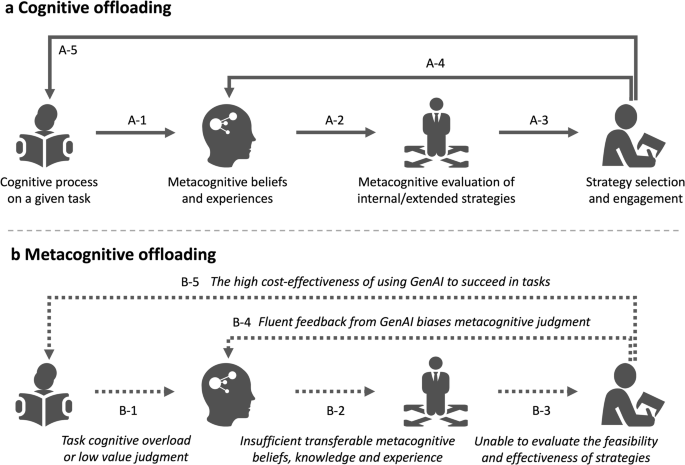
The Metacognitive Cost of AI Assistance
New research shows how generative AI can boost short-term output while degrading deep learning, presenting a framework to keep human skill sharp alongside automated systems.
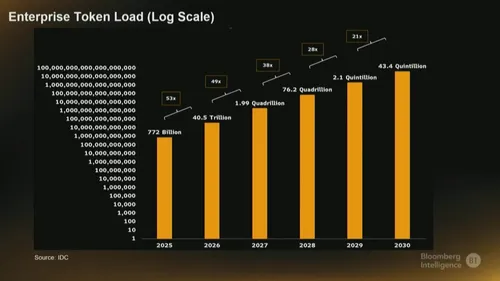
The Agentic Shift: How Autonomous Software Is Taking Over Enterprise Workflows
Enterprise IT is moving beyond generative chatbots toward autonomous agents that reason, plan, and execute actions, fundamentally reshaping corporate software stacks.

Closing the Observability Gap as AI Agents Move Into Production
Autonomous software agents are executing real-world tasks without reliable telemetry, leaving enterprises blind to policy breaches and unauthorized system modifications.