The Agentic Shift: How Autonomous Software Is Taking Over Enterprise Workflows
Enterprise IT is moving beyond generative chatbots toward autonomous agents that reason, plan, and execute actions, fundamentally reshaping corporate software stacks.
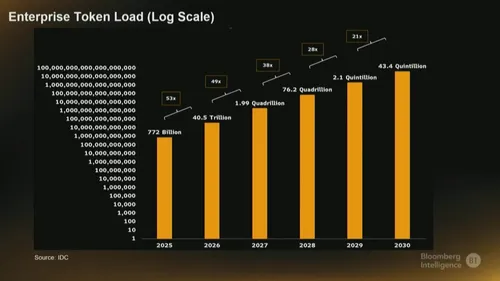
Enterprise technology is undergoing a decisive shift from passive conversational assistants to autonomous software agents capable of executing multi-step tasks across corporate systems, driving a structural reorganisation of IT budgets and operational workflows.
For the past three years, the corporate adoption of artificial intelligence has largely centred on assistance. Knowledge workers turned to large language models to draft memos, summarise quarterly reports, generate boilerplate code, and parse lengthy email threads. These implementations, while valuable, kept the human operator at the absolute centre of every interaction. The user supplied the intent, monitored the generation, verified the output, and manually carried the result into the next operational tool.
That interaction model is now reaching its ceiling. Enterprise organisations are rapidly directing capital toward agentic architecture. Unlike standard generative interfaces, AI agents are designed to take a high-level objective, decompose it into sequential steps, query external databases, call application programming interfaces, interpret intermediate results, and self-correct when an operation fails. Rather than waiting for continuous prompting, these systems operate with bounded autonomy across existing enterprise resource planning, customer relationship management, and infrastructure management platforms.
From Assistance to Delegation
To understand the magnitude of this transition, it is helpful to look at the mechanical differences between a copilot and an agent. A copilot is fundamentally responsive. It acts when addressed, generates a textual or numerical candidate, and waits. An agent, by contrast, operates on an execution loop. Given an assignment, such as resolving an unbilled inventory discrepancy, an agent evaluates the current state of the system against the target state. It formulates a plan, selects from a library of integrated tools, executes queries across distinct systems of record, and makes rule-governed decisions along the way.
This shift moves artificial intelligence from a cognitive aid to a digital workforce component. The implications for productivity are far higher than those of generative drafting. In procurement, for example, instead of asking an assistant to write an email requesting a vendor discount, an agent monitors supply chain pricing in real time, cross-references internal inventory thresholds, identifies supplier discrepancies, drafts and sends the purchase order through an approved API, and updates the accounting ledger automatically.
This functional leap relies on advances in multi-step reasoning and memory management. Modern frontier models have become sufficiently dependable at structured output generation, tool calling, and long-context analysis to execute reliable task chains. When paired with deterministic software routines, probabilistic models can deliver outcomes that enterprise compliance teams are actually willing to sanction.
The Architectural Realignment
The pivot toward autonomous agents is forcing chief information officers to reconsider the entire corporate technology stack. In the previous phase of enterprise AI adoption, integrating a model typically meant establishing a secure connection to a hosted endpoint and providing employees with a browser-based chat window. Deploying autonomous agents requires deep, bidirectional integration with core business software.
First, enterprise data architecture must transition from static document storage to real-time, event-driven pipelines. An agent cannot act on stale information. It requires continuous awareness of system state changes, user activities, and external telemetry. Many organisations are investing heavily in unified data layers and semantic metadata frameworks that expose traditional relational databases to model-based tooling in a format that models can parse reliably.
Second, application interfaces must be engineered specifically for machine consumption. While traditional enterprise software was built around graphical user interfaces designed for human eyes, agentic workflows demand robust, low-latency, and strictly typed APIs. Software vendors that fail to provide programmatic interfaces for their platforms risk being sidelined by platforms that allow software agents to perform reads, writes, and modifications with minimal friction.
Finally, orchestration frameworks are emerging as the new enterprise middleware. These platforms manage the lifecycle of an agent. They route tasks between specialized models, manage state and long-term memory across disjointed systems, monitor execution failures, and enforce rate limits. As companies deploy dozens of specialized agents across different departments, managing their coordination and avoiding conflicting actions has become a primary engineering challenge.
Shifting Software Economics
The rise of agentic systems is also poised to destabilise the traditional business model of enterprise software. For two decades, software-as-a-service companies have derived their revenue primarily from seat-based subscription pricing. A company paid a fixed fee per employee, per month, to access a given application. This model assumed that human labour was the primary constraint and driver of software utility.
When tasks are automated by autonomous agents, the seat-based model breaks down. If a single enterprise agent can do the work that previously required thirty administrative accounts across an invoicing platform, the enterprise customer has little incentive to maintain thirty individual software licenses. In response, enterprise software vendors are transitioning toward consumption-based or outcome-based pricing models, charging customers per workflow completed, per API transaction executed, or based on measurable financial value delivered.
This economic restructuring extends to compute budgets. While training large foundation models continues to demand vast capital expenditures, enterprise operational spend is tilting heavily toward inference. Running reasoning chains, verification loops, and dynamic tool evaluations requires substantially more token generation per task than a standard conversational query. As enterprise agents run continuously in the background, rather than only when an employee opens a browser tab, inference costs will become a persistent, operational line item on corporate financial statements.
Trust, Guardrails, and Verification
The primary barrier to widespread agent deployment remains the problem of reliability. Language models are probabilistic systems operating within deterministic business environments. A small hallucination in a customer-facing summary is an embarrassment. An unverified assumption in an automated financial transaction or server configuration routine is a catastrophic failure.
To manage this risk, IT leaders are establishing structured guardrail architectures. Rather than granting agents unbounded system access, organizations are implementing least-privilege permission models and deterministic verification gates. In these environments, an agent might have the autonomy to analyze telemetry, isolate an error, and construct a remediation script, but an automated policy engine, or a designated human operator, must sign off on the execution if the transaction crosses a predefined risk threshold.
Security has also taken on new dimensions. Prompt injection attacks, data poisoning, and unauthorized tool invocation represent serious attack vectors when an AI system has write permissions across enterprise databases. Security teams are developing automated audit trails that log every reasoning step, intermediate decision, tool call, and data retrieval made by an agent. If an error occurs, engineers can trace the execution path back to the precise token sequence and system state that prompted the failure.
Recent analysis by Bloomberg underscores how central these governance mechanisms have become. Corporate buyers are increasingly evaluating AI investments not on the raw intelligence or conversational fluency of a foundation model, but on the model's ability to operate within strict corporate boundaries, adhere to compliance protocols, and integrate seamlessly with legacy control frameworks.
Why it matters
The enterprise shift toward autonomous agents directly impacts physical operations, telecommunications networks, and data centre infrastructure. In these high-stakes environments, agents are stepping in to triage operational crises and augment technical personnel on the ground.
In modern data centres and telco facilities, agentic systems are already shifting from passive monitoring to automated remediation. When a thermal spike or network packet loss occurs, autonomous agents can cross-reference fiber routing diagrams, run automated loopback diagnostics, reroute network traffic, and initiate cooling adjustments before human operators notice the degradation.
When a physical fix is unavoidable, these systems coordinate directly with in-field technicians. An agent can pre-diagnose a hardware failure, verify parts inventory in the local warehouse, dispatch a work order, and feed real-time diagnostic telemetry straight to a technician's mobile terminal or augmented reality headset. By handling the logistical, diagnostic, and documentation overhead, autonomous enterprise agents ensure that field engineers spend less time searching through manuals and more time executing mission-critical physical repairs.
More from Trends
RSS
The Metacognitive Cost of AI Assistance
New research shows how generative AI can boost short-term output while degrading deep learning, presenting a framework to keep human skill sharp alongside automated systems.

How Agentic AI Is Reshaping the Modern Executive Suite
CEOs are turning to autonomous AI agents to manage corporate knowledge, cut meetings, and critique strategy, fundamentally altering executive workflow.

Closing the Observability Gap as AI Agents Move Into Production
Autonomous software agents are executing real-world tasks without reliable telemetry, leaving enterprises blind to policy breaches and unauthorized system modifications.