Humanoid Robotics Enters the Defense Arena as Startup Backed by Eric Trump Eyes Military Deals
A humanoid robotics startup backed by Eric Trump is in talks with Israel's military, signaling an accelerated shift of bipedal machines into defense and high-risk field environments.

A humanoid robotics startup backed by Eric Trump is in discussions with the Israeli military, marking a critical transition for bipedal machines from controlled factory floors to demanding defense environments.
For the past several years, the race to develop humanoid robots has centered almost entirely on industrial manufacturing, logistics warehouses, and controlled enterprise pilots. Tech giants and venture-backed ventures have showcased bipedal prototypes sorting parcels, moving totes, or learning simple assembly tasks alongside human workers. That narrative is changing as geopolitical friction and labor shortages across hazardous sectors create powerful new incentives for defense applications.
The reported outreach between a humanoid robotics startup backed by Eric Trump and Israel's defense establishment represents a notable milestone in the evolution of embodied artificial intelligence. While unmanned aerial vehicles, wheeled ground systems, and quadrupeds have operated in combat and reconnaissance zones for years, bipedal humanoid platforms have historically been viewed as too fragile, slow, and computationally intensive for harsh operational theaters. Today, advances in vision-language-action models, high-torque actuators, and ruggedized edge computing are prompting military planners to reconsider whether two-legged machines can take on life-threatening field duties.
Expanding Beyond the Factory Floor
The initial commercial roadmap for modern humanoid robots was built around brownfield industrial sites. Facilities such as automotive plants, distribution centers, and electronic manufacturing operations offer structured environments designed specifically for human proportions. Standard doorways, stairs, tool handles, and shelving configurations made bipedal designs a natural theoretical fit, eliminating the need to re-engineer billion-dollar facilities for specialized wheeled automation.
However, commercial uptake in purely industrial settings has faced realistic headwinds. Return on investment remains difficult to prove when specialized articulated arms or autonomous mobile robots can often complete repetitive pallet-moving tasks faster and at a fraction of the capital cost. By contrast, defense and public safety organizations operate under an entirely different value calculation. In operational theaters, the priority is not squeezing marginal efficiency from a warehouse cycle, but preserving human life and maintaining operational presence in places where traditional wheeled or tracked vehicles cannot go.
Defense budgets are uniquely capable of absorbing the elevated capital expenditure and engineering iteration cycles required to mature early-stage hardware. By engaging with military procurement teams, humanoid startups can secure non-dilutive development funding, field validation data under extreme conditions, and high-margin contracts that commercial retail or logistics operations cannot yet justify.
Defense Applications and the Realities of the Field
Integrating humanoid robots into operational military or security environments presents profound functional challenges, but it also opens capabilities that standard autonomous ground vehicles cannot provide. Modern conflict and disaster response increasingly take place in dense urban terrain, structurally compromised buildings, and subterranean networks. These environments are filled with obstacles that defeat wheels and severely restrict quadrupeds, such as vertical ladders, tight stairwells, narrow rubble gaps, and standard doors with latches and handles.
Initial applications under review by defense forces focus primarily on reconnaissance, logistics support in contested zones, and high-threat remediation. Bipedal systems equipped with multimodal sensor suites can navigate multi-story ruins to map interior layouts, identify structural weaknesses, and sweep for booby traps or hazardous materials before human teams enter. In explosive ordnance disposal and chemical containment, a humanoid form factor can manipulate specialized human-designed equipment, open valves, turn keys, and carry heavy loads over unpredictable terrain.
Beyond reconnaissance, there is significant interest in casualty evacuation and field resupply. A platform capable of carrying medical supplies into contested zones, extricating wounded personnel from confined spaces, or transporting ammunition across vertical obstacles addresses persistent logistical vulnerabilities. While the public imagination often leaps to autonomous combatants, the near-term tactical utility of these machines lies in dirty, dull, and perilous support tasks that remove service members from direct physical harm.
Strategic Capital and Political Dimensions
The intersection of venture capital, political family offices, and foreign military customers introduces a complex layer of scrutiny to the emerging robotics sector. The involvement of Eric Trump, executive vice president of the Trump Organization, underscores how private capital with high-profile political connections is seeking exposure to dual-use technologies. As governments worldwide reassess sovereign defense supply chains, startups that can bridge domestic political capital with allied international defense buyers gain a distinct advantage.
At the same time, selling advanced autonomous systems to foreign militaries triggers rigorous regulatory and ethical reviews. Dual-use robotics technologies, particularly those incorporating high-performance computer vision, autonomous navigation, and advanced manipulation algorithms, fall under strict export control regimes. The transfer of hardware and underlying artificial intelligence models must navigate intergovernmental compliance, human rights considerations, and defense alliance frameworks.
As the Financial Times first reported, the startup's discussions with the Israeli military highlight how rapidly sovereign security priorities are intersecting with private venture deals in the robotics space. With global defense budgets expanding and military modernization strategies prioritizing unmanned systems, companies that successfully clear regulatory hurdles and demonstrate real-world field viability stand to capture substantial multi-year procurement programs.
Engineering Hurdles: Edge Compute, Power, and Field Comms
Transitioning a bipedal robot from an air-conditioned laboratory to an austere field environment exposes technical bottlenecks that cannot be solved by software alone. The primary engineering bottleneck remains onboard energy density. Bipedal dynamic balancing requires continuous micro-adjustments from dozens of high-torque actuators, consuming considerable power even when standing stationary. In a warehouse, a robot can return to an inductive charging pad every two hours. In field operations, a platform that runs out of battery after ninety minutes becomes an operational liability.
Compute architecture presents an equally formidable challenge. Commercial humanoid systems frequently rely on high-bandwidth wireless connections to offload heavy foundation model inference to cloud servers. In a contested defense scenario or an industrial disaster zone, reliable wide-area connectivity is non-existent. Electronic countermeasures, physical obstructions, and subterranean structures sever external communications instantly. Field-ready humanoids must therefore run complete perception, motion planning, and decision-making pipelines locally on ruggedized, low-power edge silicon.
Furthermore, field systems must operate under severe physical degradation. Dust, mud, saltwater spray, ballistic shock, and extreme thermal swings cause rapid wear on delicate optical sensors, lidar domes, and harmonic gear drives. Startups must redesign their mechanical assemblies for modularity, enabling field technicians to replace damaged limbs, actuators, or battery packs in minutes using standard field tools rather than cleanroom fixtures.
Why It Matters
The migration of humanoid robotics into defense contracting provides a crucial testing ground that will directly accelerate civilian and industrial field deployments. When military agencies fund the development of machines capable of traversing rubble, operating without cloud connectivity, and surviving severe environmental conditions, they solve the exact technical barriers that currently keep humanoid robots out of complex enterprise settings.
For enterprise infrastructure operators, telecommunications providers, and data center engineers, these developments carry immediate practical implications. The ruggedized chassis, local edge inference systems, and hardened manipulation capabilities forged in defense proving grounds will directly translate to commercial utility. Telecommunication firms require autonomous maintenance platforms capable of inspecting remote cell towers, navigating unpaved access paths, and swapping hardware in harsh weather. Power utilities and pipeline operators need ground robots that can descend into sub-surface utility vaults, clear physical debris, and operate heavy manual valves in contaminated or explosive environments.
Similarly, mission-critical data center facilities facing acute technician shortages can leverage the field-hardened teleoperation and manipulation routines refined in defense programs to handle hot-aisle server maintenance, cable pulling, and physical security patrols without human presence. By pushing humanoid systems beyond idealized showroom conditions and into real-world operational stress tests, the defense sector is effectively financing the hardware reliability and autonomous resilience that the broader enterprise economy needs.
More from Trends
RSS
Inside China's Coordinated Campaign to Build an AI-Native Generation
With mandatory curricula, entrance exam integration, and rural AI tutors, China is executing a massive state push to achieve universal AI literacy across 200 million students by 2030.
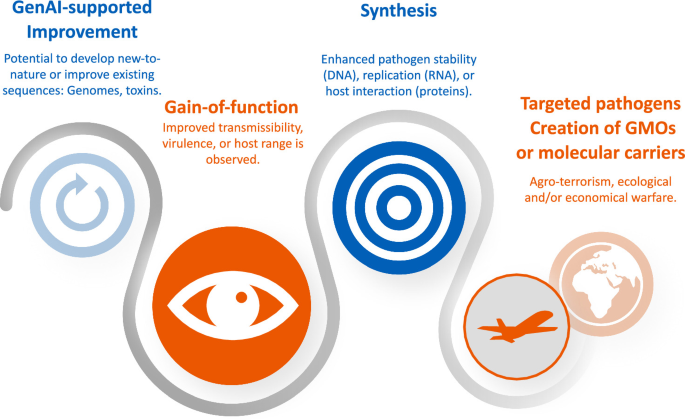
Securing Generative Biology: Inside the Defence-in-Depth Push for Biological AI
As AI models advance from generating protein structures to viable viral genomes, biosecurity researchers outline a multi-layered defence across data, models, and DNA synthesis.

Offshoring the Compute Boom: Washington Looks to Southeast Asia for Data Centers
Facing domestic grid bottlenecks and community backlash, US officials are promoting offshore AI infrastructure and chip manufacturing in the Philippines.