Making Complex Documents Machine-Readable for the Agent Era
Unsiloed AI raised $7.5 million to solve one of enterprise automation's biggest hurdles: turning chaotic visual documents into structured data for AI agents.

Unsiloed AI has secured 7.5 million dollars in seed capital to parse intricate enterprise documentation into reliable data structures for autonomous software agents.
Enterprise adoption of artificial intelligence has moved rapidly from simple conversational interfaces toward autonomous software agents capable of executing multi-step business workflows. Yet as these systems are given greater operational authority, they repeatedly encounter an old obstacle: the messy reality of unstructured enterprise documentation. Vast repositories of organizational knowledge remain locked inside multi-page PDFs, complex financial spreadsheets, scanned technical diagrams, and dense medical reports. When standard foundation models attempt to ingest these materials, visual formatting often collapses, critical context is severed, and statistical hallucinations creep into the pipeline.
To bridge this gap between raw corporate files and agent-ready inputs, San Francisco-based startup Unsiloed AI has raised a 7.5 million dollar seed round led by venture capital firm Felicis. The funding round includes participation from Y Combinator, Orange Collective, Uncorrelated Ventures, and angel investors including Aarthi Ramamurthy and Beth Turner. With a lean team of seven, the company is betting that purpose-built document intelligence can outperform the brute-force processing methods used by standard multimodal models.
The Bottleneck in Enterprise Document Ingestion
Most modern artificial intelligence models operate probabilistically. While this property enables flexible natural language generation, it introduces systemic liabilities when dealing with exact figures, dense data tables, and structural relationships. A model that misinterprets a column header in a balance sheet or misreads a decimal in an equipment specification can trigger cascading failures across downstream enterprise applications.
Traditional optical character recognition systems typically extract text as a continuous, flat stream. This approach strips away spatial context, merging distinct columns, misplacing footnote references, and scrambling multi-row table cells. For human readers, spatial design acts as an intuitive guide to semantic meaning. For an algorithmic agent relying on vector search or standard retrieval pipelines, losing that spatial hierarchy renders the underlying data largely unusable.
In sectors like banking, law, healthcare, and industrial maintenance, tolerance for such errors is essentially zero. A misplaced number can lead to severe regulatory non-compliance, legal exposure, or hazardous physical interventions. Consequently, many organizations have found themselves unable to deploy autonomous agentic systems until they can guarantee the fidelity of their base knowledge layer.
Dual Streams and Heat-Map Processing
Founded by Indian Institute of Technology Kharagpur graduates Aman Mishra and Adnan Abbas, who developed the system before entering Y Combinator's Fall 2025 cohort, Unsiloed approaches document extraction through an alternative architecture. Rather than flattening a document into plain text or treating each page purely as a downscaled image, the platform deploys a dual-stream vision model.
Under this architecture, the extraction pipeline processes textual tokens and image tokens through separate, parallel computational paths. One stream focuses on character recognition, word relationships, and semantic sequence, while the parallel visual stream tracks precise pixel-level layout, margins, geometric shapes, and coordinate spaces. The system reconciles both streams using a visual heat-map chunking mechanism, which analyzes the page to identify high-density, high-value zones such as financial tables, technical charts, nested matrices, and complex callouts.
By isolating these critical visual areas, the software concentrates inference compute precisely where structural complexity is highest, rather than spending equal processing power on empty margins or straightforward paragraphs. The platform also applies a specialized decoding layer calibrated to recognize domain-specific terminology across legal, medical, and financial fields. This prevents the system from confusing identical acronyms that carry contradictory definitions across different industries.
Crucially, the output is grounded directly in the source file. The system generates structured data payloads, such as JSON outputs, accompanied by spatial bounding boxes that tie every extracted value back to its exact coordinates on the source page. This audit trail allows automated agents and human reviewers to verify the precise origin of every data point before acting on it.
Benchmarking Against the Market
The market for document parsing is already populated by established enterprise players. Hyperscalers like Microsoft and Amazon offer proprietary document analysis services, while specialized startups such as Unstructured and Reducto are targeting developer workflows. Meanwhile, leading AI labs continue to upgrade the native visual capabilities of their flagship models.
Unsiloed argues that general-purpose models remain too computationally expensive and inconsistent for enterprise-scale document extraction. According to company data, Unsiloed evaluated its software on a private benchmark involving 542 financial documents containing roughly 84,000 discrete data points supplied by an enterprise customer. In that internal trial, which compared the startup's system against Microsoft Azure Document Intelligence, custom client tools, and frontier large language models, Unsiloed reported an extraction accuracy of 99.78 percent.
On the public olmOCR-Bench evaluation framework created by the Allen Institute for AI, which tests systems across 1,403 PDF pages containing intricate mathematical notation, multi-column layouts, and degraded scans, Unsiloed reported an aggregate score of 88.0. By comparison, Reducto achieved a score of 66.0, while Unstructured recorded 39.9 on the same evaluation dataset.
To compete with deep-pocketed platform providers, the startup is setting its base pricing at one cent per processed page. The selective allocation of compute through heat-map chunking is central to maintaining this cost floor, as the pipeline avoids burning resources on simpler text blocks that do not require full multimodal decoding.
Enterprise Footprints and Practical Realities
The company has already begun deploying its engine across regulated sectors. Early adoption includes an undisclosed commercial bank using the platform for document processing, an enterprise law firm running the software within an on-premises deployment to ingest historical contracts and litigation records, and voice agent startup Bolna AI, which uses the service to convert complex company documentation into retrieval bases for spoken-dialogue agents.
Despite promising initial benchmarks, independent validation will remain critical as the company attempts to win large-scale enterprise contracts. Public test datasets cannot fully capture the messy edge cases found in enterprise archives, such as faded carbon copies, skewed scans, handwritten margin notes, and idiosyncratic diagram styles. Scaling from seven employees to a full enterprise sales and engineering organization will test whether the company can maintain performance consistency across varied customer infrastructure environments.
The investment was first reported by TechCrunch, which noted that Unsiloed plans to direct its seed funding toward hiring additional machine learning researchers, expanding enterprise distribution, and curating specialized training datasets to refine its decoding models.
Why It Matters
While corporate attention often focuses on back-office automation like legal review and loan processing, high-fidelity document parsing plays an equally critical role in industrial and technical field operations. Field technicians servicing data centers, telecommunications networks, electrical substations, and industrial manufacturing plants depend heavily on dense technical documentation.
In these environments, engineering manuals, optical time-domain reflectometer traces, single-line wiring schematics, and equipment rack layouts are rarely available as clean, structured databases. Instead, they exist as legacy PDF diagrams, technical appendices, and scanned facility plans. When field personnel use augmented reality headsets or mobile edge devices to diagnose equipment failures, the AI agents assisting them must extract precise voltage tolerances, pin-out configurations, and fiber-routing maps without hallucination. A single misread digit in a high-voltage transformer manual or telecom switch specification can result in prolonged infrastructure downtime, severe equipment destruction, or physical danger for the technician on site. Converting chaotic technical literature into grounded, fully auditable machine data is therefore a baseline safety requirement for the next generation of industrial intelligence.
More from Trends
RSS
Inside China's Coordinated Campaign to Build an AI-Native Generation
With mandatory curricula, entrance exam integration, and rural AI tutors, China is executing a massive state push to achieve universal AI literacy across 200 million students by 2030.
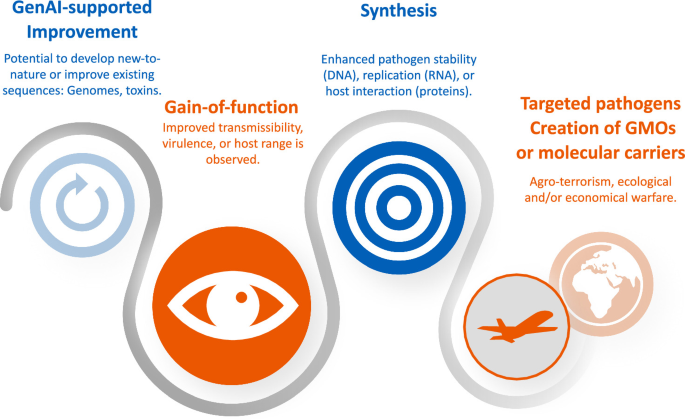
Securing Generative Biology: Inside the Defence-in-Depth Push for Biological AI
As AI models advance from generating protein structures to viable viral genomes, biosecurity researchers outline a multi-layered defence across data, models, and DNA synthesis.

Offshoring the Compute Boom: Washington Looks to Southeast Asia for Data Centers
Facing domestic grid bottlenecks and community backlash, US officials are promoting offshore AI infrastructure and chip manufacturing in the Philippines.