Mapping Molecular Chaos: How AI Unravels Multi-Omics in Cancer Drug Discovery
AI is reshaping cancer drug discovery by integrating multi-omics data, yet bridging the gap between retrospective models and clinical reality remains an uphill battle.
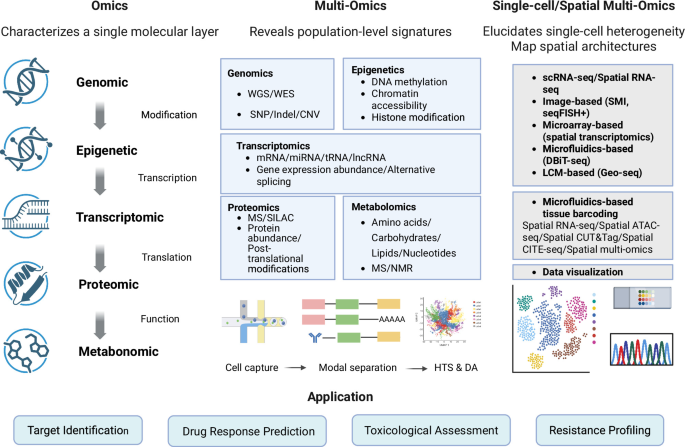
Integrating multiple biological data layers through artificial intelligence is transforming cancer drug discovery, but closing the gap between computational models and clinical validation remains a critical hurdle.
Cancer is not a monolithic disease. It is a shifting, dynamic biological system governed by complex layers of cellular machinery. For decades, oncologists and pharmaceutical researchers evaluated tumors by isolating single dimensions of biology, such as DNA mutations or individual protein expressions. While single-gene discoveries brought targeted therapies like tyrosine kinase inhibitors, they frequently ran into the brick wall of acquired drug resistance and unpredictable patient responses.
To see the full picture, oncology has turned to multi-omics. This systems-biology discipline gathers and harmonizes information across genomics, transcriptomics, epigenomics, proteomics, and metabolomics. Gathering this vast ocean of data is one challenge, but interpreting how an altered gene impacts RNA transcription, protein folding, and downstream metabolic shifts is another entirely. This computational bottleneck is precisely where artificial intelligence and modern deep learning frameworks have become indispensable.
The Multi-Layered Biological Puzzle
Biological systems operate through continuous feedback loops across distinct molecular strata. Genomics maps the inherited or acquired sequence alterations in DNA. Epigenomics tracks structural modifications, such as chromatin accessibility and DNA methylation, that dictate whether genes are accessible for transcription. Transcriptomics measures actual RNA output, proteomics captures functional cellular machinery, and metabolomics profiles the biochemical metabolites that fuel cellular activity.
Evaluating any one of these layers in isolation paints an incomplete picture. A genetic mutation might be cataloged, yet transcriptomic buffering or post-translational modifications can render it biologically inert. Conversely, an aggressive tumor phenotype might emerge not from a novel mutation, but from altered epigenetic patterns or metabolic reprogramming that evades standard assays.
Recent technological advances have further enriched this analytical landscape through single-cell and spatial profiling. Rather than homogenizing a tumor biopsy into bulk tissue data, single-cell sequencing reveals the distinct sub-populations of malignant cells, immune infiltrates, and connective tissue. Spatial omics overlays this molecular data directly onto tissue architecture, showing where resistant cells cluster and how they communicate with their immediate microenvironment. However, the resulting datasets are staggering in scale, noisy, sparse, and non-linear, demanding analytical paradigms far beyond conventional statistics.
Deep Learning as the Unifying Engine
Traditional bioinformatics techniques struggle with the sheer dimensionality and heterogeneity of integrated omics datasets. High-throughput assays frequently yield tens of thousands of molecular features across only a few hundred or thousand biological samples, an imbalance known mathematically as the curse of dimensionality.
Deep learning architectures have emerged as the foundational toolkit for extracting meaningful patterns from this noise. Variational autoencoders are widely deployed to project massive, multimodal profiles into lower-dimensional latent spaces. By compressing disparate data streams, such as DNA copy number variations and RNA expression counts, into a shared mathematical representation, these autoencoders capture non-linear interactions across modalities without succumbing to feature explosion.
Graph neural networks provide a complementary framework by explicitly modeling biological relationships. Instead of treating genes or proteins as independent variables, graph networks structure them as nodes linked by known biological pathways, protein-protein interactions, or spatial proximities within the tumor microenvironment. This structural inductive bias allows models to predict drug effects by simulating how a perturbation ripples across an interconnected cellular network.
Meanwhile, transformer-based foundation models, which originally revolutionized natural language processing, are increasingly adapted for cellular representations. By treating gene expression sequences or chemical compounds as biological sentences, self-attention mechanisms learn complex contextual relationships across distant molecular regulators. These computational systems allow scientists to navigate the sprawling matrix of human biology with unprecedented speed.
Accelerating Targets and Predicting Synergy
Within drug development, the convergence of multi-omics and artificial intelligence drives progress across three primary fronts: target identification, therapeutic response prediction, and drug combination modeling.
Target identification represents the initial choke point in drug development. Historically, identifying a viable therapeutic vulnerability required years of phenotypic screening and wet-lab validation. Today, integrated deep learning models cross-reference somatic mutation burdens, epigenetic silencing, and proteomic abundance to pinpoint synthetic lethalities. These vulnerabilities occur when the loss of two distinct genes kills a cancer cell, while the loss of either alone leaves it viable. By finding genes that become essential only in the presence of a specific oncogenic mutation, machine learning models surface drug targets that spare healthy tissue.
Predicting clinical response and prospective resistance is the second frontier. Deep learning platforms train on pharmacogenomic screens, patient-derived xenografts, and clinical trial cohorts to anticipate whether a patient will respond to a given compound. By combining molecular profiles with structural chemical descriptors of small molecules, multimodal networks predict cellular sensitivity, identifying biomarkers of response before a drug enters expensive clinical phases.
Perhaps the most mathematically demanding application is modeling drug synergy. Monotherapies often fail in oncology because tumors deploy redundant signaling pathways to survive. Combining therapeutics can shut down these compensatory pathways, but testing millions of potential drug pairs empirically in the lab is practically impossible. Artificial intelligence models screen vast combinatorial libraries in silico, predicting synergistic pairs that maximize tumor destruction while minimizing cumulative toxicity.
Benchmarking Hype Against Clinical Reality
Despite the rapid proliferation of academic literature and algorithmic proofs-of-concept, significant friction remains when translating computational discoveries into reliable medical interventions. Distinguishing genuine, externally validated clinical capabilities from retrospective laboratory exercises is essential.
Much of the existing literature relies on retrospective datasets that are prone to batch effects, selection bias, and algorithmic overfitting. A model that achieves high accuracy when predicting cell-line responses in controlled public repositories like the Cancer Cell Line Encyclopedia often fails entirely when deployed against noisy, heterogeneous tissue samples from diverse human populations. Without stringent, prospective external validation across geographically and ethnically diverse cohorts, predictive accuracy remains largely theoretical.
Furthermore, while single-cell and spatial profiling generate magnificent anatomical and cellular roadmaps, they remain overwhelmingly research-grade. The high per-sample costs, complex preparation protocols, and lack of standardized clinical quality controls prevent them from entering routine diagnostic workflows today. For clinical oncologists, decisions must still be made using standard immunohistochemistry, targeted genomic sequencing panels, and bulk sequencing methods.
Foundation models also face growing scrutiny. While they excel at representation learning and clustering cell states, recent benchmarking demonstrates that their capacity to reliably predict cellular responses to unobserved chemical or genetic perturbations requires far more rigorous verification. As detailed in an analytical review published in Nature, achieving true translational readiness demands that the oncology community move past isolated computational novelty and enforce strict, prospective benchmarking frameworks that demonstrate measurable survival or efficacy benefits.
Why it matters
Bridging the gap between computational oncology and real-world implementation depends heavily on the underlying technical infrastructure. Multi-omics integration is an intensive data and computing challenge. Generating, processing, and storing single-cell and spatial sequencing alongside high-resolution pathology images places extraordinary demands on enterprise data centres, high-performance computing clusters, and high-throughput telco networks connecting research hospitals to processing hubs.
For systems architects, data engineers, and infrastructure technicians, the rise of multi-modal AI in life sciences translates to concrete operational shifts. Managing massive, heterogeneous datasets requires highly optimized pipeline orchestration, robust data governance protocols to preserve patient privacy, and localized edge-computing architectures that allow clinical laboratories to execute inference models without routing terabytes of raw patient data offsite. As machine learning models advance from retrospective academic exercises into prospective diagnostic tools, the reliability, latency, and uptime of the digital infrastructure supporting them will directly affect operational efficiency and, ultimately, patient outcomes.
More from Trends
RSS
Inside China's Coordinated Campaign to Build an AI-Native Generation
With mandatory curricula, entrance exam integration, and rural AI tutors, China is executing a massive state push to achieve universal AI literacy across 200 million students by 2030.
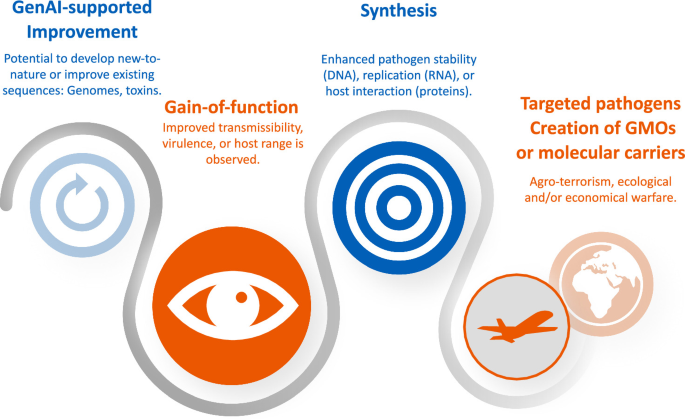
Securing Generative Biology: Inside the Defence-in-Depth Push for Biological AI
As AI models advance from generating protein structures to viable viral genomes, biosecurity researchers outline a multi-layered defence across data, models, and DNA synthesis.

Offshoring the Compute Boom: Washington Looks to Southeast Asia for Data Centers
Facing domestic grid bottlenecks and community backlash, US officials are promoting offshore AI infrastructure and chip manufacturing in the Philippines.