Mexico's Power Bottlenecks Threaten Its Ambitions as an AI Data Center Hub
Despite prime cross-border connectivity and booming nearshoring demand, Mexico's strained electrical grid is locking the country out of the global artificial intelligence boom.
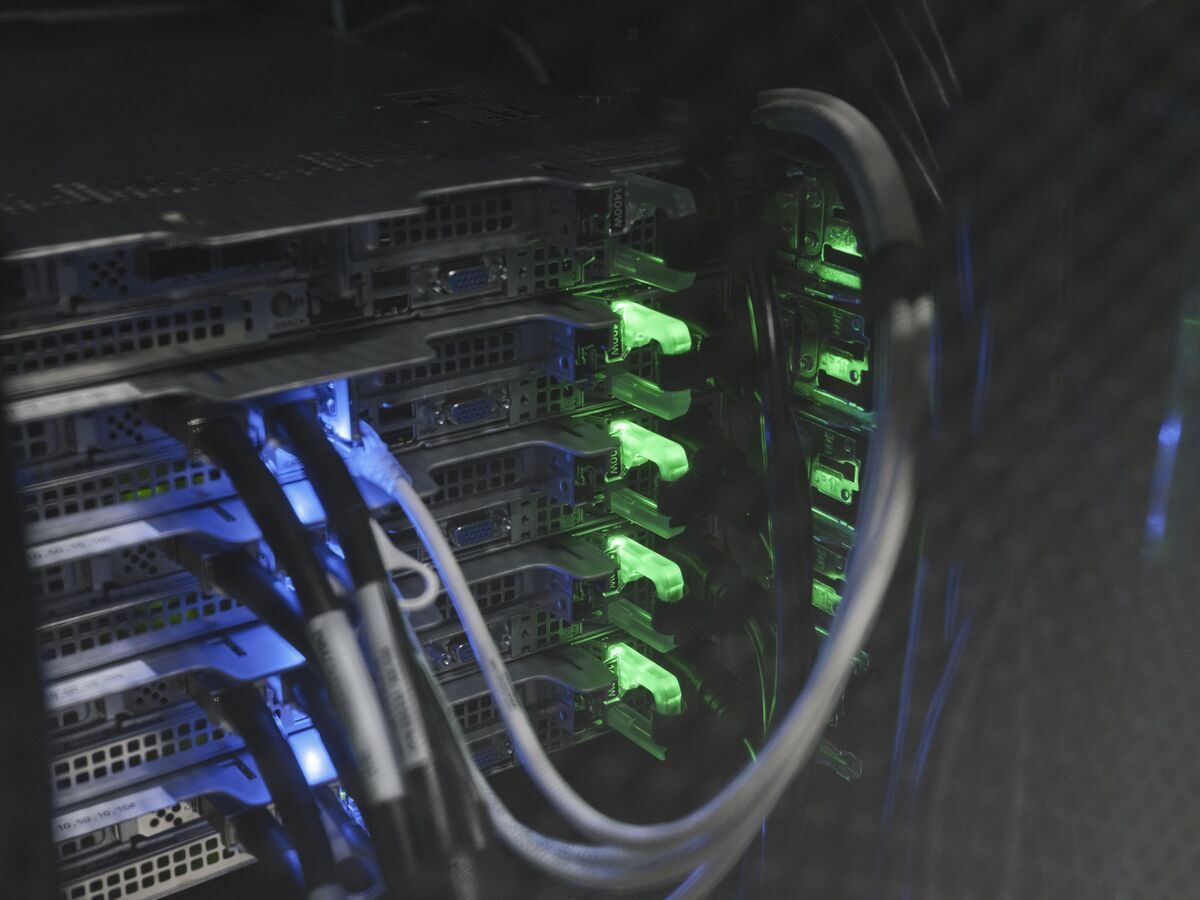
Severe electricity shortages, regulatory gridlock, and transmission bottlenecks are preventing Mexico from turning its prime geographic position into an artificial intelligence data center windfall.
The Geography Paradox
On paper, Mexico holds every fundamental advantage required to serve as the premier digital infrastructure corridor for the Americas. Its northern industrial corridor sits directly adjacent to Texas, one of the primary energy and tech engines of the United States. Fiber optic signals travel across the border in single-digit milliseconds, offering latency profiles that are functionally indistinguishable from domestic American networks.
Over the past decade, central hubs like Querétaro emerged as reliable homes for enterprise cloud storage and colocation facilities. Major industrial corridors attracted automotive and aerospace manufacturers, bringing high-capacity telecommunications routes with them. Yet as the computing requirements of global technology firms shift from ordinary cloud hosting to massive artificial intelligence training clusters, Mexico's digital expansion has hit an unexpected wall.
The global AI land rush requires unprecedented volumes of continuous electrical power. While developers have expressed eager interest in breaking ground on campus-scale facilities south of the US border, Mexico's domestic electrical system simply cannot supply the gigawatts demanded by modern hyperscale developers. As a result, projects that could have delivered billions of dollars in foreign direct investment are stalling or moving elsewhere.
The Transmission Crisis and State Utility Limits
The fundamental barrier confronting Mexican data center projects is not digital, but electrical. The national grid, operated by the state-owned utility Comisión Federal de Electricidad (CFE), suffers from acute underinvestment in transmission and distribution infrastructure. Even in regions where power generation capacity theoretically exists, the high-voltage lines necessary to deliver steady, uninterrupted current to massive computer clusters are either saturated or nonexistent.
Developers seeking interconnection agreements often face waiting periods that stretch beyond three to five years. In many industrial corridors, utility operators can only guarantee single-digit megawatt allocations to new facilities. That amount can keep traditional enterprise server rooms running, but it falls drastically short of the 50 to 200 megawatts required for modern generative AI installations.
This infrastructure bottleneck stems from years of energy policy that prioritized state control over private generation and grid expansion. Past legislative moves curtailed private renewable energy development, leaving private operators with few avenues to build off-grid solar or wind generation to power their own facilities. While commercial enterprises can install limited on-site generation, strict regulatory caps on self-generation prevent developers from creating dedicated microgrids capable of powering high-density data campuses.
The AI Power Imperative
Traditional data centers, designed around web services and database queries, typically operate with power densities ranging between five and ten kilowatts per server rack. Artificial intelligence changes that math entirely. High-density server cabinets running advanced accelerator chips, such as modern graphics processing units, can draw anywhere from 40 to more than 100 kilowatts per rack.
These chips generate extraordinary amounts of heat, requiring advanced liquid cooling loops, industrial chillers, and specialized thermal management systems that consume additional electricity around the clock. An AI cluster cannot tolerate power fluctuations. Even microsecond voltage drops can interrupt weeks-long model training runs, corrupting data and costing millions of dollars in compute time.
Because of these stringent technical parameters, tech giants and colocation operators cannot compromise on power stability. In regions where the utility grid experiences frequent blackouts or seasonal load-shedding during peak summer heatwaves, running continuous AI workloads becomes a technical liability. Hyperscalers are unwilling to deploy billions of dollars in fragile silicon into regions where base-load reliability remains uncertain.
Water Scarcity and Resource Conflicts
Beyond electricity, cooling infrastructure presents a parallel challenge that is complicating local approvals across Mexico. Many of the country's most appealing logistics hubs, including Querétaro, Guanajuato, and the northern states of Nuevo León and Coahuila, face severe and worsening water stress. Traditional data center cooling relies heavily on evaporative cooling towers, which consume millions of liters of fresh water daily to keep equipment within safe operating temperatures.
In recent years, prolonged droughts have forced local municipalities to prioritize municipal drinking water and agricultural supplies over industrial use. Community pushback against water-intensive projects has made permitting increasingly precarious for data center developers. While newer data facilities are turning to closed-loop liquid cooling and direct-to-chip designs that drastically reduce water consumption, these systems rely more heavily on electricity to drive high-capacity air-cooled heat exchangers. This trade-off pushes energy requirements even higher, compounding the electrical shortfall.
Hyperscalers Reassess Regional Roadmaps
Faced with multi-year connection queues in Mexico, digital infrastructure capital is pivoting toward alternative markets. In North America, capital is moving deeper into secondary and tertiary US markets, including rural jurisdictions across the American Midwest and Southeast, where local utilities offer clearer paths to multi-hundred-megawatt substations. Across Latin America, capital is targeting nations like Chile and Brazil, which feature clearer regulatory pathways for private renewable energy procurement and more robust transmission planning.
As Bloomberg recently reported, Mexico is actively missing out on the unprecedented wave of global AI capital expenditure precisely because its energy sector cannot absorb the influx of demand. International consortiums are eager to invest, but the inability of the local energy market to guarantee large-scale, clean power contracts is steering capital across borders to more accommodating grids.
The nearshoring phenomenon, which has drawn hundreds of manufacturing operations to Mexican soil to avoid supply chain disruptions from Asia, creates another layer of irony. The factories setting up in northern Mexico will increasingly require low-latency AI inference, computer vision for automated quality control, and regional edge compute. If local data centers cannot scale to support these industrial workloads, Mexican factories will remain dependent on computing infrastructure hosted on the other side of the US border.
Policy Pressures and Infrastructure Modernization
The administration of President Claudia Sheinbaum faces mounting pressure from business federations to resolve these structural grid limitations. Sheinbaum, an environmental engineer by training, has articulated ambitious targets for expanding renewable generation and modernizing national power corridors. Early policy proposals indicate a willingness to explore hybrid public-private partnerships to fund new transmission lines, a model previously viewed with skepticism by state planners.
Yet rebuilding transmission architecture takes considerable time. High-voltage transmission lines require right-of-way acquisition, extensive environmental impact assessments, and multi-year construction cycles. Even with streamlined permitting, substantial new transmission capacity will take years to reach commercial availability. In the hyper-competitive race for artificial intelligence supremacy, tech firms measure timelines in months rather than presidential administrations. The gap between Mexico's policy timeline and the global technology deployment cycle remains a daunting challenge.
Why It Matters
For telecommunications operators, facility technicians, and field engineering teams, Mexico's grid struggles offer a direct look at the physical limits of software expansion. Software innovation cannot scale without physical cables, substations, cooling apparatus, and uninterrupted current. When national transmission grids stall, the entire downstream operational ecosystem stalls with it.
If Mexico can open transmission corridors and clarify rules for on-site microgrids, technicians and infrastructure specialists will see a massive influx of complex deployments, spanning high-voltage substation maintenance, direct-to-chip liquid cooling installations, and specialized fiber backhaul engineering. Until those high-voltage interconnections are built, however, the digital frontier will remain tethered to the physical power lines that feed it.
More from Trends
RSS
Inside China's Coordinated Campaign to Build an AI-Native Generation
With mandatory curricula, entrance exam integration, and rural AI tutors, China is executing a massive state push to achieve universal AI literacy across 200 million students by 2030.

Securing Generative Biology: Inside the Defence-in-Depth Push for Biological AI
As AI models advance from generating protein structures to viable viral genomes, biosecurity researchers outline a multi-layered defence across data, models, and DNA synthesis.

Offshoring the Compute Boom: Washington Looks to Southeast Asia for Data Centers
Facing domestic grid bottlenecks and community backlash, US officials are promoting offshore AI infrastructure and chip manufacturing in the Philippines.