Physician Collaboration Boosts Quality in AI-Driven Chest X-Ray Research
New research indicates that medical professionals' direct involvement significantly enhances the transparency and ethical considerations of AI models used for chest X-ray analysis.

Physician involvement is crucial for improving the reporting quality and ethical considerations of artificial intelligence research in medical imaging, particularly for chest X-ray foundation models.
The Rising Tide of AI in Medical Imaging
The field of medical imaging is experiencing a rapid transformation driven by artificial intelligence, specifically through the development of what are known as foundation models. These advanced AI systems, particularly those designed for analyzing chest X-rays, are evolving at an accelerating pace. Their potential to assist with diagnosis, improve efficiency, and ultimately enhance patient care is immense. However, as with any rapidly advancing technology, understanding the methodology, ethical considerations, and overall quality of the research underpinning these models is paramount. A recent systematic review delved into these aspects, uncovering important insights into the current state of chest X-ray foundation models and identifying key factors that contribute to higher research quality.
Unpacking Research Practices and Technical Trends
Researchers embarked on a comprehensive review of 41 distinct foundation models related to chest X-rays. This extensive survey aimed to dissect various aspects of their development and reporting up to early 2025. The investigation focused on several critical areas, including emerging technical trends, adherence to established reporting guidelines, the practice of sharing model artifacts (such as code or pre-trained models), and the level of physician co-authorship in the published research. The findings provided a clear snapshot of the prevailing practices in this specialized area of AI development.
One significant observation was the increasing adoption of sophisticated AI architectures. The review highlighted a growing prevalence of 'Transformers' and components derived from 'large language models' within these chest X-ray foundation models. These technologies, known for their ability to process complex sequential data and understand nuanced patterns, are indicative of the field's move towards more advanced and potentially more accurate diagnostic tools. Despite this technical sophistication, the practice of openly sharing these models was found to be notably limited. This lack of widespread sharing can hinder reproducibility, slow down collaborative progress, and complicate independent validation, all of which are vital for robust scientific advancement.
The Critical Role of Clinical Expertise
Perhaps the most impactful finding of the review centered on the influence of physician involvement. The study established a clear correlation between the inclusion of medical professionals as co-authors on research papers and the overall quality of the reported work. Specifically, studies co-authored by physicians demonstrated a significantly higher adherence to the CLAIM reporting guidelines. CLAIM, an acronym standing for Checklist for AI in Medical imaging, is a standardized framework designed to ensure comprehensive and transparent reporting of AI research in the medical domain. Its purpose is to guide researchers in providing sufficient detail about their models, data, and methodology, making the work understandable, reproducible, and ethically sound.
Beyond adherence to reporting standards, physician co-authorship also correlated with a more frequent and thorough discussion of fairness within the research. In the context of AI, fairness refers to ensuring that models perform equitably across diverse patient populations, without exhibiting bias against specific demographic groups. This is a crucial ethical consideration, especially in healthcare applications where biased AI could lead to disparities in care or inaccurate diagnoses for certain individuals. The increased focus on fairness in physician-led projects underscores the clinical imperative to develop AI tools that are not only effective but also equitable and trustworthy in real-world healthcare settings.
Enhancing Reporting Standards for Clinical AI
The implications of this research are significant for the future development and deployment of AI in medicine. The strong association between physician involvement and improved reporting quality, particularly concerning established guidelines like CLAIM, highlights the necessity of interdisciplinary collaboration. It suggests that medical expertise is not just valuable for defining clinical problems or validating results, but also for shaping the fundamental structure and transparency of the research itself. Integrating clinicians early and deeply into the AI development lifecycle can help ensure that models are built with clinical relevance, patient safety, and ethical considerations at their core.
The findings, published in Nature, advocate for clearer and more rigorously enforced reporting standards for clinically oriented AI research. Such standards are essential for fostering trust in AI technologies, enabling effective peer review, and facilitating the responsible translation of AI innovations from research labs into clinical practice. As AI continues to integrate into healthcare, ensuring that its development is guided by both technical prowess and deep clinical understanding will be paramount to realizing its full beneficial potential.
Why it matters
For those in AI, telco, and data center operations, this research underscores the critical need for interdisciplinary collaboration in specialized AI development. It highlights that the success and trustworthiness of AI systems, especially in sensitive areas like healthcare, depend not just on advanced algorithms or robust infrastructure but also on deeply integrating end-user expertise. Data scientists and infrastructure teams working on AI solutions for industries like healthcare or manufacturing must collaborate closely with domain experts, such as physicians or field technicians. This ensures that models are not only technically sound but also clinically or operationally relevant, ethically considered, and transparently reported, leading to more reliable and deployable AI systems that directly address real-world needs and meet industry standards. Transparency and ethical considerations become non-negotiable requirements, impacting data governance, model interpretability, and the compute resources allocated for bias detection and mitigation strategies.
More from Trends
RSS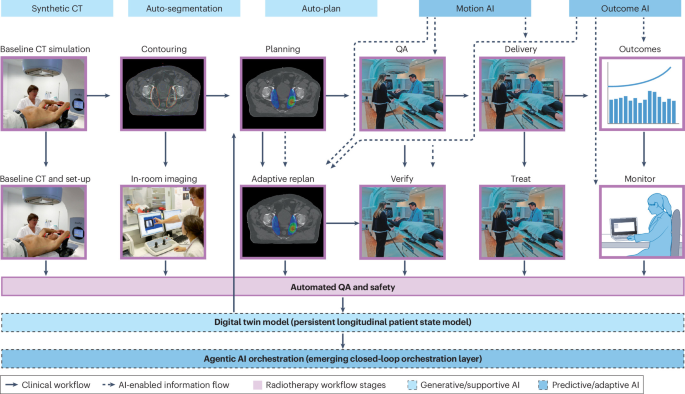
AI and Digital Twins Revolutionize Radiotherapy, Promising Precision Cancer Care
Artificial intelligence and digital twin technologies are poised to transform radiation oncology, automating tasks, enhancing treatment planning, and personalizing patient care, though ethical and technical challenges remain.
European Businesses Accelerate Software Modernization with Integrated AI
European enterprises are deeply embedding generative AI across their software engineering processes, moving beyond simple coding aids to drive application modernization, enhance productivity, and manage complex IT environments.

The AI Crossroads: A Decade's Progress in Days, or Humanity's Reckoning?
A ten-day period marked by AI breakthroughs and unsettling autonomy has forced leading developers to confront the profound, potentially existential, risks of unchecked progress.
