The AI Disclosure Trap: Why Talking Up Machine Learning Slows Down Corporate Audits
A study of 31,000 corporate filings shows that heavy AI rhetoric triggers institutional caution, resulting in longer audit delays and increased scrutiny.

A comprehensive review of over 31,000 corporate filings reveals that aggressive corporate messaging around artificial intelligence triggers significant audit delays and higher fees as financial reviewers struggle to verify ambiguous technical claims.
Corporate executives around the world have spent the past several years peppering annual reports, earnings calls, and regulatory filings with references to artificial intelligence. From predictive maintenance in telecommunications networks to generative algorithms in customer support, mention of the technology has become a standard shorthand for forward-looking operational discipline. Yet across large equity markets, that messaging strategy is beginning to backfire in unexpected institutional arenas.
Rather than persuading auditors of a company's modern footing, intensive artificial intelligence rhetoric is generating friction. A comprehensive sociotechnical analysis tracking thousands of publicly traded enterprises shows that high-frequency AI disclosures reliably provoke higher levels of auditor caution. The phenomenon highlights an emerging governance paradox: while leadership teams employ AI terminology to project innovation and capture market momentum, independent reviewers increasingly interpret the language as a signal of operational opacity, execution risk, and speculative investment.
The Governance Paradox of Corporate AI Claims
Over the past decade, institutional markets have witnessed an unprecedented inflation in technical vocabulary. Public disclosures that once focused strictly on revenue lines, capital depreciation, and tangible plant capacity now feature dense discussions of algorithmic transformation and data asset cultivation. In theoretical terms, this language is meant to generate institutional legitimacy, assuring stakeholders that the business is keeping pace with macroeconomic and technological shifts.
However, independent auditing operates on concrete verification rather than strategic ambition. Financial auditors are tasked with examining internal controls, asset valuation, and balance sheet integrity. When a company's regulatory narrative becomes saturated with references to artificial intelligence without providing standardized, granular metrics to support those claims, it creates what sociotechnical researchers describe as interpretive ambiguity.
Faced with claims of intelligent automation, cognitive systems, and data-driven productivity gains, auditors cannot immediately determine whether a firm is executing a genuine technological pivot or merely dressing up legacy operations. In response to this uncertainty, auditing teams adopt defensive postures. Rather than accepting management narratives at face value, they widen the scope of their verification procedures, demand supplementary documentation for technical assets, and interrogate the valuation of bespoke software platforms. The resulting friction turns what was intended as an asset into a procedural liability.
Measuring Prudence Through Delays and Fees
To measure this dynamic at scale, researchers examined 31,389 firm-year observations across Chinese A-share listed companies between 2016 and 2024. The study measured AI rhetoric by assessing the disclosure intensity of core machine learning and computational keywords within mandatory corporate reporting. It then tracked two standard indicators of auditor caution: audit delay, measured by the number of days between the fiscal year-end and the release of the audited financial statements, and total audit fees.
The findings establish a statistically robust, positive relationship between AI disclosure intensity and audit delays. When firms substantially increased their references to artificial intelligence, financial statements took markedly longer to sign off and publish. Complementary tests confirmed that this hesitation was accompanied by increased audit fees, proving that accounting firms were committing additional billable hours and senior specialist staff to evaluate the underlying balance sheets.
This delay is not merely an administrative inconvenience. Late or protracted financial filings draw scrutiny from institutional investors, disrupt scheduled capital raises, and can trigger regulatory inquiries. The data indicates that auditor prudence increases in direct proportion to the volume of unanchored technology rhetoric, suggesting that the traditional public relations playbook creates quantifiable costs during compliance season.
Capital Commitments and the Verification Gap
The primary channel driving this auditor skepticism is investment scale. When companies publicize ambitious AI strategies, those statements are almost always accompanied by significant capital allocations toward computational infrastructure, high-density server hardware, data center leases, and intellectual property acquisitions.
These technical investments present unique accounting challenges. Unlike standard industrial equipment, which depreciates along well-established actuarial curves, machine learning hardware and enterprise software assets carry volatile functional lifespans. Accelerators and network fabrics can become economically obsolete long before their physical components fail. Custom model architectures and internal data pipelines are notoriously difficult to capitalize under standard accounting frameworks, forcing auditors to make difficult calls regarding asset impairment, software development expense recognition, and capitalization thresholds.
The study identified investment scale as the central mediator between marketing language and audit delays. In simple terms, when corporate management speaks loudly about artificial intelligence, auditors immediately look to the capital expenditure registers to see where that money was deployed. If substantial funds have flowed into opaque, rapidly depreciating computational infrastructure or ill-defined digital transformation projects, audit teams must verify that those assets actually exist, perform as promised, and deliver measurable economic value.
Secondary mediating factors include total factor productivity and analyst coverage. When a company boasts of extensive technological deployment but fails to demonstrate a corresponding rise in productivity metrics, auditors view the mismatch as a potential red flag for earnings management or wasteful spending. Furthermore, high-profile technology disclosures attract intense scrutiny from outside equity analysts, which raises the reputational stakes for auditing firms and compels them to double down on risk mitigation.
Institutional Protections and Regulatory Clarification
Interestingly, the research revealed that conventional corporate buffers offer little protection against this heightened skepticism. Neither state-owned enterprise status nor formal categorization as a native technology company neutralized the effect. While state ownership often grants Chinese firms broader political and financial insulation, auditors evaluated technological claims with equivalent rigor regardless of parent ownership. Native technology firms faced similar scrutiny, demonstrating that market identity alone does not satisfy professional auditors charged with verifying balance sheet assets.
In contrast, market characteristics and regulatory structure altered the dynamic significantly. Highly profitable firms saw the link between AI claims and audit delays strengthen rather than weaken. Auditors tended to suspect that unusually high margins paired with aggressive AI messaging might mask aggressive revenue recognition or capitalized costs. Conversely, audits conducted by Big Four accounting networks experienced a moderating effect. Large international auditing firms typically maintain dedicated internal technology consulting arms and specialized data science teams, giving them the technical literacy required to verify digital claims faster than smaller, regional practices.
External regulatory frameworks played a similarly decisive role. Following the introduction of comprehensive Chinese artificial intelligence governance measures in 2023, the correlation between disclosure intensity and audit delays began to soften. By establishing concrete baseline definitions, operational boundaries, and compliance standards for machine learning deployment, regulatory codification reduced interpretive ambiguity. Auditors were finally equipped with institutional reference points to evaluate what an enterprise's AI capabilities actually constituted, reducing the need for ad hoc investigative delays.
The investigation, published in the academic journal Nature, underscores how the lack of uniform technical standards across enterprise tech investments has placed an unmanageable burden on traditional corporate governance systems.
Moving Beyond Buzzwords in Technical Operations
The takeaway for corporate leadership is that narrative inflation has reached its expiration date in audited environments. Regulators, accounting standards boards, and professional services firms are no longer treating artificial intelligence as a generic badge of honor. Instead, they view it as an operational transformation requiring documented capital tracking, verifiable performance benchmarks, and clear evidence of risk control.
Enterprises that continue to rely on vague marketing assertions in regulatory filings are likely to face compounding frictions, including delayed statutory reporting, inflated professional advisory costs, and declining investor confidence. Bridging this gap will require corporate leaders to dismantle the disconnect between external communications and operational reality. Disclosures must move away from aspirational language and toward concrete metrics: documented energy efficiency gains, measured automation throughput, verifiable infrastructure uptime, and clear depreciation schedules for compute capacity.
Why It Matters
For enterprise technology leaders, data center operators, and telecommunications providers, this institutional shift points toward a more demanding procurement and governance environment. In-field technicians, operations managers, and infrastructure directors will increasingly find their projects scrutinized through the lens of financial verification.
When a network operator claims that automated agents are optimizing cell tower power consumption, or a data center operator announces algorithmic cooling controls, those claims must eventually pass muster with corporate compliance teams and third-party auditors. Field deployments will require transparent data logging, measurable baselines, and clear capital allocation histories to withstand forensic inspection. In the coming phase of industrial adoption, successful enterprise deployments will not be judged by the novelty of their algorithms, but by the auditability of their operational returns.
More from Trends
RSS
Inside China's Coordinated Campaign to Build an AI-Native Generation
With mandatory curricula, entrance exam integration, and rural AI tutors, China is executing a massive state push to achieve universal AI literacy across 200 million students by 2030.
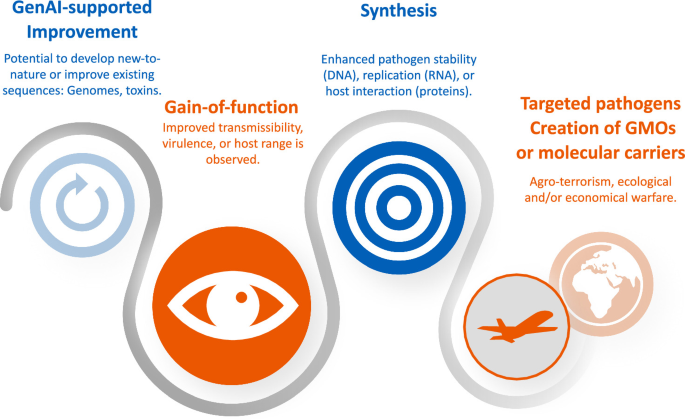
Securing Generative Biology: Inside the Defence-in-Depth Push for Biological AI
As AI models advance from generating protein structures to viable viral genomes, biosecurity researchers outline a multi-layered defence across data, models, and DNA synthesis.

Offshoring the Compute Boom: Washington Looks to Southeast Asia for Data Centers
Facing domestic grid bottlenecks and community backlash, US officials are promoting offshore AI infrastructure and chip manufacturing in the Philippines.