United Airlines Draws the Line Against Autonomous AI Booking Agents
United Airlines has moved to bar third-party AI agents from booking flights and accessing accounts, setting off a fresh clash over digital distribution and bot traffic.
United Airlines has moved to block third-party autonomous AI agents from accessing customer accounts and booking flights ahead of the peak holiday travel window, establishing a new battleground over algorithmic commerce and direct-to-consumer data control.
The New Firewall Against Machine Shoppers
As the travel sector prepares for peak holiday volume, United Airlines Holdings Inc. has quietly updated its commercial and distribution terms to shut out autonomous artificial intelligence agents. The carrier's revised policies explicitly prohibit third-party digital assistants from accessing member accounts, searching proprietary inventory on behalf of end users, and completing ticket purchases across United's direct channels and partner ecosystems.
The policy change addresses an emerging category of software: consumer-facing AI agents capable of operating web browsers, logging into loyalty accounts, comparing complex flight schedules, and executing payment transactions without human intervention. While developers market these tools as the next evolution of personal productivity, airlines view them as an unauthorized intrusion into proprietary distribution channels and a potential operational liability.
United is not simply blocking automated scrapers that extract pricing tables. The updated policy takes aim at systems acting on behalf of paying passengers, including bots operating through travel agencies, metasearch aggregators, and independent software vendors. By barring these programs, the airline is drawing a firm perimeter around its digital storefront at the exact moment consumer AI companies are attempting to turn their models into transactional engines.
Privacy, Liability, and Account Security
At the center of the airline's decision is a growing concern over digital security and user identity. For an AI agent to execute a transaction on a traveler's behalf, the system typically requires deep access. This can include personal identification data, passport details, credit card numbers, and login credentials for frequent flyer accounts.
Handing over authentication tokens and passwords to third-party language models introduces major vulnerabilities. If an external AI provider suffers a data compromise, the airline's MileagePlus accounts could be hijacked, drained of reward miles, or used to facilitate fraudulent bookings. When automated software accesses an airline database by masquerading as a human user, the carrier loses the ability to verify whether instructions originate from the genuine account holder.
There is also the question of regulatory compliance. Commercial aviation is governed by strict federal safety protocols and consumer protection mandates. When a ticket is issued, carriers must confirm that passengers have acknowledged hazardous materials restrictions, safety notices, and fare cancellation rules. Autonomous agents that bypass standard consumer interface flows create legal ambiguity. If a bot checks a box confirming that a passenger understands baggage rules or visa requirements, the airline remains exposed to disputes if the passenger subsequently claims they never saw the disclosure.
The Battle for Direct Distribution
The move by United also reflects long-standing commercial dynamics in air travel distribution. For more than two decades, legacy carriers have fought to reduce their dependence on third-party intermediaries. Global distribution systems and online travel agencies historically charged substantial booking fees, prompting airlines to invest billions of dollars into proprietary websites, mobile apps, and direct application programming interfaces.
Direct bookings do more than save distribution costs. They allow airlines to present customized ancillary offerings, such as premium seat assignments, extra legroom upgrades, Wi-Fi packages, and co-branded credit card promotions. These high-margin add-ons generate billions in annual revenue across the global airline industry.
Autonomous AI agents threaten to upend that commercial framework. An agent tasked with finding the fastest route at the lowest price strips out the tailored visual merchandising that airlines rely on to lift passenger yields. If software agents become the primary intermediary between travelers and carriers, the airlines risk being relegated to commoditized capacity providers. By closing off programmatic access to autonomous agents, United is moving aggressively to preserve the direct customer relationship before agentic booking platforms achieve widespread consumer adoption.
The Technical Challenge of Enforcing Agent Bans
Enforcing a policy ban on artificial intelligence agents is far more complex than updating terms of service documents. Modern autonomous agents do not always behave like conventional automated scrapers. Rather than flooding servers with hundreds of rapid API calls, sophisticated browser-use models mimic human navigation patterns. They render full web pages, move virtual cursors with randomized jitter, introduce artificial pauses between keystrokes, and navigate complex verification challenges.
To distinguish between a legitimate passenger booking a flight on a laptop and an autonomous model operating a headless browser session, airline engineering teams must deploy advanced behavioral biometrics and bot mitigation infrastructure. These defensive systems analyze mouse movements, device fingerprints, TLS handshakes, network routing paths, and session timing anomalies.
This cat-and-mouse dynamic places significant strain on edge security infrastructure. If security thresholds are calibrated too strictly, genuine customers using assistive technologies or corporate privacy extensions may face false positives, encountering broken booking funnels and abandoned transactions during high-traffic sales periods. Conversely, if defensive controls are too permissive, autonomous bots will continue to traverse the checkout flow undetected.
Infrastructure Strain and the Rise of Synthetic Traffic
Beyond cybersecurity and marketing margins, the proliferation of autonomous agents poses a physical infrastructure challenge for digital platforms. When human beings shop for air travel, they typically run several queries across a handful of dates before making a purchase. Autonomous agents, by contrast, can spawn background processes that query hundreds of itinerary permutations, dynamic pricing updates, and seating charts across multiple days.
This synthetic query volume produces exponential increases in server load without a corresponding rise in completed bookings. Airline search engines and reservation systems, many of which still rely on complex enterprise transaction engines hosted in hybrid cloud architectures, must process compute-intensive queries on every search.
As Bloomberg reported when covering the carrier's policy update, the industry is increasingly forced to confront the hidden computational and financial costs created by autonomous digital assistants. For infrastructure operators, unmanaged agent traffic consumes costly network egress bandwidth, exhausts database connection pools, and inflates cloud compute bills.
To defend against this, enterprises are being forced to route traffic through localized edge inspection nodes, deploying machine learning models at the network perimeter simply to evaluate whether incoming requests originate from a human being or a software agent. The computational arms race between agent developers and enterprise infrastructure teams is becoming a primary driver of enterprise networking expenses.
Why It Matters
United Airlines' ban provides an early blueprint for how major enterprises will respond to autonomous AI agents entering operational environments. For enterprise IT teams, data center operators, and telecommunications providers, this dynamic signals a major shift in network traffic profiles. Network engineers can no longer assume that inbound web traffic consists of either human users or malicious distributed denial-of-service attacks. Instead, a third category of legitimate yet unauthorized synthetic traffic is rapidly emerging.
For field service technicians, telecommunications teams, and edge data center managers, the growth of automated agents will demand higher network capacity at the edge to support inline AI filtering and real-time authentication. As mission-critical systems in transport, logistics, and utilities integrate deeper programmatic interfaces, defining where human authorization ends and synthetic execution begins will become one of the defining operational hurdles of the coming decade.
More from Trends
RSS
Inside China's Coordinated Campaign to Build an AI-Native Generation
With mandatory curricula, entrance exam integration, and rural AI tutors, China is executing a massive state push to achieve universal AI literacy across 200 million students by 2030.
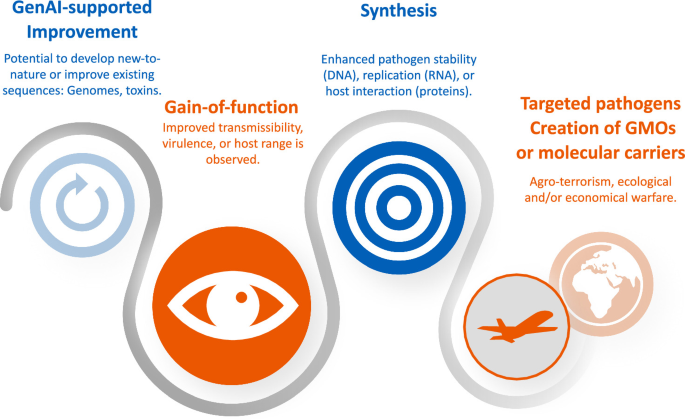
Securing Generative Biology: Inside the Defence-in-Depth Push for Biological AI
As AI models advance from generating protein structures to viable viral genomes, biosecurity researchers outline a multi-layered defence across data, models, and DNA synthesis.

Offshoring the Compute Boom: Washington Looks to Southeast Asia for Data Centers
Facing domestic grid bottlenecks and community backlash, US officials are promoting offshore AI infrastructure and chip manufacturing in the Philippines.