Why Smart Glasses Are Not Ready to Replace the Desktop Monitor
Smart glasses offer portable, private virtual displays, but thermal limits, optical strain, and task-switching friction keep physical monitors firmly on the desk.
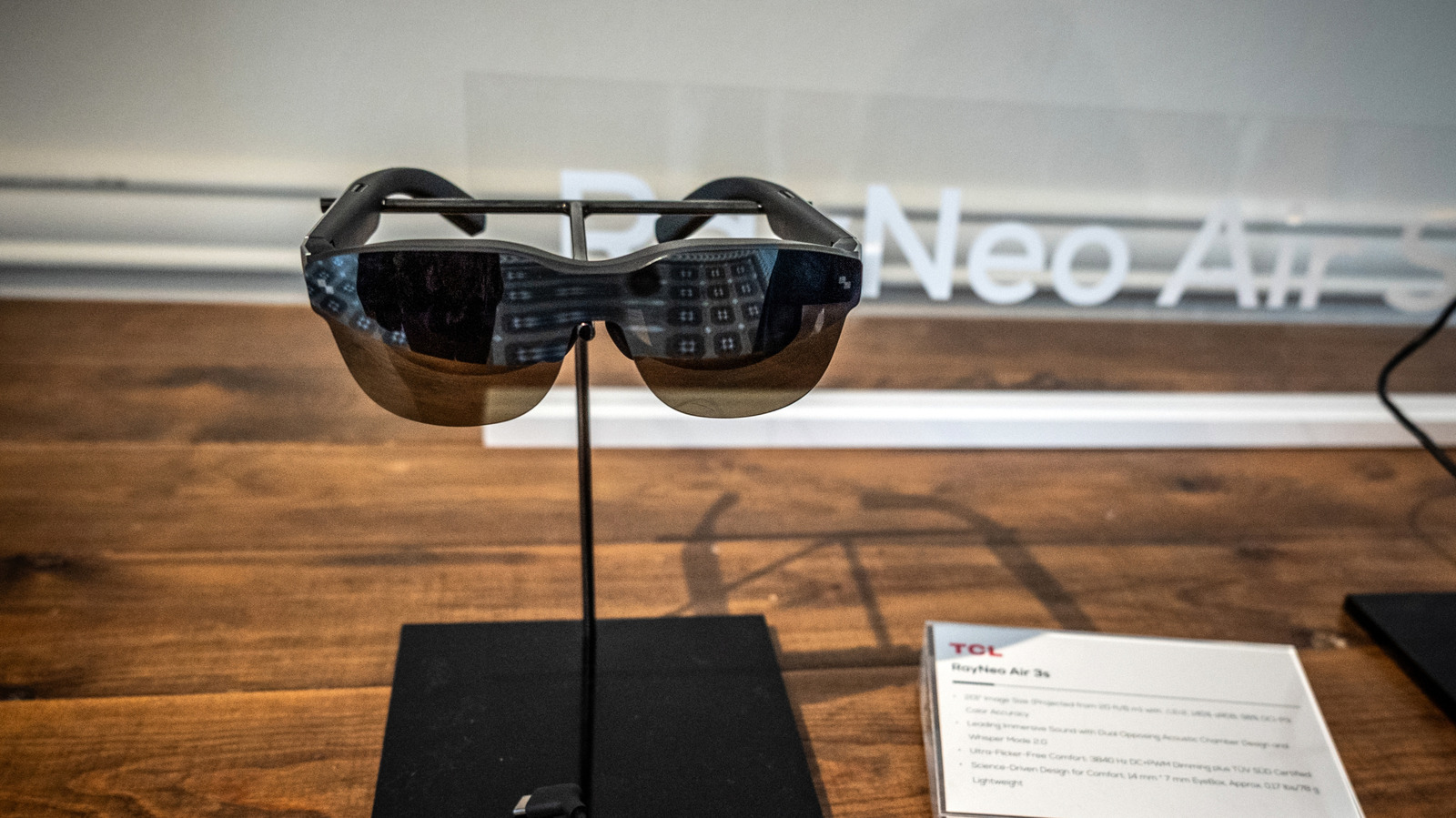
Smart glasses promise to free workers from bulky physical monitors, but thermal constraints, optical limitations, and awkward workplace ergonomics mean dedicated desktop displays will remain essential for years to come.
For decades, knowledge workers have organized their digital lives around rigid slabs of glass and plastic anchored to desks. The vision of replacing those static panels with lightweight augmented reality glasses has circulated among hardware engineers and futurists since the earliest days of wearable computing. In theory, the value proposition is hard to dispute. Instead of spending thousands of dollars on bulky multi-monitor arrays that consume desk space and draw continuous wall power, a worker could slip on a pair of glasses weighing under one hundred grams to project three, four, or five borderless virtual displays anywhere in their field of view.
On paper, the workflow offers unmatched flexibility. On a crowded commuter train or a cross-country flight, a traveller could pull open private spreadsheets that no seatmate can view. In small apartments or shared hot-desking offices, workers could tailor their display layout without moving a single cable. Yet despite substantial improvements in micro-OLED panel brightness and wearable industrial design, people attempting to discard their desktop monitors in favor of smart eyewear are discovering that consumer hardware remains caught between impressive technical demos and the grueling physical realities of an eight-hour workday.
Thermal Management and the Limits of Facial Ergonomics
One of the most persistent hurdles facing all-day wearable computing is thermal physics. Driving two independent high-resolution panels at refresh rates of 60Hz, 90Hz, or 120Hz generates non-trivial heat. When those displays, companion display controllers, and spatial tracking sensors are packed into a compact spectacle frame, that heat has nowhere to go except into the ambient air or directly against the user's face.
Unlike laptops or desktop towers, which rely on active fan assemblies, vapor chambers, and distant heat sinks, eyewear rests directly on sensitive nerve clusters across the bridge of the nose, the brow, and the temples. Users experimenting with modern display glasses often report a creeping sensation of warmth across the forehead after forty-five to sixty minutes of sustained use. Even when internal temperatures stay well within safe silicon operating limits, the psychological and tactile sensation of wearing a mildly warm electronic device against the skin induces fatigue and discomfort.
Weight distribution creates an additional ergonomic trade-off. Even glasses that tip the scales at roughly 75 to 90 grams, while miraculously light for consumer electronics, remain three to four times heavier than standard corrective prescription spectacles. Because the optical prisms and display engines must sit in front of the eyes, the weight profile is inevitably front-heavy. Over several continuous hours, this imbalance presses down on the bridge of the nose and can cause neck strain, especially if the user tilts their head unnaturally to align their view with fixed virtual windows.
Optical Physics: Resolution, Focal Plane, and Visual Fatigue
Physical comfort is only half the equation. The human visual system is remarkably sensitive to subtle distortions and unnatural focal demands, both of which are common in wearable displays.
Most current display glasses employ micro-OLED screens that bounce light through birdbath optics or waveguide lenses to create a virtual image perceived at a fixed distance, typically between two and four meters. While this optical illusion works reasonably well for full-screen video and casual web browsing, it introduces distinct challenges for dense information work. Software engineering, financial modelling, and technical drafting demand high pixels-per-degree (PPD) clarity so that fine text, punctuation, and intricate UI elements remain crisp across the entire field of view.
When a worker moves their gaze across a physical monitor, their eyes naturally converge and accommodate to the exact physical distance of the panel. On smart glasses, the focal distance remains artificially fixed regardless of how near or far a virtual window appears to sit within the room. This phenomenon, known as the vergence-accommodation conflict, forces the brain and eye muscles to decouple two reflexes that have worked in tandem throughout human evolution. The result is visual fatigue, dry eyes, and low-grade tension headaches after prolonged reading sessions.
Peripheral clarity presents another barrier. High-end desktop monitors deliver consistent sharpness from corner to corner. By contrast, wearable optical lenses frequently suffer from soft edges, chromatic aberration, or subtle geometric distortion outside their central sweet spot. For users who rely on rapid glances at system trays, peripheral chat channels, or secondary reference documents, the need to turn their entire head rather than merely flicking their pupils adds unexpected friction to everyday workflows.
Social Friction and the Reality of Hybrid Task Switching
Even if optical and thermal issues were resolved overnight, the social and operational dynamics of modern office work present subtle obstacles to total monitor replacement.
A typical workday is rarely an uninterrupted sprint of digital screen time. Professionals routinely shift between typing on a keyboard, jotting notes in physical notebooks, referencing printed schematics, drinking coffee, and talking to colleagues who walk up to their desks. Wearing tinted glasses indoors introduces visual isolation. Looking down at a notebook through augmented optics can be disorienting, and reading handwriting through semi-reflective lenses is noticeably harder than glancing down with unaided vision.
Remote collaboration brings its own awkwardness. When attending video conferences while wearing smart glasses, users present an unusual appearance to colleagues on the other end of the camera. The dark lenses obscure eye contact, hide facial micro-expressions, and can make the wearer look as though they are wearing sunglasses during a boardroom presentation. While avatars and inward-facing eye-tracking cameras are being developed to bridge this gap, they introduce software overhead and uncanny valley aesthetics that many corporate environments are not yet ready to normalize.
Tactical Use Cases: Entertainment and Field Mobility
None of these limitations suggest that display glasses lack a commercial future. Rather, they highlight that the hardware is currently specialized for episodic tasks rather than marathon desktop replacements. As highlighted in recent reporting by Engadget, consumers who evaluate smart glasses primarily as personal entertainment devices or short-session productivity tools report significantly higher satisfaction than those attempting full desk overhauls.
When used to watch a movie on an airplane, play a game in a hotel room, or review a concise set of briefing slides during a layover, the constraints around thermal buildup, analog task-switching, and video-call etiquette largely disappear. In these contexts, the ability to pack a virtual hundred-inch display into a jacket pocket outweighs the minor optical compromises. The friction only becomes prohibitive when users attempt to force a single piece of hardware to absorb the complex, multi-modal demands of an entire standard workday.
Why It Matters
While desk-bound knowledge workers will likely keep their traditional monitors for years to come, the operational trade-offs of smart glasses look entirely different in industrial and field environments. For telecommunications technicians climbing cell towers, data centre engineers auditing high-density server racks, and utilities workers troubleshooting substation switchgear, physical desktop monitors were never an option in the first place.
In these high-stakes field environments, wearable displays do not need to deliver eight hours of fine-text typography or blend seamlessly into casual video conferences. Instead, they excel at delivering short, hands-free bursts of situational data, such as port maps, diagnostic telemetry, and step-by-step schematics directly aligned with physical hardware. By recognizing that smart glasses are specialized mobile instruments rather than universal replacements for office desks, organizations can deploy the technology where its compact form factor solves genuine logistical bottlenecks without demanding unnatural ergonomic sacrifices.
More from Trends
RSS
Inside China's Coordinated Campaign to Build an AI-Native Generation
With mandatory curricula, entrance exam integration, and rural AI tutors, China is executing a massive state push to achieve universal AI literacy across 200 million students by 2030.
Securing Generative Biology: Inside the Defence-in-Depth Push for Biological AI
As AI models advance from generating protein structures to viable viral genomes, biosecurity researchers outline a multi-layered defence across data, models, and DNA synthesis.

Offshoring the Compute Boom: Washington Looks to Southeast Asia for Data Centers
Facing domestic grid bottlenecks and community backlash, US officials are promoting offshore AI infrastructure and chip manufacturing in the Philippines.