Xreal Aura and the Reality of Everyday Spatial Computing
Xreal's $1,279 Aura glasses pair impressive optical clarity with Android XR, but tethered hardware and finicky gesture controls reveal persistent spatial computing hurdles.

Xreal's new Aura smart glasses deliver impressive high-resolution displays on Google's Android XR platform, but tethered processing and unreliable gesture tracking show how far spatial hardware still has to go.
The Bridge Between Heavy Headsets and Wearable Frames
For the past decade, augmented and extended reality hardware has been stuck in an architectural bind. Device makers have consistently been forced to choose between two extremes. On one side sit fully enclosed, standalone headsets that house batteries, cooling fans, and high-performance silicon directly on the user's skull. These devices deliver rich immersive environments at the expense of ergonomic sustainability and social acceptance. On the other side sit lightweight smart glasses that pass as everyday eyewear, yet offer little more than audio playback, basic cameras, or monochrome heads-up notifications.
Xreal has spent several product cycles trying to bridge this divide. With the introduction of the Xreal Aura, priced at $1,279, the company is attempting to push wearable displays into legitimate computing territory. Rather than treating eyewear merely as a secondary monitor for a smartphone or handheld gaming device, the Aura runs on Google's Android XR platform. This operating system shift positions the device as an early benchmark for Google's broader spatial computing ecosystem, arriving ahead of anticipated collaborative hardware from partners like Samsung.
The hardware reflects a transitional era for extended reality. Weighing 95 grams, the Aura is substantially lighter than a traditional virtual reality headset, which typically exceeds 500 grams. However, achieving that lower mass on the face requires compromises elsewhere. The physical architecture splits the computing burden into two distinct parts: the visual frame worn on the face, and an external pocket-sized processing unit attached by a physical cable.
Optical Fidelity and Display Architecture
The most convincing argument for the Aura lies in its display subsystem. Each eye receives an individual resolution of 1920 by 1200 pixels, producing visual clarity that comfortably outpaces earlier consumer display glasses. Text rendered on virtual windows remains legible even when resized down, making productivity workflows viable rather than an exercise in eye strain.
To balance immersion with environmental awareness, Xreal engineered a dual-lens optical stack. An interior lens handles the projection of augmented reality elements and virtual screens across a 70-degree field of view. An exterior electrochromic lens can electronically adjust its tint, transitioning from transparent to heavily darkened. When fully darkened, the glasses create a cinema-like contrast boundary that shields the user from ambient glare. In transparent mode, the user maintains peripheral situational awareness, allowing them to see nearby obstacles while viewing floating application windows.
Yet the optical compromise remains noticeable. A 70-degree field of view is wide for lightweight glasses, but it falls short of the roughly 110-degree coverage offered by bulkier mixed-reality goggles. As a result, virtual interfaces cut off abruptly at the edges of the display area. Furthermore, the dual-layered lens construction adds optical thickness that looks decidedly foreign on the street. While far less conspicuous than an enclosed face-mounted computer, the Aura still signals to onlookers that the wearer is operating behind a piece of specialized tech equipment.
The External Processing Compromise
Removing the processor and power source from the frames was essential to keeping the headset under 100 grams, but it introduces its own set of mechanical frictions. The glasses rely on a dedicated compute puck about the size of a standard smartphone, weighing slightly more than half a pound. A permanent USB-C tether runs from one of the temple arms down to the unit, which users must keep in a pocket or place on a desk.
Inside this companion brick sits the system hardware, storage options of 12 or 16 gigabytes, and an onboard battery capable of delivering four to five hours of continuous operation. Offloading battery mass and silicon to a tethered module solves the most severe neck-fatigue issues that plague standard headsets, but it introduces cable management problems. In moving environments, such as trains or busy work sites, loose cords inevitably snag on armrests, clothing, or safety gear.
Thermal management also presents an ongoing engineering challenge. Even with the primary system-on-chip housed inside the external puck, the display panels, micro-mirrors, and integrated sensor arrays inside the glasses generate noticeable heat. Within minutes of sustained use, the frames warm up around the temple and bridge. While the device does not reach dangerous temperatures, the heat combined with the pressure of nose pads leaves visible marks on the skin after moderate sessions, limiting the appetite for all-day wear.
Android XR and Virtual Workstation Practicality
The software foundation represents the Aura's most notable platform leap. By adopting Android XR, Xreal grants users immediate access to the broader Android application library. Rather than waiting for developers to build proprietary spatial software from scratch, users can boot up standard business and media tools inside floating windows.
This setup turns the glasses into an ad-hoc multi-monitor workstation. A mobile worker can dock a word processor directly in front of their field of view, place messaging windows off to the side, and anchor a browser tab in their upper peripheral vision. When paired with a portable physical Bluetooth keyboard, the combination effectively replicates an expansive office desk in tight quarters, such as an economy airline seat or a shared remote bench.
Beyond flat application panes, spatial experiences show flashes of potential. Interactive 3D mapping programs and architectural walkthroughs demonstrate how real-time dimensional data can integrate into physical rooms. However, software stability can falter when handling graphics-intensive tasks. Pushing complex rendering pipelines pushes both the thermal thresholds of the hardware and the limits of the software optimization layer.
Input Latency and the Reality of Hand Tracking
Where the Xreal Aura stumbles hardest is in its basic interaction model. Navigating a spatial interface without a physical mouse or keyboard requires reliable multimodal input. Xreal implemented forward-facing computer vision cameras intended to track hand gestures, such as pinching two fingers together to select, drag, or resize interfaces.
In real-world use, these gesture controls frequently prove inconsistent. Users often find themselves repeatedly air-pinching to register simple commands like opening an application or pausing a video stream. Missing inputs quickly turn basic interface navigation into a tiring and socially awkward chore.
The compute puck features a built-in capacitive trackpad and a fingerprint reader for biometric authentication, providing an alternative to mid-air gestures. In theory, using the puck like a pocket trackpad should solve the reliability problem while remaining discreet in public spaces. In practice, the trackpad implementation lacks fine cursor precision, making it difficult to target small user interface buttons or highlight lines of text. As noted in a detailed review by Wired, this mismatch between visual ambition and operational control keeps the product from feeling like a seamless daily tool.
Until spatial hardware vendors master micro-gesture recognition or integrate low-latency physical inputs like neural wristbands or reliable peripheral controllers, spatial interfaces will remain more demanding to operate than the simple glass touchscreens they seek to replace.
Why It Matters
While hardware like the Xreal Aura is currently marketed toward consumer entertainment and mobile productivity, the underlying platform shifts have direct implications for enterprise and industrial field operations. Technicians maintaining complex machinery, inspecting telecom cell towers, or servicing remote equipment racks inside dense data centres require immediate access to system schematics, telemetry dashboards, and remote engineering support.
For field operations, wearing a heavy, enclosed headset is a non-starter. Enclosed visors impair peripheral vision, create safety hazards around high-voltage equipment, and cause swift physical fatigue in demanding environments. High-clarity smart glasses equipped with adjustable optical pass-through present a workable path toward true hands-free maintenance, allowing an on-site engineer to cross-reference diagnostic layers while keeping eyes on physical hardware.
However, the compromises evident in the Aura also show why wide-scale industrial deployment remains limited. Fragile tether cables risk catching on server cabinets or structural frames, while unreliable gesture tracking makes interaction nearly impossible when wearing work gloves. For data centre and network operations, the true tipping point will arrive when optical engines maintain this level of clarity while internalizing spatial sensors, robust voice-driven AI assistance, and ruggedized physical controls that can withstand the rigors of frontline deployment.
More from Trends
RSS
Inside China's Coordinated Campaign to Build an AI-Native Generation
With mandatory curricula, entrance exam integration, and rural AI tutors, China is executing a massive state push to achieve universal AI literacy across 200 million students by 2030.
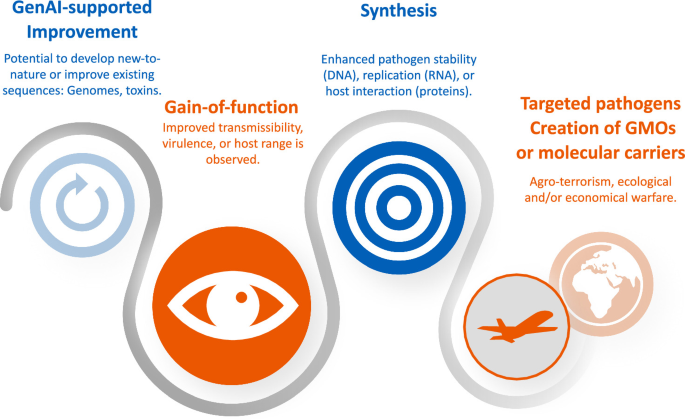
Securing Generative Biology: Inside the Defence-in-Depth Push for Biological AI
As AI models advance from generating protein structures to viable viral genomes, biosecurity researchers outline a multi-layered defence across data, models, and DNA synthesis.

Offshoring the Compute Boom: Washington Looks to Southeast Asia for Data Centers
Facing domestic grid bottlenecks and community backlash, US officials are promoting offshore AI infrastructure and chip manufacturing in the Philippines.