Xreal Aura Tests the Limits of Tethered Spatial Computing
Priced at $1,200 and powered by Android XR, Xreal's Aura glasses offer crisp optics and deep software access, but thermal and input compromises remain.

Xreal has delivered its most ambitious extended reality headset to date with the $1,200 Aura, pairing Google's Android XR software with high-resolution micro-displays while exposing ongoing hardware trade-offs in wearable tech.
The Architecture of a Hybrid Spatial Wearable
The extended reality sector has long struggled with a fundamental physics problem. Cramming batteries, heat spreaders, sensors, and graphics processors into standard spectacles yields an uncomfortable, unwieldy device. Stripping them down entirely creates a dumb peripheral that requires a tethered smartphone or workstation.
With the Aura, hardware maker Xreal adopts a middle architecture. The $1,200 glasses offload the bulk of processing and electrical storage to a dedicated compute unit. This peripheral, roughly the footprint of a modern Google Pixel smartphone and weighing approximately half a pound, connects to the frames via a physical cable.
The puck houses the main chipset, wireless radios, and a battery capable of sustaining roughly five hours of continuous operation. By taking the heavy power storage off the user's face, Xreal keeps the frames substantially lighter and more comfortable than enclosed virtual reality visors like the Apple Vision Pro or Meta Quest 3.
Yet the device is far from discreet. The chassis remains distinctly oversized, dominating the wearer's facial profile. Transparent optics allow the user to maintain visual contact with their real-world surroundings, but the thick browline and prominent temple arms signal that everyday social wearability remains an elusive target.
Optical Fidelity and Thermal Friction
Where the Aura makes its strongest technical argument is in visual clarity. The headset features dual micro-displays projecting 1920 by 1200 pixels per eye. In practice, this delivers sharp text rendering and rich color saturation across virtual monitors. Whether tethered to a portable gaming machine like a Steam Deck or used as an expansive floating workstation, the virtual canvases avoid the screen-door pixelation that plagued earlier optical engine generations.
Software flexibility is bolstered by Google's Android XR platform. Unlike proprietary headsets that launch with barren application stores, the Aura inherits native compatibility with standard Android packages. A user can pin a Google Docs window directly in front of their workspace, anchor a communication client like Slack to the left periphery, and stream media to the right.
However, routing display signals and sensor processing into compact frames introduces severe thermal complications. Even with the battery and primary system on chip relegated to the waist-level puck, the optical engines and forward-facing tracking cameras generate concentrated heat. The warmth focuses squarely on the bridge of the nose.
During extended sessions, the thermal build-up becomes noticeable against the skin. Prolonged wear leaves clear physical indentations, indicating that weight distribution and passive cooling require further refinement before these frames can support eight-hour desk shifts.
The Fragility of Bare-Hand Interaction
To interact with floating Android windows, the Aura relies on optical hand tracking. Forward-facing cameras monitor finger positions, using computer vision models to register pinch gestures for selection, dragging, and navigation.
When tracking functions properly, the interface feels immediate. Users can manipulate multiple browser panels or adjust media playback with subtle finger pinches. But the optical tracking pipeline suffers from reliability dropouts. In uneven lighting or during rapid movements, the cameras often lose lock on the hands.
Users frequently encounter missed inputs, prompting repeated, exaggerated gestures to pause media or grab floating interface elements. While acceptable in a private living room, this failure mode becomes awkward in public transit or shared office environments.
The input inconsistency highlights a persistent problem across the augmented reality industry. Enclosed headsets overcome this by pairing hand tracking with eye-tracking sensors, letting the device predict intent before a pinch occurs. Without high-end gaze tracking to guide optical targeting, purely hand-driven spatial interfaces remain prone to frustrating edge cases.
The Emerging Battle for the Android Ecosystem
Xreal's launch represents a crucial skirmish in the broader war for spatial operating systems. Meta has dominated consumer virtual reality through heavily subsidized Quest hardware, and it has already previewed standalone augmented reality spectacles slated for commercial release later this decade.
By building on Android XR, Xreal gives Google a tangible beachhead against Meta's Horizon OS and Apple's visionOS. For developers, writing applications for an established Android core reduces the friction of supporting spatial hardware. Any enterprise with an existing fleet of Android productivity or maintenance tools can deploy them to floating virtual panels with minimal redevelopment.
Recent hands-on testing by Wired underscored both the engineering progress and the remaining physical hurdles of the hardware, noting that while the Aura delivers superior comfort compared to full visors, its thermal output and oversized dimensions serve as reminders of the compromises inherent in consumer spatial gear.
The competitive landscape is moving quickly. As silicon fabrication nodes shrink and optical waveguides become more efficient, the distance between tethered compute pucks and self-contained smart glasses will narrow. Xreal has proved that an ecosystem of floating Android applications can function smoothly today, but keeping the hardware cool and the interaction layer dependable is the real test.
Why It Matters
Consumer spatial computing often focuses on entertainment and desktop replacement, but devices like the Aura offer clear utility for enterprise field operations, telecom maintenance, and data centre technicians.
In complex infrastructure settings, technicians require hands-free access to schematics, live telemetric overlays, and remote assistance calls without wearing heavy, disorienting VR visors. The Aura demonstrates that a pocket-sized compute puck combined with high-density optical frames can support data-dense dashboards and spatial documentation for five hours at a stretch.
Before these platforms can dominate server aisles or cell tower climbs, manufacturers must resolve thermal pressure points and input latency. An offshore engineer or network technician cannot afford missed hand gestures when confirming a breaker shutdown or navigating a fiber routing map. When optical reliability matches the strength of the underlying operating system, spatial glasses will transition from curious consumer gadgets to essential industrial field gear.
More from Trends
RSS
Inside China's Coordinated Campaign to Build an AI-Native Generation
With mandatory curricula, entrance exam integration, and rural AI tutors, China is executing a massive state push to achieve universal AI literacy across 200 million students by 2030.
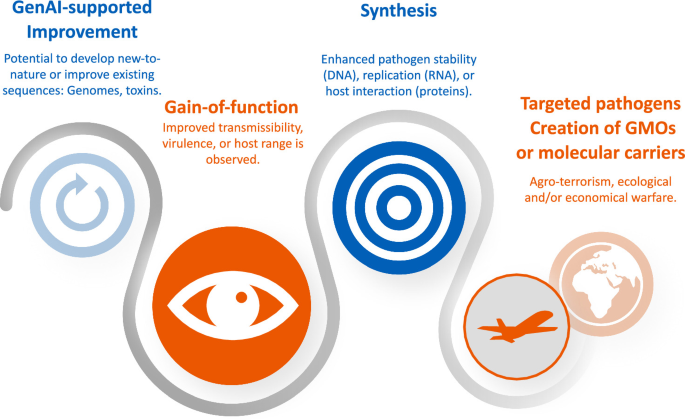
Securing Generative Biology: Inside the Defence-in-Depth Push for Biological AI
As AI models advance from generating protein structures to viable viral genomes, biosecurity researchers outline a multi-layered defence across data, models, and DNA synthesis.

Offshoring the Compute Boom: Washington Looks to Southeast Asia for Data Centers
Facing domestic grid bottlenecks and community backlash, US officials are promoting offshore AI infrastructure and chip manufacturing in the Philippines.