Anthropic Files for IPO, Revealing Rocketing Enterprise Revenue and $600 Billion in Compute Commitments
Anthropic's IPO filing shows revenue topping $16 billion in early 2026, paired with unprecedented long-term compute contracts and tightly held founder governance.

Anthropic has filed public registration documents for a landmark stock market listing, unveiling a massive surge in enterprise revenue alongside more than $600 billion in binding infrastructure commitments.
The Anatomy of an Unprecedented Market Debut
Anthropic has formally lifted the curtain on its financial performance, submitting public paperwork for an initial public offering in the United States that will serve as a definitive barometer for investor appetite in the foundation-model sector. The disclosure follows a confidential filing submitted earlier in the summer and provides the clearest view yet into the scale, velocity, and fiscal realities of the generative AI boom.
The figures paint a picture of extraordinary top-line expansion. After recording $41 million in revenue in 2023 and $386 million in 2024, the San Francisco company reached $4.59 billion in 2025. The pace accelerated further during the first six months of 2026, with revenue climbing to $16.29 billion. That represents a fourteen-fold increase over the $1.16 billion generated in the corresponding period a year earlier.
Even more notable for public market analysts is the trajectory of Anthropic's bottom line. While operating losses widened during earlier phases of intense research and development, they narrowed substantially in the first half of 2026 to $693 million, down from $2.14 billion in the prior-year period. The sheer magnitude of enterprise adoption has begun to outpace operating overhead, even as overall expenses multiplied fivefold.
Enterprise Adoption and the Token Economy
Anthropic's financial momentum stems from its deliberate alignment with enterprise workflows. Founded in 2021 by former OpenAI researchers Dario and Daniela Amodei, the company established an early lead in software development and structured data analysis. Today, its Claude model suite spans four performance tiers: Fable, Opus, Sonnet, and Haiku. These architectures power developer assistants, standalone chatbots, and Claude Cowork, a dedicated platform designed to execute complex business tasks autonomously.
The vast majority of Anthropic's income is consumption-based. Corporate clients pay per token of input and output data processed through application programming interfaces, directly linking the vendor's cash flow to operational reliance within enterprise software stacks. While fixed-fee subscriptions such as Pro and Max provide steady baseline cash flow, variable usage fees from large-scale corporate deployments represent the primary engine of top-line growth.
Market analysis underscores the strength of this enterprise moat. Transaction figures compiled by business spending platform Ramp indicate that Anthropic captured 60.1 percent of corporate AI token spending in mid-October 2026. By establishing Claude as the de facto engine for code generation and internal automation, the company has managed to carve out premium market share among software engineering teams and enterprise technology departments.
The Infrastructure Bill and Circular Financing
Behind these revenue milestones sits an unprecedented physical requirement: computing capacity. Computing charges paid to hyperscale cloud providers, physical data centre lease arrangements, networking equipment, and commercial electricity constitute Anthropic's single largest expenditure category. For several consecutive years, these capital commitments vastly outstripped gross receipts.
To ensure sustained access to specialised clusters, Anthropic has committed more than $600 billion in aggregate spending across approximately eight infrastructure partners over the coming decade. Crucially, major portions of these contracts are structured as non-cancelable take-or-pay obligations, requiring regular cash disbursements regardless of actual model deployment or end-user demand.
The contractual distribution reveals heavy dependencies on industry incumbents. Anthropic has agreed to direct at least $110 billion to Amazon Web Services, approximately $114.5 billion to Google Cloud, and $44.9 billion to Microsoft for compute capacity spanning terms of seven to ten years.
This capital dynamic also highlights the self-reinforcing financial arrangements that characterise the AI frontier. Amazon and Google are not merely primary suppliers; they rank among Anthropic's most significant institutional backers. Amazon has injected at least $13 billion into the business, with agreements permitting up to an additional $20 billion in funding. Google has similarly structured financial backing amounting to $40 billion. The outcome is a circular capital arrangement where equity investments from cloud hyperscalers return directly to their cloud balance sheets as contracted compute revenue.
Public Benefit Governance and Concentrated Control
Public investors weighing Anthropic's shares will also have to navigate an unconventional corporate governance blueprint. Anthropic was incorporated as a Public Benefit Corporation, meaning its directors carry an explicit legal duty to weigh shareholder value against broader technological safety and the welfare of society. That status will remain intact after the listing.
To insulate long-term technical direction from short-term financial pressure, the company has concentrated decision-making authority within an inner circle. Under the proposed voting structure, a single share of Class F stock directs 50.1 percent of total voting power over fundamental corporate decisions, including board appointments.
This Class F voting stake is controlled by a majority vote among Anthropic's seven co-founders, in coordination with an independent trust. Company leadership argues that tight operational control is vital to avoid commercial incentives overriding safety protocols as model capabilities approach parity with human experts. For equity buyers, however, the arrangement strictly curtails shareholder activism and traditional corporate oversight.
The Battle for Generative Supremacy
Anthropic approaches its public debut amid aggressive competition across the technology industry. OpenAI, which ignited the modern generative AI era, remains its primary rival and has aggressively built out its own developer and enterprise toolsets. At the same time, Alphabet, Meta, and Elon Musk's ventures are investing tens of billions annually in proprietary compute campuses, custom silicon, and frontier model development.
Despite this intense rivalry, Anthropic has managed to present public markets with a rare profile: a foundation-model developer generating tens of billions in annualised sales while beginning to demonstrate a path toward structural profitability. The underlying filings, originally analysed by Reuters, reveal an enterprise market willing to spend lavishly on frontier model integrations, even as the ultimate margins of the underlying compute economy remain fiercely contested.
Why it matters
Anthropic's transition to the public markets signals that frontier AI is shifting from speculative research into utility-grade enterprise infrastructure. The company's $600 billion in locked-in contracts offers a window into the unrelenting demands facing physical facilities worldwide.
For data centre operators, telecommunications providers, and facilities engineers, these figures indicate that high-density computing demand will not slacken in the medium term. Sustaining these workloads requires immediate advancements in power distribution, substation construction, and high-efficiency liquid cooling systems. Furthermore, as models like Claude shift from software development environments into automated industrial and enterprise workflows, field technicians and network engineers will increasingly manage edge infrastructure that bridges cloud-hosted frontier models with real-world operational hardware. The financial sustainability of that buildout is now being put to its first public market test.
More from Trends
RSS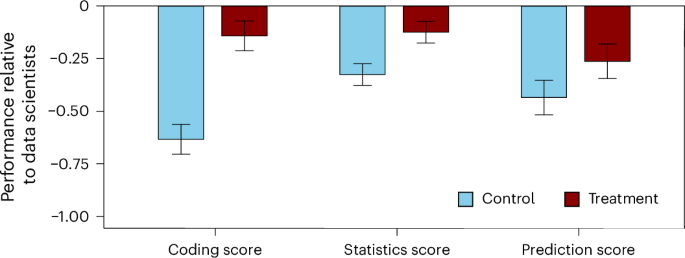
The Exoskeleton Dilemma: Why Generative AI Boosts Performance Without Building Skill
A randomized trial reveals that while AI helps non-specialists complete technical work, the capability vanishes the moment the tool is removed.
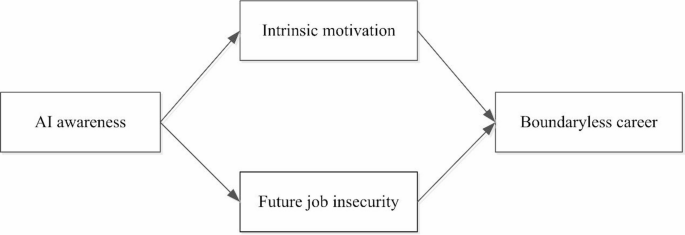
The Boundaryless Worker: How AI Awareness Is Rewiring Early Career Strategy
New research shows students aware of AI are abandoning traditional career ladders, propelled by equal parts technical curiosity and fear of automated displacement.
Closing the AI Value Gap: Why Enterprise Transformation Demands Physical and Operational Overhauls
Moving enterprise AI from experimental pilots to measurable balance-sheet returns requires rewiring core workflows, data architectures, and industrial operations.